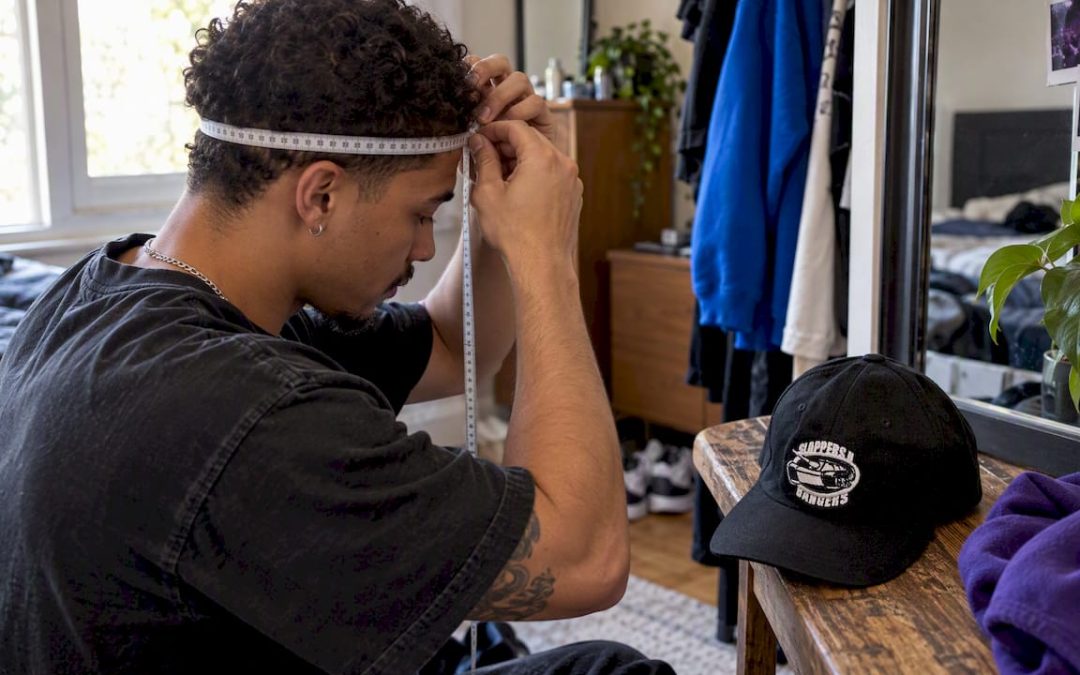
Measure your head about one inch above your eyebrows, keep the tape level around the back, and that circumference converts directly to a US hat size somewhere between 6 5/8 and 8. Most adults land near 22 to 23 inches, or roughly 56 to 58 centimeters, which translates to a US 7 to 7 1/8. If your number falls between two sizes, size up and use the chart below to lock in the right fit.
TL;DR:
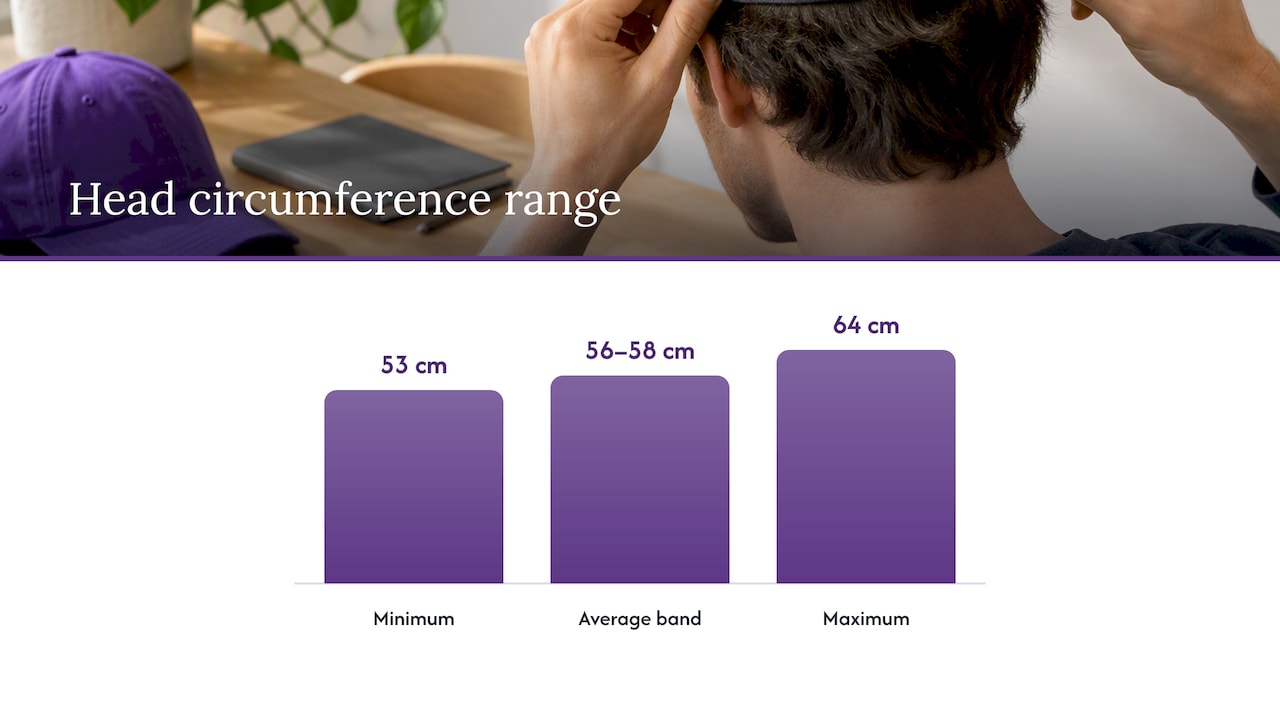
- Most adult head sizes range from 53 to 64 centimeters, with the average around 56 to 58 centimeters, corresponding to US sizes 7 to 7 1/8.
- When measuring, keep the tape snug and level, and consider measuring with hair or liners in place for more accurate sizing.
- For fitted caps, select a size that fits snugly, while adjustable styles allow for sizing flexibility within their range.
- Use a foam cleaner designed for headwear to maintain the shape and fabric quality of your hat, avoiding dish soap.
- Sizing mistakes are costly for brands and consumers, so accurate measurement and choosing adjustable styles help ensure a better fit.
Table of Contents
- How to Measure Your Head for a Hat
- Hat Size Chart: Inches, Centimeters, and US Sizing
- How Fit Changes Across Fitted Caps, Snapbacks, and Beanies
- Caring for Your Hat So It Keeps Its Shape
- Why We Take Hat Sizing Seriously
- Pick Up SNB Merch Sized the Right Way
- FAQ
- Sources
How to Measure Your Head for a Hat
Grab a flexible cloth tape measure if you have one. No tape? A piece of string and a ruler works just as well since you only need the final length, not a tool built for sewing.
Wrap it around your head about one inch above your eyebrows, running just above your ears and around the widest part of the back of your skull, near the occipital bone. Keep the tape snug but not tight enough to dent your hair, and make sure it stays level all the way around instead of drifting up in the back.
- Take the first measurement and note it down.
- Re-measure two more times, adjusting slightly if the tape shifted.
- Use the average or middle value of your three readings as your final number.
If you have thick hair, braids, or plan to wear a liner underneath, measure with that in place since it changes your usable circumference. For kids, measure the same way but check more often since head size shifts quickly during growth spurts.
Most adult heads measure between 53 and 64 centimeters around, with the average sitting close to 56 to 58 centimeters. That range covers the bulk of standard hat sizing, which is why most brands build their lineups around it instead of stretching to extremes.
Hat Size Chart: Inches, Centimeters, and US Sizing
Once you have your number, matching it to a hat size is just a lookup. Baruch College’s hat conversion chart and Alfred University’s sizing guide both use the same standard progression, which is how most manufacturers build their charts too.
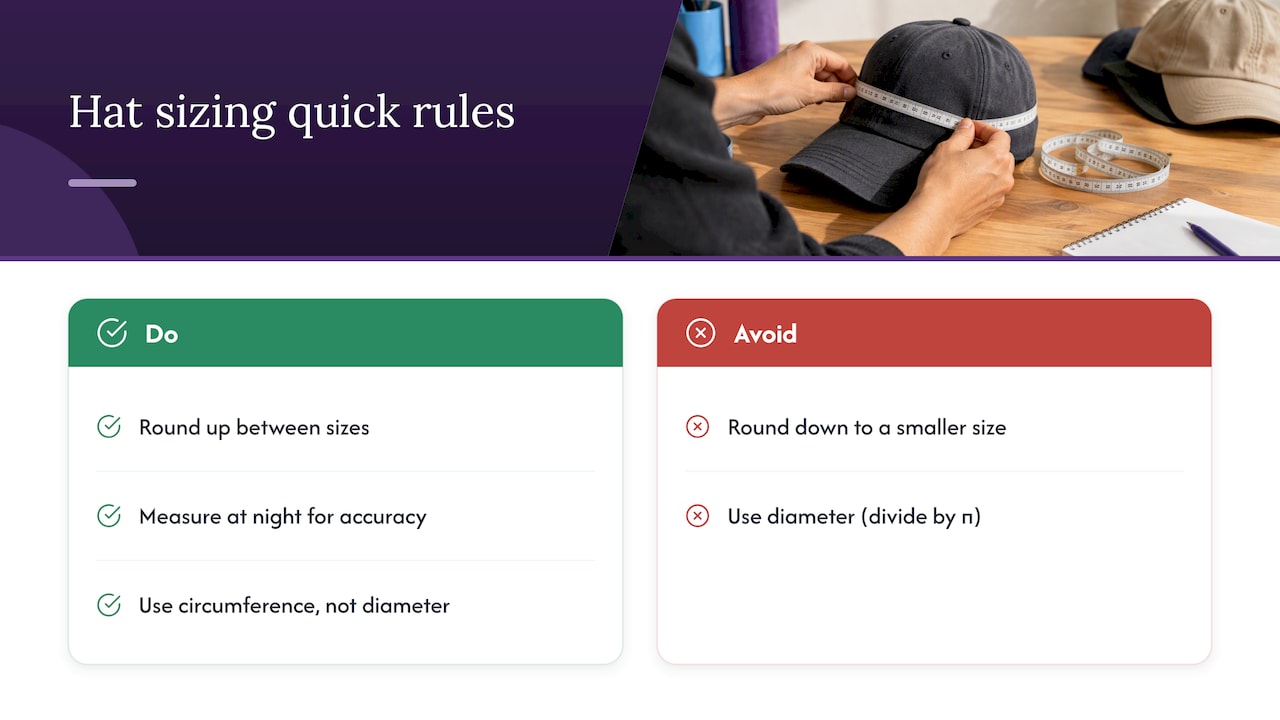
If your measurement lands between two rows, round up rather than down. A hat that is slightly loose is comfortable; one that is tight gives you a headache by the third hour of an event.
So a head measuring 22 1/4 inches lands at US 7 1/8, a solid medium. One measuring 23 1/2 inches converts to a 7 1/2, which most brands label large to extra-large depending on their own cut.
Some charts explain sizing with circumference divided by pi, which gives you an approximate internal diameter. Circumference stays the preferred measurement because it accounts for the natural oval shape of a head, while a straight diameter reading does not.
Pro Tip: Measure at night if your head swells slightly during the day from heat or activity, since that gives you a more honest baseline number.
How Fit Changes Across Fitted Caps, Snapbacks, and Beanies
Your converted number is the starting point, but how a hat should actually sit depends on its style.
- Fitted caps have no adjustment, so they should match your measured size closely with a snug, consistent feel all the way around.
- Snapbacks and strapback adjustables give you a range, so aim for the middle of the stated size window rather than the smallest setting.
- Beanies stretch significantly, so a size that feels slightly tight when new usually relaxes into a comfortable fit after a few wears.
- Bucket hats run close to true to size but benefit from sizing up slightly if you plan to wear them with longer hair or in windy conditions.
Size up when you are between two chart rows, when you prefer a looser everyday feel, or when you measured with a liner or thick hair that will not always be in the way. Hat-size tape sold for the inside of a sweatband is an easy fix for a fitted cap that runs slightly big, and removable liners or foam pads solve the same problem from the inside out.
If you are sizing protective headgear rather than fashion hats, the rules change. Hardhats rely on their own suspension systems and safety standards, so always follow manufacturer inspection and fit guidance rather than a standard hat chart.
Pro Tip: When ordering online without trying a hat on first, choose the adjustable version of a style whenever one exists; it covers measurement error that a fitted cap won’t forgive.
Caring for Your Hat So It Keeps Its Shape
Structured hats and water do not mix well. Submerging a fitted cap or a felt hat tends to warp the brim and loosen the internal structure, so spot-cleaning is almost always the safer move.
- Use a foam cleaner made for headwear, since products like the Jason Markk foam hat cleaner are formulated safe for cotton, wool, felt, corduroy, and polyester.
- Skip dish soap as a go-to cleaner. It shows up often in online advice, but it is not formulated for headwear fabrics and can strip color or dry out certain materials.
- Store hats on a form or shelf rather than crushed in a drawer, which keeps the brim and crown from losing their shape over time.
- Keep hats out of direct sunlight for long stretches, since UV exposure fades color faster than regular wear does.
Hats are generally exempt from the Federal Trade Commission’s clothing care-labeling rule, which is why care instructions vary so much from maker to maker. When in doubt, treat your hat gently and spot-test any cleaner on a small area first.
Why We Take Hat Sizing Seriously
We have sold branded merch at our own events since our founding in 2015, and sizing mistakes cost everyone involved. A hat that runs too tight gets left at the merch table instead of worn out onto the dance floor, and that is a missed connection with the community we build our parties around.
Getting sizing right the first time means fewer exchanges at our events and more people repping our gear at the next SNB night. We built our own size notes around the same standard charts we walk you through above because getting the right fit helps customers trust the brand behind it.
— Slappersnbangers@gmail.com
Pick Up SNB Merch Sized the Right Way
Once you know your number, picking SNB gear is simple instead of a guessing game. We size our pieces against the same standard chart used above, so your measurement carries straight over to checkout.
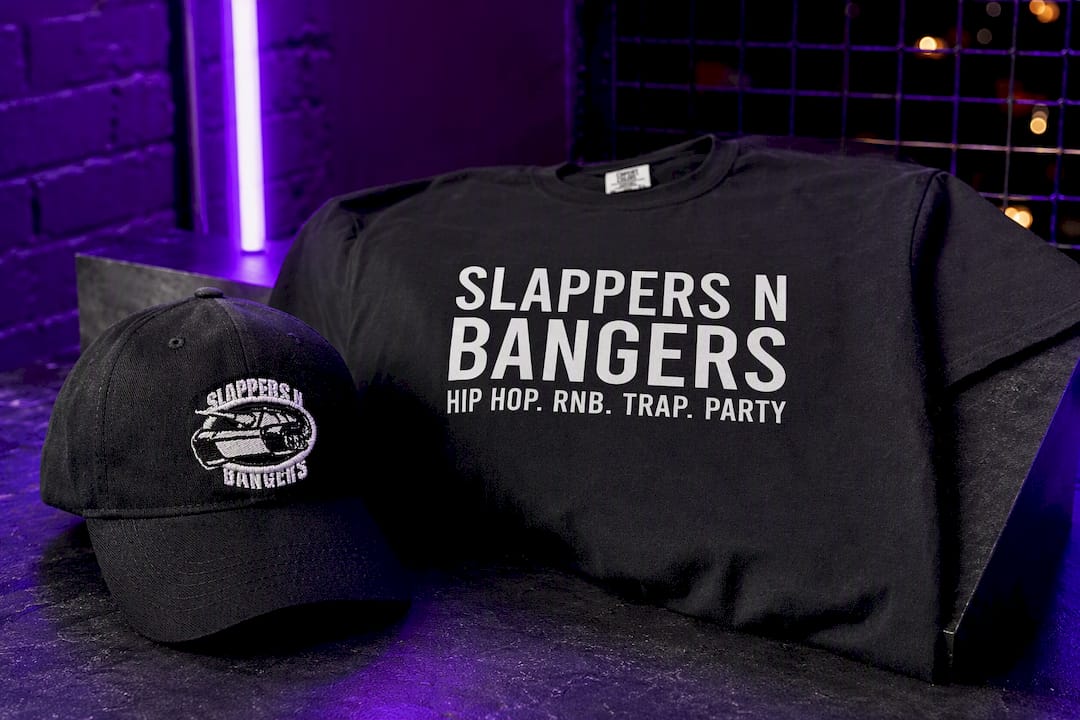
- The SNB Tank Hat runs true to standard adjustable sizing, so your converted US size fits comfortably with room to tighten the strap.
- The SNB heavyweight t-shirt runs slightly fuller in the body, which pairs well if you like a relaxed look at a party or outdoor set.
- New drops and limited runs show up regularly in our latest items, so checking back before an event is worth the habit.
| Item | Fit note |
|---|---|
| SNB Tank Hat | True to standard adjustable sizing |
| SNB heavyweight t-shirt | Runs slightly fuller through the body |
Measure first, then check the size guide on each product page before you add anything to your cart. If you want to see the gear in action, grab tickets to August SNB: 400 Degreez or catch the lineup at SNB’s 11th Anniversary and see the merch table for yourself.
FAQ
How do you know your hat size?
Measure around your head about one inch above your eyebrows and just above your ears using a flexible tape, then match that number to a standard hat size chart. Take two or three readings and use the average for the most accurate result.
Is hat size 7 3/8 medium or large?
A 7 3/8 generally falls in the large to extra-large range on most standard conversion charts, though exact labels vary slightly by brand. When a size sits near a label boundary, checking the specific maker’s own chart is the safer move.
Can I use dish soap to wash my hats?
Dish soap is not recommended as a universal hat cleaner since it is not formulated for headwear materials and can dry out or discolor certain fabrics. A foam cleaner made for hats is a safer choice for cotton, wool, felt, and similar materials.
Is a 7 1/4 hat size a big head?
A 7 1/4 sits right around the middle of the standard adult range, which runs roughly from 6 5/8 to 8 on most hat size charts. That puts it squarely in average territory rather than unusually large.
How does hat sizing work for costumes or character headwear?
Costume and character hats generally follow the same circumference-based sizing as everyday hats, though structured pieces may fit differently depending on the build. A costume-specific sizing guide can help when the headwear is part of a full costume rather than a standard cap.
Sources
- Hat Size Conversion Chart – Student Affairs | Baruch College
- Determine your hat size – Alfred University
- Jason Markk Ready-To-Use Foam Hat Cleaner, Ideal for Hat, Cap and Headwear Cleaning, Safe for Cotton, Wool, Felt, Corduroy, Polyester, 7oz
- Clothes captioning: complying with the care labeling rule | Federal Trade Commission