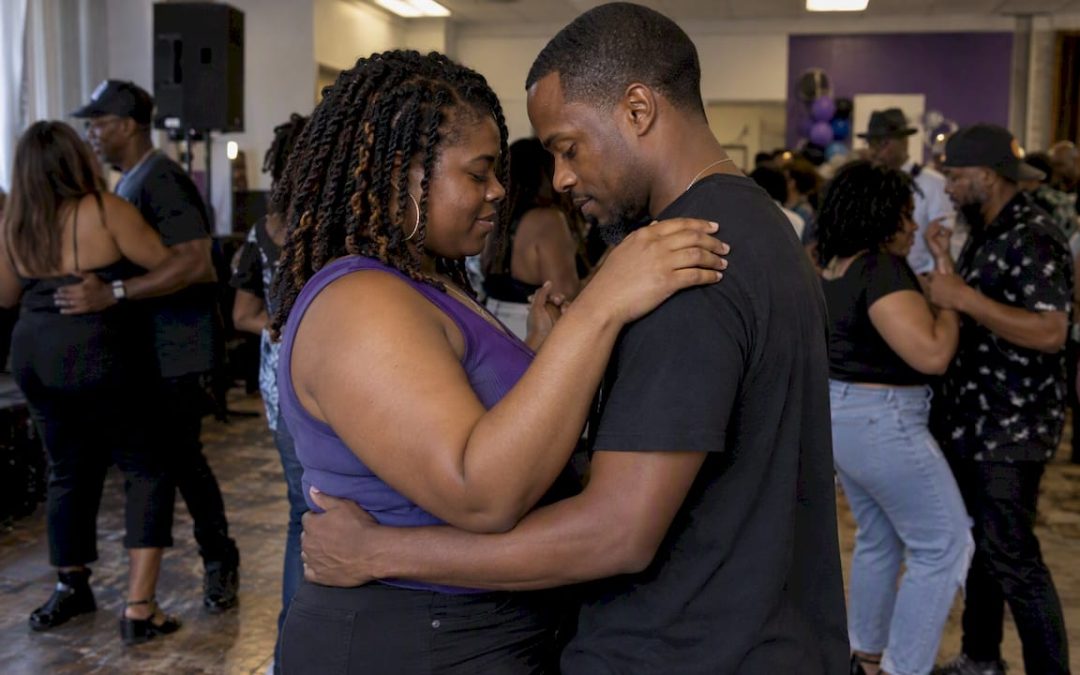
Slow jam dancing comes down to three things: a relaxed sway, a comfortable hold, and paying attention to your partner instead of your feet. You don’t need steps. You need to hear the song, shift your weight with it, and stay aware of the people packed around you.
That’s the whole secret. The rest of this guide shows you how to do it, what to do with your hands, how to handle a crowded floor, and which kinds of songs make it easiest.
TL;DR
- Slow dancing is a casual partner dance built on smooth, controlled movement, not rigid technique. A simple side-to-side sway is enough.
- Move from your weight shifts, not your arms. Keep your knees soft and your posture tall but relaxed.
- On a packed floor, keep it small. Sway in place and watch the couples next to you.
- Let the song set the style: softer and smaller for a ballad, a bit bouncier for a more upbeat slow track.
- Ask first, read the response, and never turn a slow song into a performance.
Table of Contents
- What a slow jam actually is
- The basic sway, step by step
- Hands, frame and eye contact
- Asking someone to dance
- Slow dancing on a crowded floor
- Don’t make it a performance
- Songs that make slow jam dancing easy
- Our take: why the slow jam belongs at a hip hop party
- Warm up with the faster side
- Find a floor to practice on
- FAQ
- Sources
What a slow jam actually is
A slow jam is a subgenre of R&B and soul. Tempos typically run from 50 to 80 beats per minute, and the lyrics center on romance and intimacy. The term was popularized by Midnight Star’s 1983 single “Slow Jam,” and radio formats like Quiet Storm, which started at WHUR-FM in 1976, helped make the sound a staple of Black adult-oriented radio.
That history matters on the dance floor. These songs were built for closeness. Cultural writers describe the slow jam as a narrative of intimacy that blends soul, R&B and jazz fusion, and the format has stretched from Marvin Gaye and Smokey Robinson in the 1970s to the 1990s run of Boyz II Men and Mariah Carey, and on to artists like SZA today.
So when the DJ pulls the tempo down, you’re not stepping into a different party. You’re stepping into the same culture, just slower.
The basic sway, step by step
The most effective beginner move is a gentle side-to-side sway, or a subtle forward-and-back step that matches the rhythm. Here’s how to build it.
- Find the pulse. Listen for the kick or the bass note. At 50 to 80 beats per minute, it arrives less often than you expect, so don’t rush it.
- Stand tall, knees soft. Experts recommend standing tall but relaxed with soft knees so you don’t lock up.
- Shift your weight. Move your weight from one foot to the other on each beat, or every other beat for the slowest songs. Your feet follow your weight.
- Add a small step. Once the sway feels easy, step slightly to the side with each shift. That’s it.
- Match the song. A heavy ballad wants smaller, softer movement. A slow track with more bounce can take a wider sway.
Slow songs make people drift ahead of the beat. Practice guides for slow music point out that because the beat arrives less often, dancers tend to cut movements short or rush. Breathe, and let the beat come to you.
Practice at home first
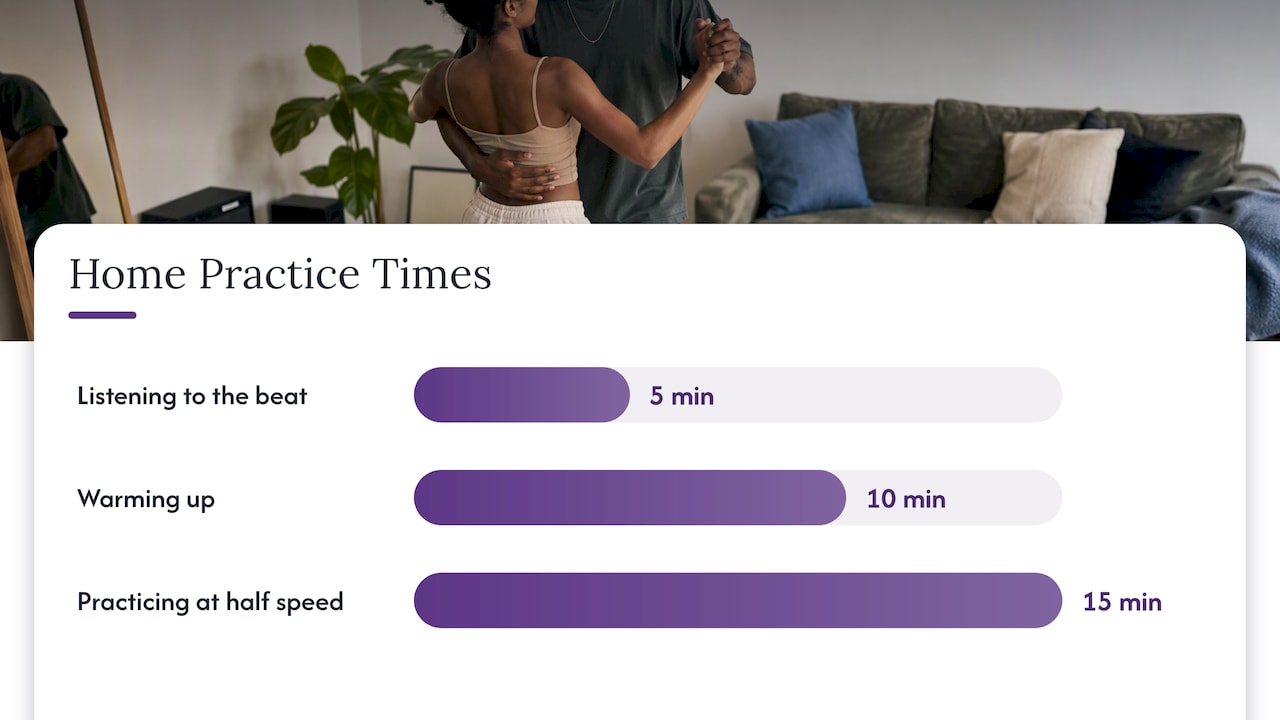
If you want to feel less stiff before a night out, one 2026 practice guide suggests 5 minutes listening to the beat, 10 minutes warming up, and 15 minutes practicing at half speed. Put on a slow jam playlist and sway alone. It sounds silly, and it works.
Hands, frame and eye contact
A ballroom studio will teach a rigid frame. Social slow dancing is looser. Your arms should feel supportive, not restrictive, and the most common error is using arms to force movement instead of shifting body weight.
Here are some common holds, from most casual to closest:
- Hands on shoulders or upper arms. Easy, friendly, and good with someone you just met.
- One hand on the waist or lower back, one hand holding your partner’s hand. The classic.
- Arms around the neck and waist. For partners who are already close.
Whatever you choose, keep the connection conversational. If your partner pulls back, loosen up. If they lean in, follow.
Don’t stare the whole song
Holding eye contact from start to finish gets overwhelming fast. Experienced dancers alternate their focus: a look around the room, a glance over a shoulder, a check-in with their partner’s expression now and then. It keeps things intimate without the pressure.
Skip the dip
Dips look great and go wrong often. If you do try one, the follower engages their core to hold their own weight while the lead braces and guides, rather than doing all the lifting. On a crowded party floor, our advice is to save it for the kitchen.
Asking someone to dance
The approach matters as much as the sway. Wikihow’s partner dance guide suggests that if the person says yes, you wait for the next song to start, take their hand, and lead them to an uncrowded spot with room to move.
A few practical notes:
- Ask plainly. “Want to dance to this one?” works every time.
- A “no” or a hesitant answer is a no. Say thanks and move on.
- Check in once the song starts. A quick “you good?” costs nothing.
- Keep your hands where you both agreed they’d be.
We wrote a whole piece on dance floor etiquette, consent and floorcraft first, and every point applies double on a slow song, when people are closest.
Slow dancing on a crowded floor
This is the part instructors rarely mention. At a real party, the floor is full. The circles and traveling patterns from a studio don’t work. The best partygoers keep their steps compact, often just a subtle sway in place, and stay aware of neighboring couples.
What that looks like in practice:
- Claim a small patch and stay in it.
- Rotate slowly if you want to change your view, rather than traveling.
- Keep elbows in. Wide arms bump strangers.
- Watch for the people who are dancing alone or in a group nearby and give them space.
Dressing for it helps too. Closeness plus a hot, packed room is a lot, so our guide to indoor concert outfits that survive a packed show is worth a look before you go.
Don’t make it a performance
The most common beginner mistake is treating a slow dance like a show. Dance educators point out that focusing on doing moves instead of feeling the music costs you the connection that makes it fun.
That’s a relief, honestly. Nobody is judging your footwork at a party. If you’re swaying in time and paying attention to your partner, you’re doing it right.
A good way to remember it: the song is the lead, and you both follow it.
Songs that make slow jam dancing easy
If you’re picking music for a night in, a wedding playlist or a first practice session, look for songs in that 50 to 80 BPM range with a clear, steady groove. Here’s the lineage to browse by era:
| Era | What to look for | Artists to start with |
|---|---|---|
| 1970s | Smooth soul with warm bass | Marvin Gaye, Smokey Robinson |
| 1990s | Harmony-heavy R&B ballads | Boyz II Men, Mariah Carey |
| Today | Moody, modern R&B production | SZA |
Those artist names come from the music history of the format. Start there and follow the credits.
If you’re not sure where R&B ends and hip hop begins on a slow track, we broke it down in how to hear the difference between hip hop and R&B, even as the two keep blending.
Capturing the moment
If you’re dancing at a wedding or a big event and want a keepsake, it helps to see how professionals think about movement. This look at how a dancer’s eye sees movement is a good primer on why a still frame of a sway can say so much.
Our take: why the slow jam belongs at a hip hop party
We started Slappers N Bangers in Pittsburgh in 2015, founded by Arie Cole and NFD, because hip hop and rap fans didn’t have enough venues that welcomed the music. Our nights are built around experienced DJs who read the crowd, and reading the crowd includes knowing when to bring the energy down.
Here’s how we see slow jam dancing:
- It’s part of the culture, not a break from it. Hip hop and R&B grew up side by side. A smooth R&B moment in a set lets people breathe and connect.
- Community is the point. A packed floor where thousands of people dance together only works when everyone respects each other’s space. Slow songs test that the most.
- Expression beats technique. We’d take someone swaying and smiling over a perfect step any night.
- The DJ sets the mood. A good one reads the room and shifts the tempo at the right time. That’s the difference between a dance floor and a crowd.
If you’re new to this, start small. Learn the sway, ask politely, and let the song carry you.
— Slappersnbangers@gmail.com
Warm up with the faster side
Slow jams hit best when you’ve already loosened up. If you want to build confidence moving to a beat, try our 5 minute routine to learn hip hop dance basics at home. And if you’re curious what the faster half of a night sounds like, here are 27 hip hop party songs DJs rely on.
Find a floor to practice on
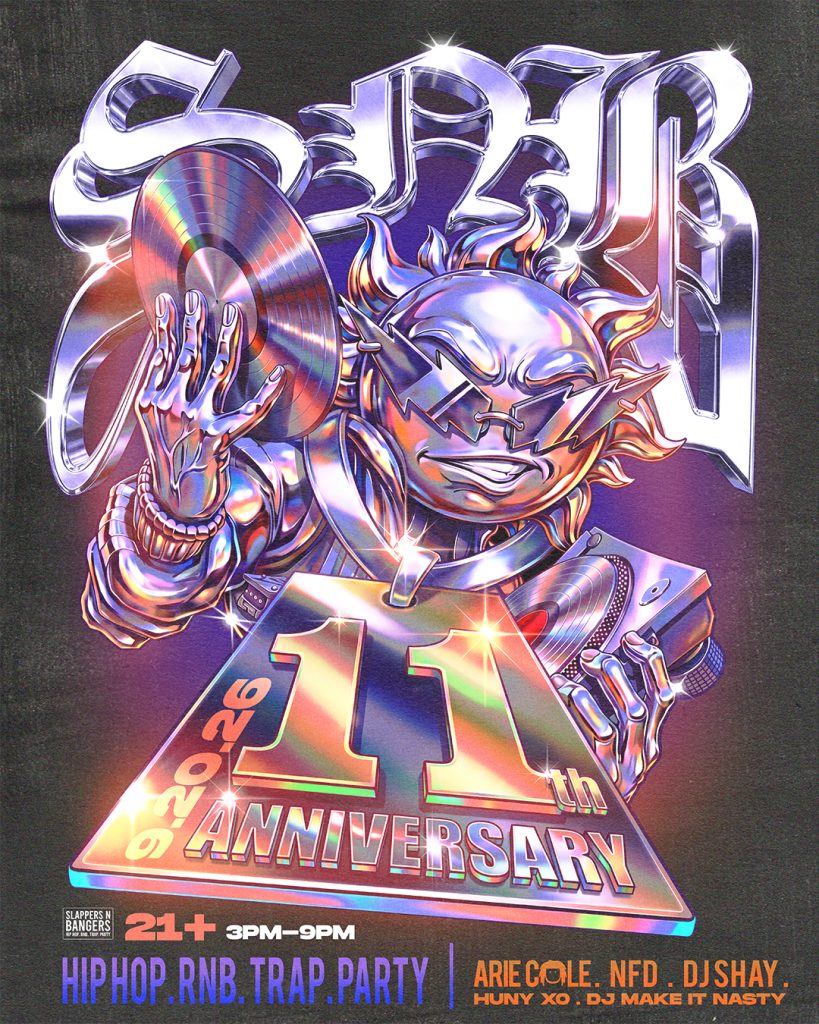
The best way to get comfortable is to do it live, with a DJ who knows how to move a room. Our events bring hip hop, rap and R&B to big indoor and outdoor spaces. Check our events page for the latest, including August SNB: 400 Degreez, and see the SNB 11th Anniversary and new and limited edition items on our home page. Ticket details are listed with each event.
FAQ
How do you dance to slow jams if you’ve never done it?
Start with a side-to-side sway, shifting your weight from one foot to the other in time with the beat. Keep your knees soft, your posture relaxed and your hands in a comfortable hold. You can add a small step to the side once the sway feels natural.
What’s the best way to slow dance in a crowded club?
Keep your movement small and stay in your own space. A subtle sway in place beats any traveling pattern when the floor is packed. Keep your elbows in and stay aware of the couples around you.
What is a slow jam, exactly?
It’s an R&B and soul subgenre with a slow tempo, usually 50 to 80 beats per minute, and romantic, intimate lyrics. Quiet Storm radio helped popularize the sound in the 1970s.
Where does the term slow jam come from?
The earliest known reference is a 1961 article in The Chicago Defender. The term spread widely after Midnight Star released “Slow Jam” in 1983.
Do I have to look at my partner the whole time?
No. Most experienced dancers look around the room and check in with their partner now and then. Constant eye contact can feel forced.
Sources
- Slow jam, Wikipedia
- Slow dance, Wikipedia
- Slow Jams, Grokipedia
- How to Slow Dance for Beginners, SFCOfDance
- How to Practice Dancing to Slow Music, SFCOfDance
- 4 Ways to Dance with a Partner, wikiHow