The short version: pick a small list of DJs who already play your sound, send a finished and properly labeled track before it’s public, keep the pitch to one short paragraph, and follow up once. Blasting a thousand inboxes doesn’t work. Showing a DJ you know their sets does.
We throw hip hop, R&B and trap parties in Pittsburgh and beyond, so we see this from the dance floor side. A DJ has maybe four seconds of patience for a stranger’s file. Everything below is about spending those four seconds well.
TL;DR
- Build a list of 20 to 40 DJs who provably play your style, not a mass list. Practitioners report this beats a blast to 1,000 random contacts.
- Send a private streaming link plus a WAV download, named clearly, with BPM and key in the metadata.
- Keep the pitch under about 120 words and give a specific reason you picked that DJ.
- Send it 6 to 8 weeks before release, while the DJ can still be the first to play it.
- Real relationships, in person and online, do more than any submission form.
Table of Contents
- Why Most Submissions Get Ignored
- Step 1: Get the Track DJ-Ready
- Step 2: Build a Short, Smart Target List
- Step 3: Write a Pitch a DJ Will Actually Read
- Step 4: Time It and Follow Up
- Where Submissions Fall Short: Go Where the DJs Are
- Our Perspective: What We See From the Booth Side
- See What a Crowd-First Night Looks Like
- Don’t Forget the Business Side
- A Simple Checklist Before You Hit Send
- FAQ
- Sources
Why Most Submissions Get Ignored
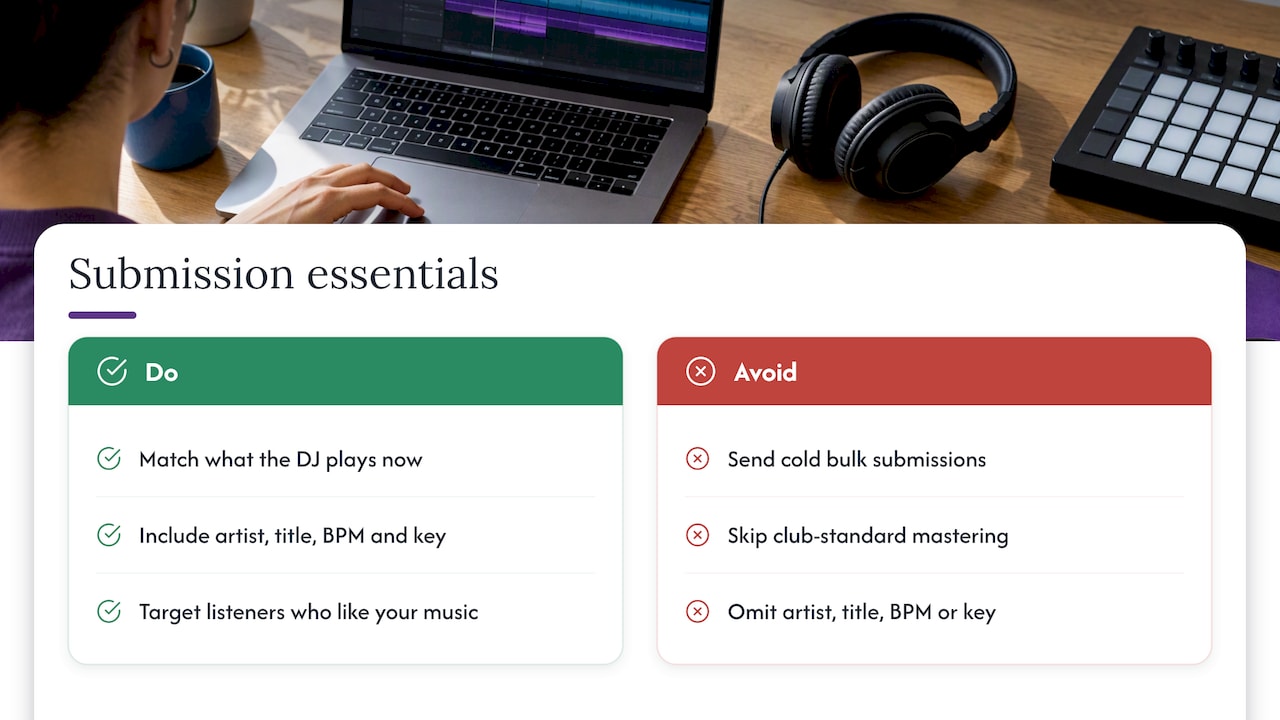
DJs in busy genres like hip hop and trap work fast. A track that isn’t mastered to club standards or lacks basics like artist, title, BPM and key often gets dropped without a listen, because it doesn’t fit a high-speed workflow.
The other common failure is relevance. A drill-leaning rapper emailing a house DJ is wasting everybody’s time. Cold emailing and bulk submissions are frequently treated as spam, and the most important factor in getting a reply is whether your track fits what that DJ plays right now.
Marketing pros say the same about the bigger picture: the era of massive blind promo blasts is effectively over. What works is being relatable, human, and aimed at listeners who already like what you make.
Step 1: Get the Track DJ-Ready
Before you email anyone, fix the file. A DJ shouldn’t have to guess what they’re holding.
- Finish it. Send a properly mixed and mastered track, not a rough demo you plan to replace.
- Name it clearly. Use a pattern like “Artist – Title (Mix).wav”. Current guidance also says to embed BPM and key so DJs can search and sort quickly.
- Offer more than one version. Clean, dirty, instrumental and acapella versions are what a working party DJ actually uses. Label each one.
- Know your tempo. Hip hop crowds move differently at different speeds. If you produce, our breakdown of trap at 65 to 88 BPM versus boom bap at 85 to 95 shows how tempo and 808 tuning affect what a DJ can blend.
- Skip the heavy attachments. Send a private streaming link, such as an unlisted SoundCloud, plus a WAV download link. Nothing attached to the email.
A quick check for mix-friendliness
Play your track right after a record from the DJ’s own sets. Does the intro give them room to bring it in? Does the energy fit? Tracks with a short, clean intro and a clear drop are easier to drop into a set. That’s a practical detail, not a rule, but DJs notice it.
Step 2: Build a Short, Smart Target List
This is where the work is. Spend more time here than on writing the email.
- Find DJs who play your sound. Look at recent setlists, mix uploads, radio show tracklists and chart posts. If a DJ has supported three artists like you in the last few months, they’re a fit.
- Sort by reach. Mix some local club and party DJs, some mixshow and radio DJs, and a few bigger names. Locals answer more often, and they’re the ones who can try a track in front of a real crowd.
- Note one specific thing per DJ. A mix you liked, a record they broke, a night they run. You’ll use this in the pitch.
- Keep the list small. Aim for 20 to 40 hand-picked DJs rather than a giant list.
- Track replies. A simple spreadsheet with date sent, link, response and follow-up date is plenty.
Streaming-style submission platforms exist where artists pay a small fee per contact for a guaranteed listen and feedback. One such service lists fees starting at about $2 per contact as of 2026, with a response window and a credit back if the curator doesn’t answer. They can be a decent supplement for reaching people you can’t find yourself. They don’t replace a targeted list and a real relationship.
Step 3: Write a Pitch a DJ Will Actually Read
Industry professionals suggest keeping it under 120 words, or one paragraph. It should say who you are, what the track is, and why you’re writing to this particular DJ.
Here’s a template you can adapt:
Subject: Artist Name – Track Title (Pittsburgh, 94 BPM, A minor)
Hey [DJ name], I loved how you opened your [mix or night] with [specific track]. I’m [Artist], a rapper from [city]. My new single “[Title]” sits around 94 BPM and I think it would fit right where you take the room from the first hour into peak time. Private stream: [link]. WAV download: [link]. Clean and dirty versions are in the folder. It drops on [date]. Thanks for listening, [name, social handle].
What makes that work:
- The subject line has the facts a DJ needs to decide whether to open it.
- The reason for contacting this DJ is specific and true.
- The links are ready. Nothing needs to be requested.
- The release date is clear, so the DJ knows they have exclusivity.
And what to leave out: your life story, a wall of press quotes, five tracks at once, or a sentence like “this is going to blow up.” Send one track. If they like it, they’ll ask for more.
Step 4: Time It and Follow Up
Send before release
Exclusivity drives support. Sending 6 to 8 weeks before the official release gives a DJ time to road-test the track while it’s still exclusive. Once a song is already everywhere, the incentive to break it shrinks. Most promo guides repeat this rule, including this one on promo mailings.
Follow up once
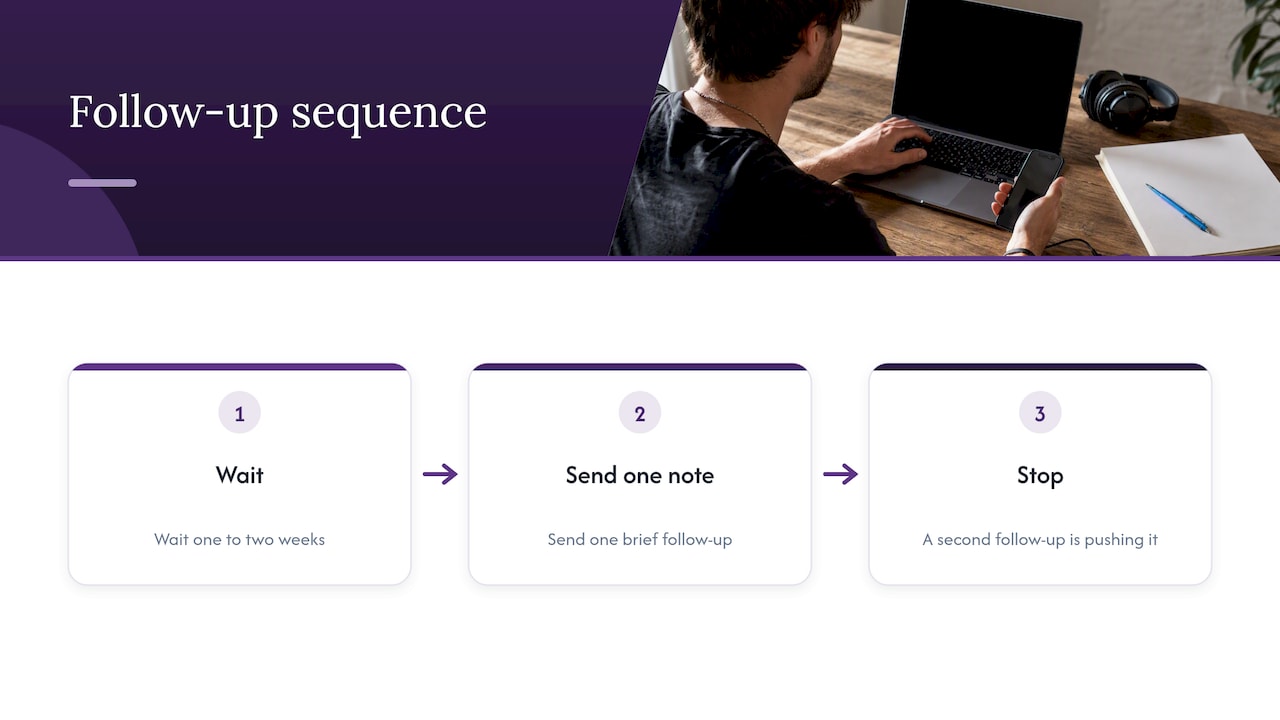
If you hear nothing in a week or two, send one short note: “Just checking you got the link. Happy to send a different format.” Then move on. Two follow-ups is pushing it. If a DJ does play your track, thank them publicly and tag them. DJs remember who made them look good.
Ask for feedback, not favors
A reply like “not for me” is still useful. Ask which part didn’t work, and say thanks. Next release, that DJ may take your email more seriously than you’d expect.
Where Submissions Fall Short: Go Where the DJs Are
Email is only one lane. For hip hop especially, a lot of DJ support happens face to face.
- Go to the nights. Show up at events in your scene regularly. Be a person, not a username. Buy a ticket, dance, and talk to people.
- Hand over music in person. Ask first, and have a QR code or short link ready, not a thumb drive pitch mid-set.
- Study the sets. Our guide to 27 hip hop party songs and plug-and-play sets DJs rely on shows what party DJs reach for, and our look at open format DJ transition techniques shows how they move between genres. Knowing that helps you make something a DJ can actually use.
- Build your own base. Artists who own direct relationships with fans through email lists, Discord or in-person community events often sustain longer careers than those who depend on social media algorithms. Our friends in the beat world make a similar point about gaining fans as an independent artist through real connections instead of mass submissions.
One more thing. When a local crowd hears you, that’s data a DJ trusts. We wrote about why a $30 ticket can do more for a local artist than 500 streams, and the same logic runs the other way: if you show up and support the scene, the scene notices.
Our Perspective: What We See From the Booth Side
We started Slappers N Bangers in 2015 because Pittsburgh didn’t have enough rooms that treated hip hop and rap like they mattered. Since then, our whole approach has been experienced DJs reading the crowd and playing hip hop, R&B and trap the way it’s meant to be played.
That shapes how we think about music submissions. A DJ reading a crowd isn’t hunting for novelty. They’re asking whether a record keeps the floor moving, fits the moment, and feels right next to what came before. The artists who earn support understand that. They make music with the room in mind, they show up to the room, and they treat the DJ like a collaborator instead of a billboard.
So our advice is simple. Be specific, be early, be easy to work with. Come to the parties. Learn what a packed dance floor does when a certain tempo drops. Then send the track, once, with a note that proves you did your homework. We’d rather you send fewer emails and make more friends.
— Slappersnbangers.com team
— Slappersnbangers@gmail.com
See What a Crowd-First Night Looks Like
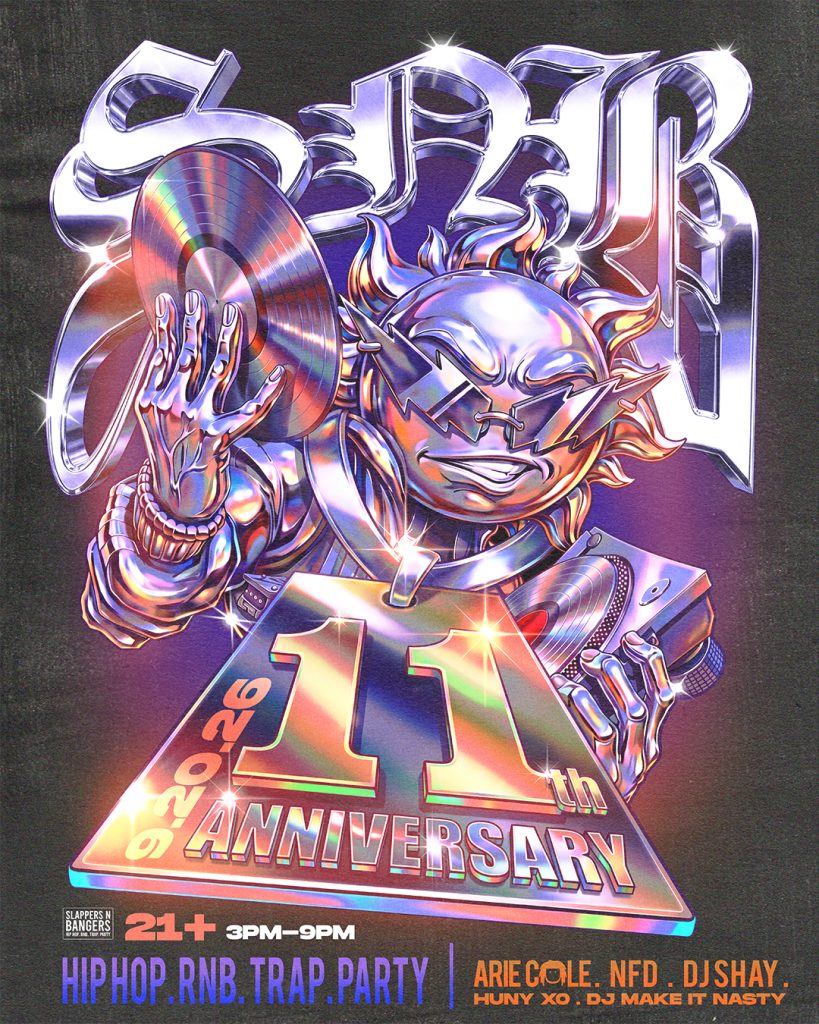
If you want to see how DJs read a room, come to one of ours. Check the August SNB: 400 Degreez event page for the latest, and meet the Pittsburgh DJs behind 400 Degreez. Our SNB 11th Anniversary and limited edition merch is on the home page too. Tickets and merch are how you support what we do, and standing on our dance floor is the best research you can do for your next record.
Don’t Forget the Business Side
Getting played is one half. Getting paid is the other. In the U.S., SoundExchange is the organization designated by the government to collect and distribute digital performance royalties for sound recordings, from services such as SiriusXM, Pandora and webcasters. It reports having passed $13 billion in distributions to more than 800,000 music creators. If your track gets radio or streaming plays, check whether you’re registered. For questions about your own rights and contracts, talk to a music attorney or your performing rights organization.
A Simple Checklist Before You Hit Send
| Check | Done when |
|---|---|
| Track is final | Mixed and mastered, no placeholder vocals |
| File naming | “Artist – Title (Mix).wav” with BPM and key embedded |
| Versions | Clean, dirty, instrumental, acapella labeled |
| Links | Private stream plus WAV download, both tested |
| Target list | 20 to 40 DJs who play your sound |
| Pitch | Under 120 words, one personal detail |
| Timing | 6 to 8 weeks before release |
| Follow-up | One reminder in a week or two, then stop |
FAQ
How do I get a DJ to play my song?
Make it easy and relevant. Send a finished track to DJs who already play your sound, with a short personal pitch and clean links. Then show up where they play, because DJs support people they know.
Should I pay to submit music to DJs?
It’s optional. Some platforms charge a small fee per contact in exchange for a guaranteed response window, and some mixshow lists charge a few dollars per submission. They can widen your reach, but a targeted list and real relationships usually matter more. Never pay anyone who promises a guaranteed spin or a hit.
What file format should I send?
Send a private streaming link for a quick listen and a WAV download for actual use. Name files clearly and embed the BPM and key. Avoid big email attachments, since they clog inboxes and get ignored.
When should I send my music to DJs?
About 6 to 8 weeks before the release date. That gives DJs time to test it in sets while it’s still exclusive. Sending after release lowers the incentive for them to break it.
Can I just message a DJ on social media?
You can, but keep it short and personal, and don’t open with a link drop. A real comment on their mix first, then a polite note with your private link, lands better than a cold DM. If they don’t reply, don’t chase.
Sources
- How to Get DJs to Play Your Track: Promo That Actually Works
- How to Promote Your Music to DJs: A Practical Guide for Independent Artists
- Producers: how to get your music played by DJs (MusicRadar)
- Authentic Community Building in Marketing & Artist Management (Music Business Association)
- Get your track heard by DJs
- How to Get DJs & Playlists to Play Your Music: 8 Proven Tips
- Digital Performance Royalties (SoundExchange)
- SoundExchange tops $13B distribution milestone