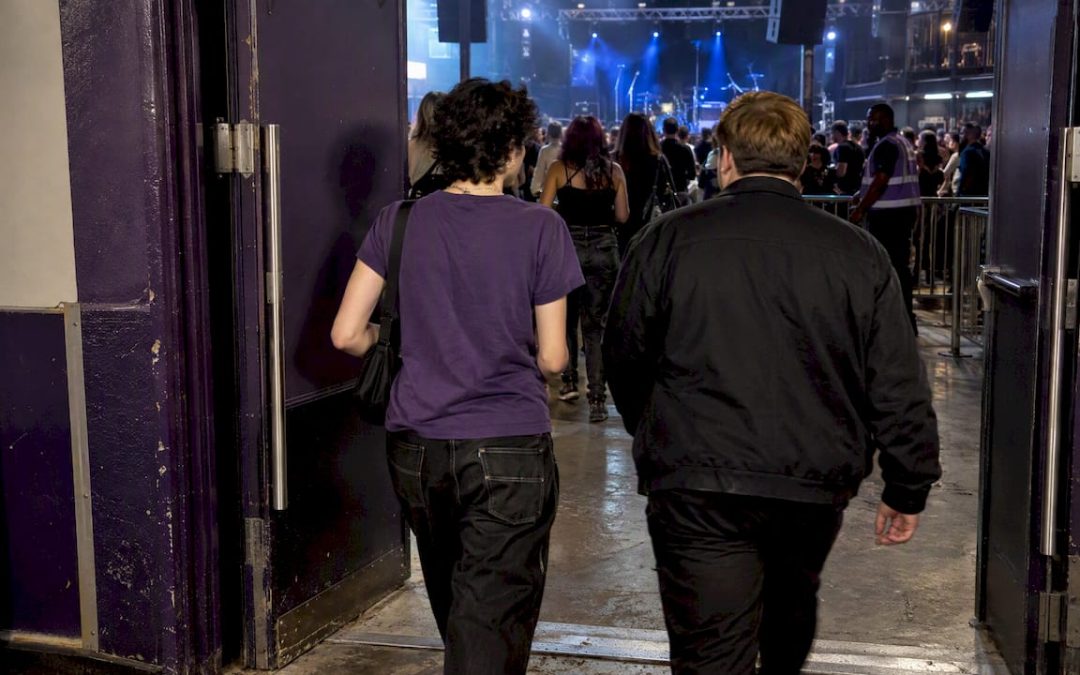
Doors is the time the venue opens for entry; show time is when the scheduled performance begins. Per Ticketmaster’s guidance, venues typically open doors 60 minutes before the event starts. Want a front-floor spot? Be in line at doors. Have an assigned seat? Show up close to show time. Chasing merch or food? Come right at doors.
TL;DR:
- Ticketmaster’s typical gap is 60 minutes, but venue gate times can differ, so confirm your ticket and the venue’s official calendar before leaving.
- Show time usually marks the opener, not the headliner; check published set times, since support acts and changeovers can push the main act later.
- For a front floor general admission spot, arrive by doors or earlier; assigned seat holders can arrive near show time and skip early queues.
- For merchandise or will call, arrive at doors, but check box office hours because ticket pickup may begin before the gates open.
- VIP guests should check confirmation emails and venue FAQs for a separate gate or entry window, which may differ from general admission doors.
Table of Contents
- What does “doors” actually mean at a concert?
- What does “show time” mean, and when does the headliner play?
- How long is the gap between doors and show time?
- When should you arrive? A plan based on your priority
- How do VIP and early-entry tickets change your arrival?
- What should you check before you leave the house?
- What do organizers know that fans do not?
- Plan your night with Slappers N Bangers
- FAQ
- Sources
What does “doors” actually mean at a concert?
Doors is the moment a venue officially opens its entrances to the public. Nothing else on your ticket matters until that clock hits, because the line, the security check, and the bar all hinge on it. Think of it as the starting gun for your night, not the start of the music.
Once doors open, here is what usually switches on:
- Box office and will-call open for ticket pickup and last-minute purchases.
- Security screening begins, including bag checks and ID checks.
- Concessions and bars start serving.
- Merch tables open for business.
- Re-entry rules kick in, so find out whether you can step out and come back.
Not every venue runs on the same rhythm. A club might open doors a short while before the first act, a theater keeps a tight, ticketed flow, and a stadium can stretch its schedule across an entire afternoon. Venues also publish their own gate times, and those can differ from what a ticketing site shows at first glance.
One habit saves a lot of grief: treat the venue’s official page and your ticket confirmation as the final word. The Regency Ballroom’s FAQ, for example, points guests to the venue calendar or ticketing platform for current door times and advises against lining up before the stated door time.
Pro Tip: Screenshot your door time and gate info the night before. Cell service gets rough once thousands of phones hit the same tower.
What does “show time” mean, and when does the headliner play?
Show time is the scheduled start of the performance program. That usually means the first act, not the name you bought the ticket for. If the ticket lists a show time, expect someone to walk on stage around then, and expect the headliner to arrive later.
Most bills follow the same order:
- Opener or openers kick things off at the listed show time.
- Support acts build the energy and often get longer sets.
- A changeover gives the crew time to reset gear and sound.
- The headliner closes the night.
Every extra act and every long changeover pushes the headliner back. A short opening set can put the main act on stage soon after show time. Several acts with slow resets can push it much later. Nobody can give you one tidy number, because it depends on the bill, the venue’s curfew, and how the night runs.
That is why the time on your ticket can mislead you. It tells you when the program begins, not when your favorite artist appears. If you only care about the headliner, hunt for published set times. Some artists, venues, and organizers post a schedule on social media or in a day-of email. When no schedule is out, the safest read is that the headliner lands well after the listed show time.
For a deeper look at how long nights run, see our breakdown of concert duration at hip hop and DJ nights.
How long is the gap between doors and show time?
The common rule of thumb comes straight from Ticketmaster’s help center, which says venues typically open doors 60 minutes before the event begins, though it varies by venue, artist, and event type.
Venues typically open doors 60 minutes before the start of the event, per Ticketmaster, so treat that hour as your baseline and adjust for your venue.
So why is there a gap at all? A few real-world reasons:
- Security checks take time when a crowd arrives all at once.
- Stage resets and soundchecks often wrap up right around doors.
- Staffing and concessions need a window to get set up and stocked.
- Crowd flow works better when people enter in a stream, not a rush.
The hour is a guideline, not a law. Large events can run on a very different clock. A published stadium event schedule from MetLife Stadium shows parking lots and will-call opening in the afternoon while stadium gates open later, and the box office can close once the main act takes the stage.
One more thing from our side of the table: when you hear about “late doors,” that usually points to a production delay, like a soundcheck running long, not an artist playing games. The wait is annoying, but it rarely means the show is in trouble.

When should you arrive? A plan based on your priority
Pick the one thing that matters most to you tonight, then arrive to match it. Door time is the pivot for almost every choice.
- General admission, front of the floor. Doors is your cutoff for a good spot. Some fans queue well in advance while others walk in at doors, and demand decides how early you need to be. For a high-demand show, plan to arrive well before show time. For a calmer night, arriving near doors is fine. Our guide on getting up front at standing room only shows goes deeper.
- Assigned seats. You do not need to rush. Arriving close to show time, or a bit after for many venues, skips the longest lines while still leaving time to settle in. Remember that the first act is on stage at show time.
- Merch, will-call, or meeting friends. Come at doors, or earlier if will-call opens before the gates. Check box office hours first. The stadium schedule linked above shows will-call opening hours before the main gates do.
- Headliner only. Aim for roughly show time plus the length of the openers, and check for published set times.
Gate-day checklist
- Photo ID (read why in our ID requirements guide)
- Ticket as a mobile screenshot or a printout
- A bag that fits the venue’s rules (see the clear bag policy breakdown)
- A parking or transit plan (our concert parking tips put the exit first)
- The will-call pickup window, if you are collecting tickets
A sample timeline for a typical indoor show
- T minus 90 to 60 minutes before doors: park or get off the train.
- Doors, about 60 minutes before show time: get through security, grab a drink, find your spot.
- Show time: the opener starts.
- Later: the headliner takes the stage, depending on how long the earlier sets and changeovers run.
Pro Tip: Going with kids? Arrival time also affects shade and noise exposure, and this guide to taking kids to concerts covers hearing and sun safety.
How do VIP and early-entry tickets change your arrival?
Premium tickets rarely follow the general line. VIP and early-entry holders often get a separate entry window or a different gate, and that detail may not appear on the main event page. Edgefield’s visitor guidance notes that premium ticket holders commonly have their own entry times or gate assignments and that guests should check ticket confirmations or venue FAQs for those instructions.
What to check before you leave:
- Your ticket confirmation email, which often spells out the VIP gate and entry window.
- The venue FAQ, where special entry lanes are usually explained.
- Venue and organizer social accounts, which post last-minute changes.
- Your entry window versus general doors, since they can be different times.
If two sources disagree, do not guess. Contact the venue box office or the ticketing platform as early as you can, ideally the day before. Standing in the wrong queue is the fastest way to lose the perk you paid for.
What should you check before you leave the house?
Run this list once and you cut most of the common gate-day surprises:
- Ticket confirmation email: look for door, gate, and will-call text plus special entry instructions.
- Venue FAQ or calendar: confirm gate times and box office hours. Ticketmaster and venue sites like the one above are the authoritative sources.
- Parking and transit: find out whether lots open earlier than doors, the way the stadium schedule above shows.
- Prohibited items and bag rules: a quick look at the policy keeps you out of the slow line.
- Phone battery and a backup copy of your ticket.
What do organizers know that fans do not?
From where we stand, doors is the anchor of the whole night. Staffing, sound, catering, and guest flow all get built around it, so when doors move, everything behind it moves too.
Our practical tips for you:
- Queue where staff point you. Wandering lines cause confusion at the gate.
- Make your merch run early. Right after doors, or between sets, beats the rush when the headliner is about to start.
- Do not trust one source. Cross-check the ticket, the venue page, and our social accounts.
And a reassurance: if doors run late, it is almost always a production delay, not a problem with the show. Stay patient, keep an eye on updates, and you will be inside soon enough. The biggest mistake we see is people treating the time on the ticket as the time the night starts for them. Your night starts at doors.
— Slappersnbangers@gmail.com
Plan your night with Slappers N Bangers
Check the event-specific details to plan your night. Event details are available on our events page, including August SNB: 400 Degreez, and you can browse everything we have going on at Slappersnbangers.

Want to skip the merch line? Grab your gear ahead of time:
Pre-buy, check the door time, and walk in ready to dance.
FAQ
How long between doors open and concert start?
Typically about an hour. Ticketmaster says venues usually open doors 60 minutes before the event starts, but it varies by venue, artist, and event type.
What does “doors 7pm” mean?
It means the venue opens its entrances to the public at the stated door time. Security, concessions, merch, and the box office usually start then, while the performance begins later at show time.
If a concert starts at 7, how early should I arrive?
It depends on your priority. For a front-floor general admission spot, arrive by doors or earlier, which is usually about an hour before show time. For an assigned seat, arriving near show time is generally fine.
Does the headliner play at the listed show time?
Usually not. Show time marks the start of the program, which often begins with an opener, so the headliner typically takes the stage later. Check for published set times when you can.
Sources
- When do the doors open? – Ticketmaster Help
- The Regency Ballroom
- When You Arrive – Edgefield Concerts