Most concerts and DJ-driven parties run between 2 and 5 hours from doors to exit, with the Stanford scheduling review placing a standard show at 3 to 4 hours from the first note to the last. That window isn’t one continuous block. It’s built from doors, openers, changeovers, a headliner set, and often an encore, and we’ve learned from running events of our own that knowing those pieces is what helps you plan a night out instead of guessing at it.
TL;DR:
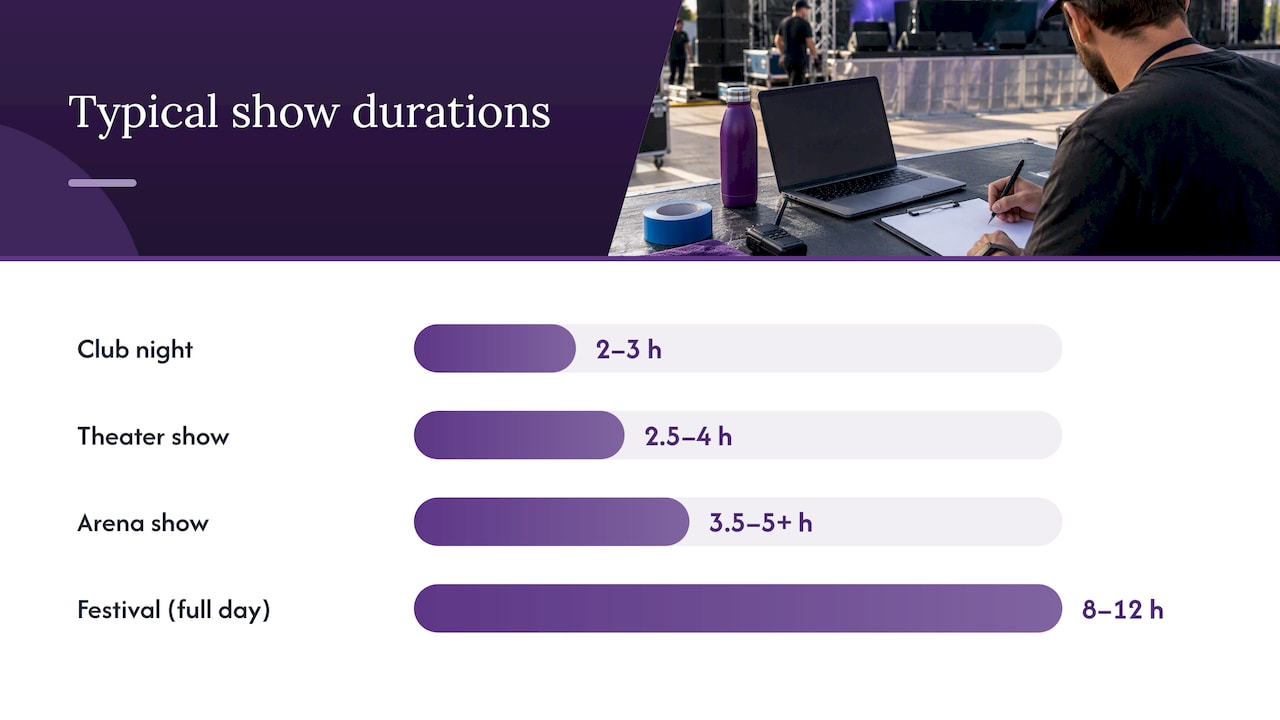
- Club nights typically last 2 to 3 hours, while arena shows can exceed 5 hours; festival days run 8 to 12 hours.
- Opening DJs usually play 30 to 45 minutes, while headliners run 60 to 120; continuous mix nights have few pauses, unlike announced set blocks.
- Add 30 to 45 minutes before the set you want to catch, because opener delays and quick changeovers can shift the schedule either way.
- Curfews, noise rules, licensing hours, and load out windows can shorten a show, so check the venue’s posted hours before planning travel.
- Organizers should publish doors, opener, headliner, and expected end times, and assign a stage manager to track act timing and transitions.
Table of Contents
- 1. Concert length by venue size and format
- 2. How DJ sets differ from live-artist sets
- 3. How to plan your arrival and departure
- 4. Building a realistic show flow as an organizer
- 5. Sample timelines you can copy for your own night
- 6. Variations in concert duration by region or country
- 7. How concert duration shapes the audience experience
- 8. What actually changes how long a show runs
- 9. What we plan for at Slappers N Bangers
- Where to experience this schedule in person
- FAQ
- Sources
1. Concert length by venue size and format
The room you’re walking into tells you a lot about how long you’ll be standing in it. A small club night built around one or two acts typically wraps in a few hours total, since there’s less production to reset between sets. A theater show with a proper opener and a headliner tends to stretch for several hours, and once you’re talking arena shows with multiple openers, production changeovers run longer and the full night can last quite a while.
Festivals split into two different experiences. A full festival day can run 8 to 12 hours across multiple stages, but if you’re there for one artist, your actual time investment might be a single 60 to 90 minute slot plus the walk in and out.
Headliner set length also shifts with who’s on stage. Legacy acts with decades of catalog tend to play longer sets than newer artists still building a discography, and headline DJs often run longer continuous blocks than a live band working through a fixed setlist. The Stanford review notes that a standard evening can include openers running 20 to 40 minutes, changeovers of 10 to 30 minutes, and a headliner set landing anywhere from 60 to 120 minutes, which adds up fast once you stack them.
Venue curfews matter too. City noise ordinances and venue contracts can force an early cutoff regardless of how the night is going, which is why some shows start promptly at doors while others let openers run a little long.
- Club night: 2 to 3 hours total, fewer acts, minimal changeover time.
- Theater show: 2.5 to 4 hours with one or two openers and a full headliner set.
- Arena show: 3.5 to 5+ hours with multiple openers and longer production resets.
- Festival: 8 to 12 hours for a full day, or a single hour-plus set if you’re there for one act.
2. How DJ sets differ from live-artist sets
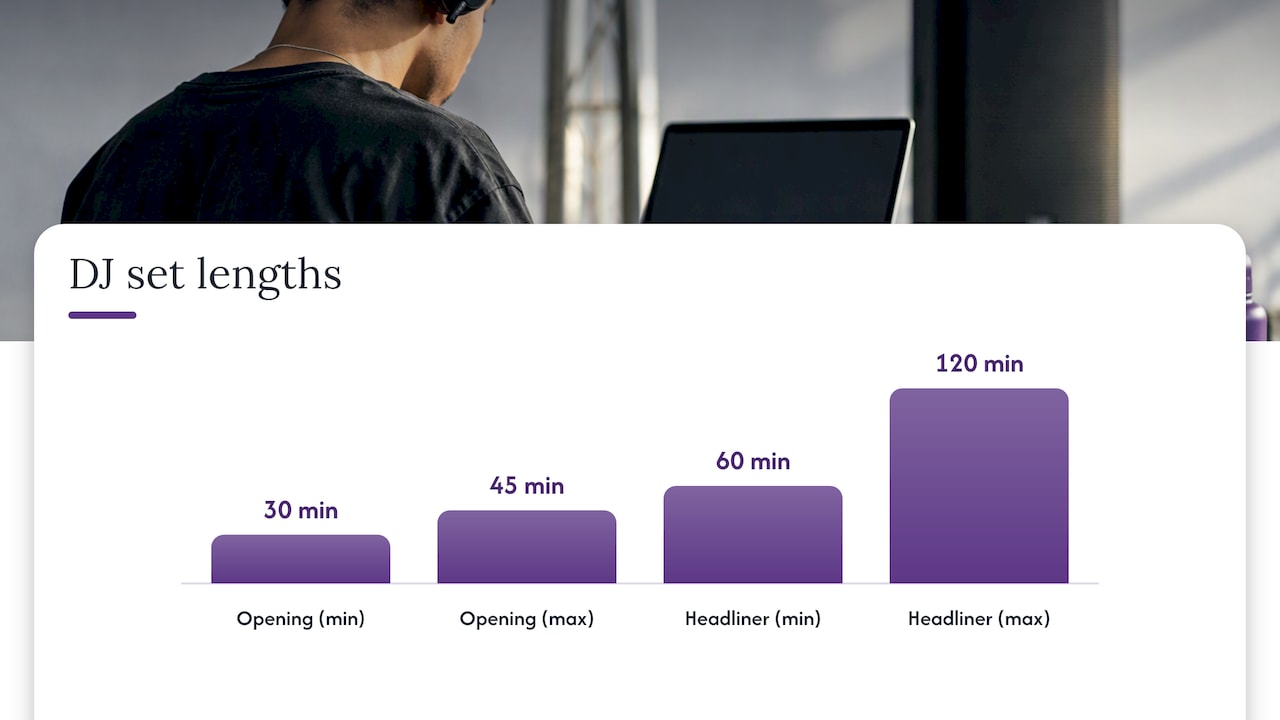
DJ-driven nights run on different math than a band-based show. An opening DJ typically plays around half an hour to three quarters of an hour, while a headlining DJ set commonly runs about one to two hours, though the exact length depends heavily on genre, the DJ’s style, and what the promoter books the night around.
Two formats show up most often. A continuous-mix party keeps the energy moving with DJs blending into each other with barely a pause, which means the dance floor rarely goes quiet. A segmented set night, by contrast, gives each DJ a clearly defined block with announced start and end times, closer to how a live concert schedules its acts. Each format changes what you should expect as an attendee: continuous nights reward showing up early and staying, while segmented nights let you time your arrival around a specific name.
Changeovers between DJs move much faster than changeovers between bands, since there’s no drum kit to strike or amps to reposition. That speed can tempt promoters to cut transition time too thin, but a planned handoff and a quick soundcheck still matter for keeping levels consistent and avoiding dead air. Our own open-format DJ breakdown covers the transition techniques that keep a floor full between sets rather than clearing it.
- Opening DJ set: 30 to 45 minutes, setting tone and building the room.
- Headlining DJ set: 60 to 120 minutes, varying with genre and promoter format.
- Continuous-mix party: DJs blend back to back with little or no pause.
- Segmented set night: Each DJ gets an announced block, closer to a concert schedule.
3. How to plan your arrival and departure
Showing up at doors guarantees you won’t miss anything, but it also means standing around longer before the show builds momentum. If you’re there for a specific opener, arrive before that set starts. If you’re only there for the headliner, give yourself around half an hour to three quarters of an hour of padding before their expected start time, since openers running long or early changeovers can shift the schedule in either direction.
Pack light but smart. Long nights on your feet call for comfortable shoes and layers you can adjust as the room heats up, and our indoor concert outfit guide covers what actually holds up through a packed show. If the venue allows outside snacks, our food-at-concerts packing list can help you avoid the two-hour hunger wall that hits right around the headliner’s first few songs.
Time your bathroom and food breaks during a changeover or an opener you’re less invested in rather than during the set you came to see. For parking, plan your exit route before you ever park the car: our parking and egress guidance is built around getting out fast, not just getting in easily.
- Arrival padding: Add 30 to 45 minutes before any set you don’t want to miss.
- Breaks: Use changeovers or less-essential openers for bathroom and food runs.
- Parking: Choose a spot based on exit speed, not just walking distance in.
4. Building a realistic show flow as an organizer
A show that runs on time starts with a handful of confirmations made well before doors. The Mi lays out the sequence: lock the venue, confirm curfew, finalize the lineup, establish a production contact, and nail down tech needs before building anything more detailed.
From there, minute allocations keep the night honest:
- Doors: Open 30 to 60 minutes before the first act to let the room fill without a rushed crowd.
- Opener sets: Budget 20 to 40 minutes per act depending on how many openers you’re running.
- Changeovers: Plan 10 to 30 minutes, with DJ-only bills needing far less than instrument-heavy lineups.
- Headliner set: Reserve 45 to 120 minutes based on the artist’s catalog and format.
- Encore: Leave 5 to 20 minutes if one is planned or likely.
- Load-out: Build in time after the last note for breakdown and venue turnover.
The MI.edu guidance is clear that someone has to own each checkpoint: the stage manager confirms act timing in real time, while the production lead handles technical handoffs between acts. Without a named owner for each transition, changeovers drift and the whole night slides behind schedule.
Safety planning belongs in the same checklist, not bolted on afterward. We enforce a 30-minute lightning rule at outdoor events, pausing the show and clearing exposed areas any time lightning is spotted within that range, and our rain-or-shine planning notes cover how we communicate delays without losing the crowd’s trust.
Pro Tip: Publish your show flow on the event page in plain terms, doors, openers, headliner, so attendees stop assuming a late opener means a disorganized night.
5. Sample timelines you can copy for your own night
Having a template in front of you beats building a schedule from scratch. Here are three starting points, each assuming a 30-minute padding buffer built in from the start.
- Club night: Doors at 9:00 PM, opener 9:30 to 10:00 PM, changeover 10:00 to 10:15 PM, headliner 10:15 to 11:30 PM, encore 11:30 to 11:40 PM, exit by midnight.
- Theater show with two openers: Doors at 7:00 PM, first opener 7:30 to 8:00 PM, changeover 8:00 to 8:15 PM, second opener 8:15 to 8:45 PM, changeover 8:45 to 9:05 PM, headliner 9:05 to 10:35 PM, exit by 11:00 PM.
- DJ-led party: Doors at 10:00 PM, opening DJ 10:15 to 11:00 PM, continuous transition into headlining DJ 11:00 PM to 1:00 AM, close and exit by 1:30 AM.
Build the 30-minute padding into whatever time you print on tickets, and state an expected end time rather than just a start time. That single addition cuts down on the most common complaint promoters hear, which is attendees feeling blindsided by how late a night actually runs.
6. Variations in concert duration by region or country
Show length isn’t governed by some universal standard. It bends around local noise ordinances, venue licensing, and the cultural expectations of a given scene. A city with strict residential noise curfews will push venues toward earlier doors and firmer cutoffs, while a market with looser enforcement gives promoters more room to let a night run long.
Venue type plays into this as much as geography. A market dense with standalone music halls can support later start times and longer headliner sets than a market where most hip hop and rap shows happen in multi-use venues that have to clear the room for another event. Licensing hours for alcohol service also shape the schedule indirectly, since a venue’s last-call time often sets a soft ceiling on how late the headliner can run.
Within the United States, this shows up city to city more than it shows up as a single national rule. A touring artist might play a 90-minute set in one market and a 75-minute set in another simply because the venue’s curfew is tighter. If you’re planning travel around a show, check the specific venue’s posted hours rather than assuming the schedule will match a show you saw somewhere else.
7. How concert duration shapes the audience experience
A night that runs too short can leave a crowd feeling like they paid for a fraction of what they expected, especially when a headliner’s set barely clears an hour. A night that runs too long without clear communication tends to produce the opposite problem: fatigue, thinning crowds before the encore, and attendees who leave early because they didn’t know how much longer things would go.
Clear expectations fix most of this before it becomes a complaint. When a promoter states an expected end time alongside the doors time, attendees pace themselves differently, they budget energy for a four-hour night instead of assuming the show wraps whenever the headliner feels like stopping. The Stanford scheduling review frames this as treating the evening in layers and communicating that show flow upfront, which cuts down on complaints about “late” starts when openers and changeovers were part of the plan all along.
Duration also affects how a crowd remembers the night. A well-paced two-hour set often lands better than a sluggish three-hour one padded with dead air between songs. Energy density matters more than raw runtime, which is part of why continuous-mix DJ formats tend to feel shorter than they actually are: there’s rarely a lull long enough to check the time.
8. What actually changes how long a show runs
Genre sets a baseline before anything else gets decided. Hip hop and rap shows built around a DJ and a rotating cast of guest features often move faster between songs than a live band working through instrumental breaks, which can compress or extend total runtime depending on how many guests are on the bill.
Artist popularity shifts the math too. A headliner with a deep catalog and strong ticket demand typically earns a longer set and more leeway on curfew from the venue, while a developing artist on an early tour might only have enough material for a tight 45 to 60 minutes. Neither is a flaw, it’s just where that artist is in their catalog and their draw.
Venue policy closes out the list of variables, and it’s often the least visible one to attendees. Noise ordinances, last-call timing, and contracted load-out windows can force a hard stop regardless of how the crowd is reacting. A venue with an early residential curfew will cut a show short compared to one with no such restriction, even with the same artist and the same setlist planned. Knowing a venue’s reputation for enforcing curfews strictly can tell you almost as much about expected runtime as the lineup itself.
9. What we plan for at Slappers N Bangers
Running hip hop and rap parties since 2015 has taught us that a good night is built, not improvised. We lean on a 30-minute lightning rule for outdoor shows, plan parking and exit routes before we plan anything else on site, and set DJ block lengths based on format: shorter headliner sets for high-energy segmented nights, longer continuous blocks when the room calls for one DJ to ride the whole peak. None of that happens by accident, it’s the same show-flow thinking any organizer should bring to a stage plot and a crew call. For the detail-level version of how we handle weather delays and exits, our rain-or-shine planning page and parking and egress guide walk through the specifics.
— Slappersnbangers@gmail.com
Where to experience this schedule in person
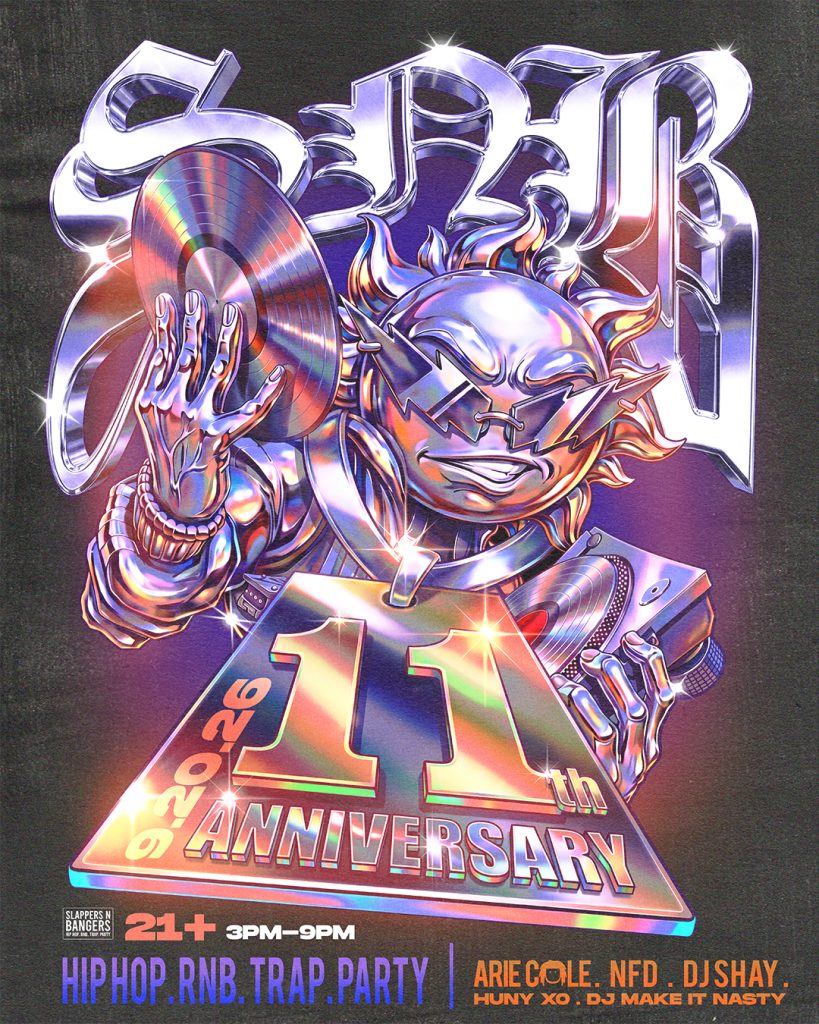
We built our reputation on hip hop and rap parties where the show flow is planned, not left to chance, so the dance floor stays full from the first DJ to the last song. Our SNB 11th Anniversary celebrations and the August SNB: 400 Degreez lineup both run on the same timing principles covered above, doors, DJ sets, and a planned exit, not a guessing game.

| What you get | Where to find it |
|---|---|
| Upcoming events and ticket details | SNB events page |
| Anniversary celebration and merch drops | SNB landing page |
| New and limited-edition merchandise | SNB landing page |
Check the events page for the next date near you and grab a ticket before the room fills up.
FAQ
How long does a typical concert last from start to finish?
A standard concert runs about 3 to 4 hours from doors to the final note, according to the Stanford scheduling review, though club shows can run shorter and arena or festival shows often run longer. Add 30 minutes of padding to any posted time to account for delayed starts or extended encores.
How long is a typical DJ set at a party or club night?
Opening DJ sets usually run 30 to 45 minutes, while a headlining DJ set commonly runs 60 to 120 minutes depending on genre and format. Continuous-mix nights can extend well beyond that since DJs blend into each other without a hard stop.
What should I add to my estimated arrival time?
Add 30 to 45 minutes of padding before any set you don’t want to miss, since opener delays or quick changeovers can shift the schedule earlier or later than printed. The Stanford review specifically recommends this buffer to avoid missing segments like a late headliner start or an encore.
Why do some concerts end earlier than others?
Venue curfews, noise ordinances, and contracted load-out times can force an earlier stop regardless of how the show is going. A theater with a strict residential curfew will end a night sooner than a standalone music hall with more flexible hours.
How does Slappers N Bangers structure its DJ-driven events?
We build our show flow around confirmed set-time blocks, a 30-minute lightning rule for outdoor safety, and parking plans that prioritize a fast exit over a short walk in. Our events page lists current set times and schedules for upcoming parties.
Sources
- How Long Is A Concert Schedule – Great Research
- How to Plan a Live Concert: Show Advance, Stage Plots, and Load-Out