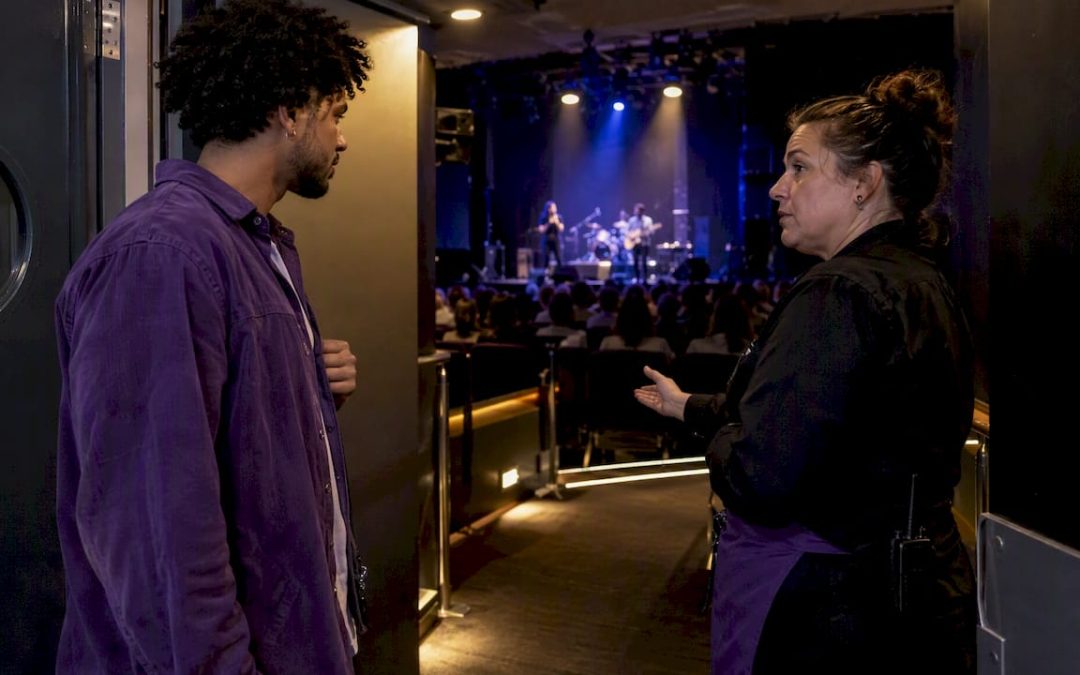
Late entry is usually allowed at commercial concerts and arena shows, but it is often restricted at classical, opera and theater-style performances. Either way, the venue decides, not your ticket. Before you head out, read the event page or the venue’s “Know before you go” section, because that text is the final word on whether you get in and where you stand or sit.
TL;DR:
- At strict seated performances, staff may hold latecomers in a lobby with monitors or refuse entry entirely, especially when a program has no intermission.
- Check the event page for late seating, intermission, and reentry rules; LA Phil recommends arriving 60 minutes early, while Pittsburgh Symphony advises 30 minutes.
- Reserved guests may wait at the back or in a lobby until a pause; late general admission arrivals may lose their place near the stage.
- Many venues prohibit reentry after scanning, so confirm before leaving; charge your phone, open your ticket, and carry ID before reaching security.
Table of Contents
- What late entry and late seating mean at the door
- The venue policy checklist that decides whether you get in
- Reserved seating vs general admission when you’re late
- Ticket and entry logistics to sort out before you travel
- If you’re running late: a step-by-step checklist
- Indoor vs outdoor concert venues: how late entry differs
- Late entry at festivals vs single artist shows
- What we’ve learned about late arrivals at SNB events
- Want predictable entry? Start with our events
- FAQ
- Sources
What late entry and late seating mean at the door
Two terms get mixed up. Late entry means you can come into the building after the show starts. Late seating means you can come in, but you may not reach your actual seat right away. Venues use these rules to protect the performers, the people already seated and the safety of dark aisles.
For most major commercial concerts and arena shows, late entry is permitted and tickets generally stay valid through the event. SeatGeek also notes that Broadway, classical, opera or ballet performances may restrict it. Hip hop, R&B and rap shows sit on the commercial side, but each venue still sets its own rules.
Here is what late arrivals commonly run into:
- Admission at a break: you wait until the end of a song, set or movement before staff let you in.
- Lobby holding area: you watch on monitors. At the Utah Symphony, latecomers may view the performance on monitors until they can be seated at a suitable interval.
- Back or side seating: staff place you out of the way until intermission, then you move to your assigned seat.
- A special gallery: some venues, like the Pittsburgh Symphony, offer a Latecomer’s Gallery for watching until you can be seated.
There are clear exceptions. Programs with no intermission may offer no late seating at all, and some venues say latecomers will not be admitted once the performance starts. Management or the conductor makes that call in the moment, so treat any late arrival as a favor, not a right.
The venue policy checklist that decides whether you get in
Before you leave home, check these items on the event page or venue FAQ. Together they predict your odds better than any rule of thumb.
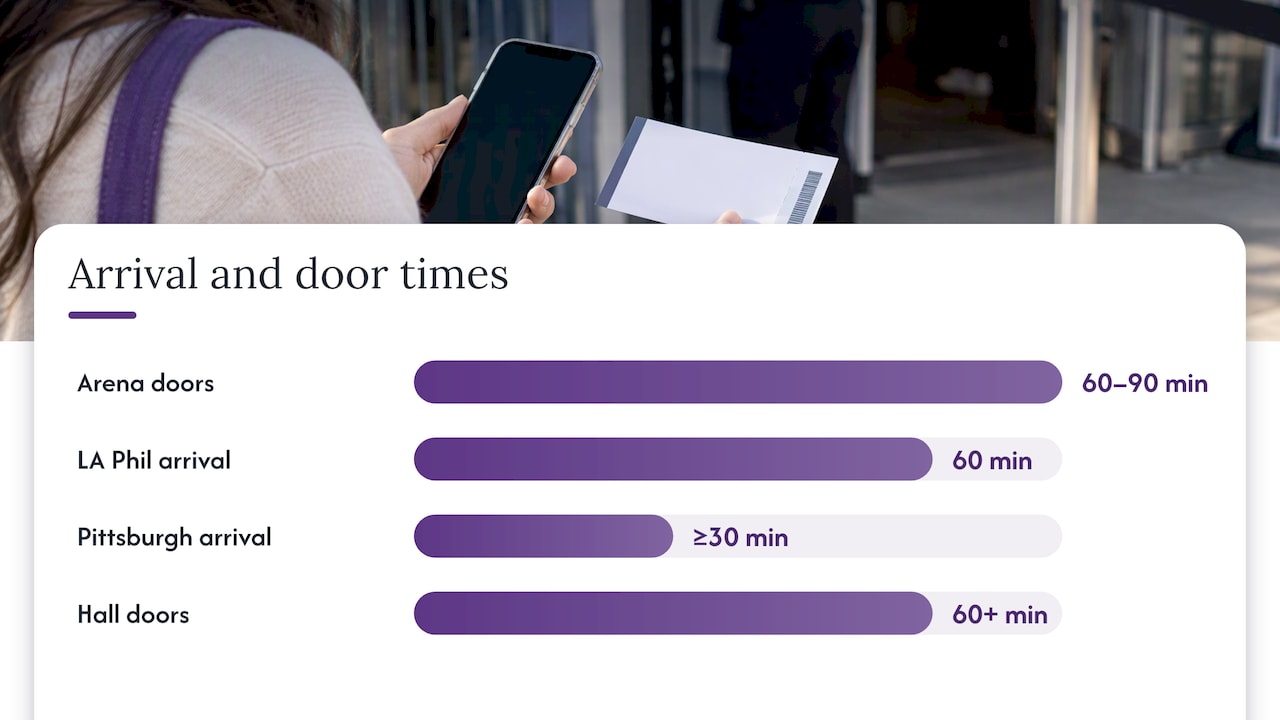
- Door and house times. Arena event pages typically publish door times, often 60 to 90 minutes before start, as SAP Center’s arena FAQs show. If doors opened well before you arrive, you have a big cushion.
- Late seating language. Look for phrases like “no late seating,” “seated at an appropriate pause” or “latecomers will be admitted during breaks.”
- Intermission structure. A show with an intermission gives latecomers a built-in entry point. A show without one does not.
- Re-entry rules. Many venues enforce no re-entry once your ticket is scanned. Hold that thought if you plan to step out for a call or a car charger.
- Bag, ID and security rules. These add minutes at the gate. Our guide on what happens when you forget ID shows how a missing document can end your night at the door, and a clear bag policy can decide which line you stand in.
- Where the rules live. Start with the event page, then the venue FAQ, then guest services if something is unclear.
LA Phil’s venue policies recommend arriving 60 minutes early to allow time for parking and security screening, and note that some programs without intermission offer no late seating.
Pittsburgh Symphony’s FAQ goes a step further and suggests arriving at least 30 minutes prior, with many halls opening doors an hour or more ahead. Event safety planners also care about this stuff: a practical guide to event safety explains why entry procedures and crowd flow rules exist in the first place.
Reserved seating vs general admission when you’re late
Your ticket type changes what “late” costs you.
With reserved seating, you own a specific seat, but you may not get to it on your schedule. Staff may hold you until a pause, walk you in with a flashlight or park you at the back until intermission. At strict venues, your reserved seat is not guaranteed once the show begins.
With general admission (GA), there is no seat to protect, but there is a position to lose. Arrival order often decides how close you get. Some arenas run wristbanding and queue processes for GA shows, and Ball Arena’s policies and FAQ point out that GA rules vary by event. If you show up late to a packed floor, expect to start at the back. Our tips on getting up front at a standing-room show cover how early arrivals win that fight.
What that looks like in practice:
- Reserved and late: expect to be held, escorted or sent to a lobby monitor at strict venues.
- Reserved at a commercial show: you will likely walk right in, though aisle traffic may slow you down.
- GA and late: you get in, but the front is gone and the wristband line may be closed.
- GA and very late: check whether the venue still scans tickets after the opener, since some floors fill up and close.
If front-row energy matters to you, the fix is simple: arrive earlier, not faster.
Ticket and entry logistics to sort out before you travel
Most late-entry trouble starts with small avoidable problems. Handle these before you leave:
- Load your mobile ticket now. Open it, confirm it shows, and take a screenshot only if the venue allows it.
- Charge your phone, and carry a small battery pack. A dead phone is a dead ticket.
- Know how to transfer tickets. If a friend arrives separately, our walkthrough on mobile ticket transfers shows how to send a ticket.
- Confirm your entrance. Large venues often have separate gates for GA, reserved and VIP. The event page usually says which one to use.
- Plan parking and egress. A five minute walk versus a 45 minute exit can swing your whole night, so pick the lot with arrival and departure in mind.
- Pack light. Bag checks lengthen lines, and some arenas such as TD Garden publish bag and security restrictions you should read in advance.
- Call guest services if you will be very late or have an accessibility or medical need.
Pro Tip: Screenshot the venue’s late entry or “Know before you go” text and keep it on your phone, so you can show staff exactly what you read if the gate rules differ from what you expected.
If you’re running late: a step-by-step checklist
Already in the car? Work through this in order:
- Check the event page for late-seating language, door times and the correct entrance.
- Charge up and open your ticket in the app before you reach the gate, with ID in hand.
- Carry the smallest bag you can. Anything that triggers a bag check slows you down.
- Tell a staff member you arrived late as soon as you reach the entrance, and ask where latecomers wait or watch.
- Follow the escort or hold instructions. Fighting them can cost you the seat you still have.
- Confirm re-entry before you step out. Many major venues enforce no re-entry after your ticket is scanned. The Dallas Chamber Symphony’s late seating policy is an example of venues that stick to it.
If you do all of this, you give yourself the best realistic shot at getting in and getting settled quickly.
Indoor vs outdoor concert venues: how late entry differs
Indoor venues tend to have the tightest rules. Seated halls, theaters and symphony stages rely on silence and darkness, so latecomers get held at the door until a pause. Seattle’s Benaroya Hall, for one, states that latecomers may not be permitted once the performance starts, or are admitted only during pauses, with lobby monitors available while they wait. Arenas are looser. Doors usually stay open during the show, and the main limits are security lines and seat locations.
Outdoor venues usually feel more flexible, but the flexibility is partly an illusion. Amphitheaters and open-air stages tend to keep gates open long after the opener, because crowds trickle in all night. The catch is distance: big grounds mean longer walks from parking, longer lines for security and fewer shortcuts once you are inside. Weather can also change the timeline. Delays, evacuations or schedule shifts can all move set times, so check the event page for updates on the day.
A few differences worth remembering:
- Indoor seated shows: strict pauses, monitors in the lobby, possible no-entry windows.
- Indoor arenas: open doors, but long lines for screening and a dark walk to your section.
- Outdoor amphitheaters: open gates, a longer trek and a seat or lawn spot that may already be taken.
- Outdoor GA lawns: space fills early, so late arrivals often land far from the stage.
No matter the setting, re-entry is the rule people forget. Many venues treat a scanned ticket as spent once you leave, so a quick trip back to your car can end your night.
Late entry at festivals vs single artist shows
Festivals and single artist shows follow different logic. At a single artist show, there is a headliner, often an opener and a fairly fixed timeline. Arrive in the middle of the opener’s set and you will likely catch most of the main act. If you arrive during the headliner, you still get in at most commercial venues, you just miss songs.
Festivals work the opposite way. Gates often stay open all day, multiple stages run at once and no single moment is “the start.” Arriving late usually means walking into the middle of someone’s set and joining the crowd, not being held back. The risks are different: wristband pickup lines, shuttle delays, capacity limits near popular stages and the walk between stages can eat a surprising amount of time.
Here is how to plan for each:
- Single artist show: know the headliner’s expected set time, check the opener lineup and arrive before the main act.
- Festival: build your schedule around the one or two sets you cannot miss, then add buffer for lines, shuttles and stage-to-stage walking.
- Multi-day festival: pick up wristbands early on day one so later days go faster.
Treat festivals as a long day with a fixed priority, and treat single artist shows as a short evening with a hard deadline.
What we’ve learned about late arrivals at SNB events
We’ve been throwing hip hop and rap parties since 2015. Our approach starts before the doors open, with help available when your phone, your ticket or your timing goes sideways.
On the ground, staff can help with mobile tickets. If you tell us you’re running late, we can point you toward the best way in. The best move is simple: reach out to us before you travel if you expect to be late, and check the event page for specifics on each show. Our rules can differ from night to night, and the page always has the latest.
— Slappersnbangers@gmail.com
Want predictable entry? Start with our events
The easiest late-entry problem to solve is the one you never have. Buy early, read the door policy and arrive inside the venue’s recommended window, and you’ll skip the lobby monitors and the long lines entirely.

We run large indoor and outdoor hip hop, R&B and rap events. Check what is coming up and grab your spot:
- Browse our events page for show times, door policies and tickets.
- Visit our main site for anniversary events and limited edition merch.
- Plan to arrive early and bring your mobile ticket and ID.
Pick your night, buy early and we’ll see you at the door.
FAQ
Can you get into a concert after it starts?
Usually yes at commercial concerts and arena shows, where late entry is common. Classical, opera and theater-style performances may hold you until a pause or intermission. Always check the event page for the final rule.
Do you lose your seat if you arrive late to a concert?
Not necessarily, but you may not reach it right away. Venues may seat latecomers at the back or sides until intermission, or place them in a lobby viewing area with monitors. At some venues, management decides at the time.
What is general admission at a concert?
General admission means your ticket gets you into the venue without an assigned seat. Where you stand or sit depends largely on when you arrive, and some venues use wristbands or queues to manage access. Arriving earlier gets you closer to the stage.
Can you leave and come back into a concert?
It depends on the venue, but many enforce no re-entry once your ticket has been scanned. Confirm the policy with staff before you step outside, because leaving can end your night.
Sources
- Can I buy tickets to an event after it has started? – SeatGeek
- Late Seating and Re-Entry Policy – Utah Symphony
- Late Seating Policy – Dallas Chamber Symphony