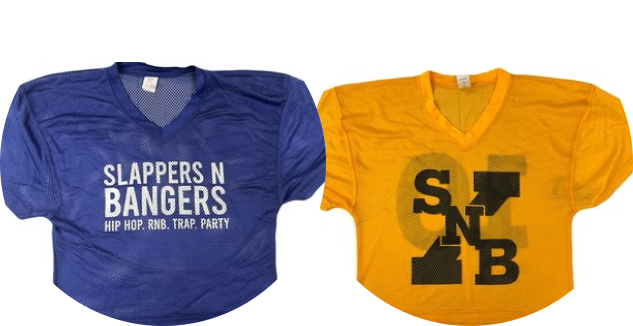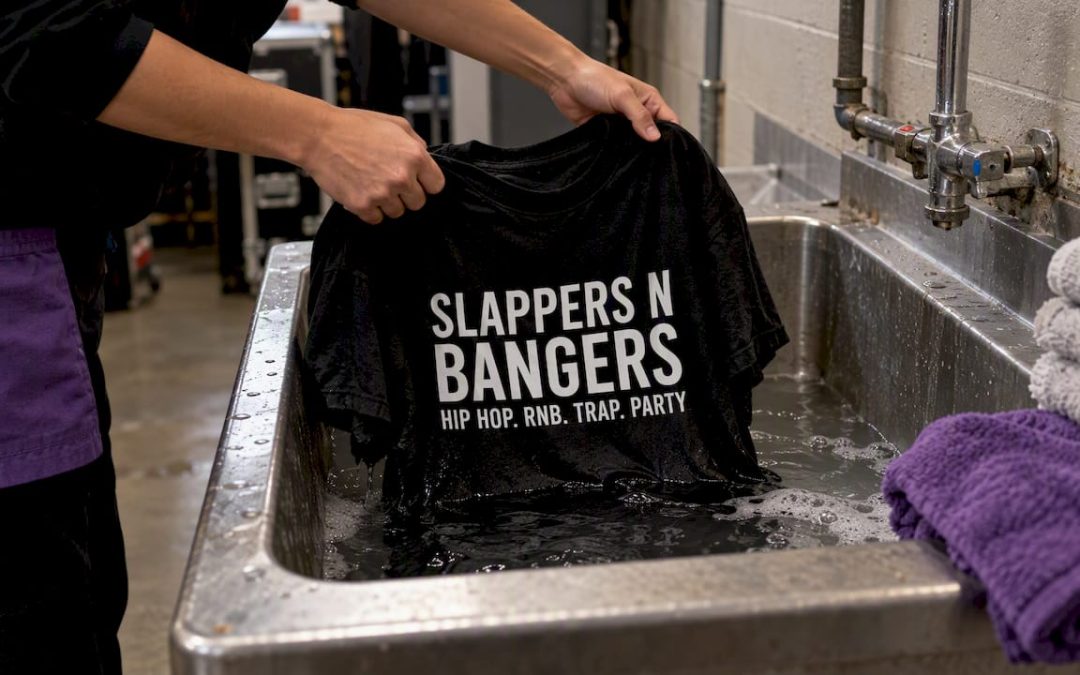
The single best way to protect a graphic tee is to turn it inside out, wash it cold on a gentle or delicate cycle (or hand wash if the label says so), skip the chlorine bleach and fabric softener, and let it air-dry or tumble on low. That combination does more to stop cracking, fading, and shrinking than any single product you could buy.
TL;DR:
- Washing graphic tees inside out, in cold water on a gentle cycle, prevents ink cracking and fading better than any commercial product.
- Hand washing is recommended for fragile, vintage, or specialty prints to minimize damage from friction and high heat.
- Air-drying flat or hanging away from sunlight is safest; if using a dryer, choose low or no-heat settings to prevent ink peeling or cracking.
- Avoid chlorine bleach and fabric softener, instead using oxygen-safe bleach and spot treatments suited to specific stains to protect prints.
- Always follow the care label, as garment-specific instructions override general advice, ensuring the print’s longevity and vibrancy.
Table of Contents
- Machine washing graphic tees: settings, detergent choice, and load rules
- Hand washing graphic tees: when to pick it and a step-by-step method
- Drying graphic tees safely: air-dry best practices and dryer rules
- Ironing and wrinkle removal without harming the print
- Stain removal and bleach alternatives that protect prints
- Storage and wash frequency: when to launder and how to store to prolong print life
- Top tips checklist: quick rules you’ll remember every wash
- Event-merch care: publisher advice for limited-run tees and hoodies
- What the laundry industry gets wrong about graphic tees
- How to care for Slappers N Bangers merch
- FAQ
- Authoritative sources for further reading
Machine washing graphic tees: settings, detergent choice, and load rules
A washing machine is perfectly safe for most graphic tees as long as you set it up right. Start by sorting: wash similar colors together so dark dyes don’t bleed onto lighter prints, and keep heavyweight hoodies separate from thinner tees since they agitate differently.
Turn every printed shirt inside out before it goes in the drum, and fasten any zippers or snaps on hoodies so they don’t snag or scrape against the design. Cold water on a gentle or delicate cycle, paired with a low spin speed, cuts down on the friction that cracks ink over time. A mild liquid detergent or an HE detergent, measured to the correct dose, cleans without leaving behind the residue that dulls prints and stiffens fabric, according to American Cleaning Institute guidance on detergent use.
Skip the fabric softener. It coats fibers in a way that can trap heat and grime against printed areas.
- Sort by color and fabric weight before loading the machine.
- Turn tees inside out and fasten zippers or snaps.
- Set cold water, gentle or delicate cycle, low spin.
- Measure a mild or HE detergent instead of eyeballing it.
- Leave room in the drum so clothes aren’t compressed and rubbing against each other.
Overloading the washer is one of the quietest ways people wreck their merch. A packed drum means more abrasion per cycle, and abrasion is what eventually turns a crisp graphic into a faded ghost of itself.
Hand washing graphic tees: when to pick it and a step-by-step method
Hand washing earns its place when a tee has a fragile ink, a vintage print, or a care label that flat out says “hand wash.” Screen prints on thin, worn cotton and anything with foil or glitter accents tend to hold up longer with this gentler approach.
You don’t need much: a clean basin or sink, a mild detergent, and your hands for soft agitation.
- Fill the basin with cold water and mix in a small amount of mild detergent.
- Submerge the tee inside out and gently swirl it for a minute or two, focusing on any visible stains.
- Let it soak for 15 to 20 minutes if the shirt is noticeably dirty.
- Rinse thoroughly in cold water until no suds remain.
- Press out excess water by squeezing gently, never wringing or twisting.
- Lay the tee on a dry towel, roll it up to absorb more moisture, then move it to its drying spot without stretching the shoulders or collar.
This method takes a few extra minutes compared to tossing a shirt in the machine, but for a one-off event tee you actually want to keep, it’s worth it.
Drying graphic tees safely: air-dry best practices and dryer rules
Heat is the real enemy of a printed shirt, more than water or even most detergents. Plastisol, the thick, rubbery ink used in a lot of screen printing, softens and can crack or peel under high heat, and heat-transfer vinyl can lift at the edges just as easily.
Air-drying flat or on a hanger, with the print facing inward or away from direct sun, is the safest route for almost any graphic tee. Direct sunlight fades colors over time, printed or not.
- Air-dry flat or hang inside out, away from direct sun.
- If you use a dryer, choose tumble-low or a no-heat air-fluff setting.
- Pull shirts out while still slightly damp and let them finish drying flat.
- For hoodies and heavyweight tees, reshape the hood and cuffs while damp so they dry in the right shape.
Heavyweight cotton and hoodies hold water longer than a basic tee, so give them extra space on the drying rack and expect a longer dry time before they’re fully wearable.
Ironing and wrinkle removal without harming the print
Never set an iron directly on a printed graphic. Turn the shirt inside out and iron from the back on a low setting, or lay a thin pressing cloth over the design if you need to press the front.
Steam works well for stubborn wrinkles and is gentler than direct heat contact, so a handheld steamer is a solid alternative if you’re nervous about scorching a design. Always check the sewn care label first, since some inks and finishes shouldn’t meet a hot iron at all. If the shirt is still a little damp from washing, smoothing it out by hand and letting it air-dry flat often removes enough wrinkles without any heat.
Stain removal and bleach alternatives that protect prints
Chlorine bleach is hard on both fabric and ink. It can yellow whites, weaken fibers, and eat away at certain print finishes, so it’s worth avoiding unless a care label specifically allows it. Oxygen or color-safe bleach is the gentler substitute, and the American Cleaning Institute notes it works on many colorfast fabrics without the same risk.
For pretreating, match the cleaner to the stain:
- Use an enzyme-based cleaner on protein stains like sweat, food, or blood.
- Use a degreaser or dish soap pretreatment on oil and grease marks.
- Always spot test a small, hidden area first to check for color changes.
Soak stained areas before the full wash cycle rather than after. A stain that goes through the dryer before it’s fully treated tends to set permanently.
Pro Tip: Treat a stain the same day it happens. The longer it sits, the more likely it is to need aggressive treatment that can also strip the print.
Storage and wash frequency: when to launder and how to store to prolong print life
T-shirts and tank tops are typically washed after each wear, according to American Cleaning Institute guidance, though a light, barely worn tee can sometimes go a second round if you weren’t sweating much.
For storage, fold printed tees with the design facing inward so it doesn’t rub against zippers, buttons, or other garments in a drawer. Skip sealed plastic bins for long-term storage since trapped moisture encourages mildew. A breathable fabric bin or a simple drawer in a cool, dry closet works better.
Hoodies and heavyweight tees take up more room and hold more moisture after washing, so give them space on the rack and avoid stacking lighter shirts directly on top of a still-damp hoodie’s print.
Top tips checklist: quick rules you’ll remember every wash
Keep this list taped inside your laundry room door if you’re serious about making your merch last.
- Turn tees inside out, use cold water, and pick the gentle cycle.
- Measure a mild or HE detergent, and skip chlorine bleach and fabric softener entirely.
- Air-dry when you can, or tumble on low and pull shirts out while slightly damp.
- Follow the sewn care label every time, and hand wash anything fragile or vintage.
- Store tees folded with the print facing inward, and wash promptly after a heavy sweat session.
Turning garments inside out before washing is described across laundry guides as one of the most reliable ways to cut down on the drum friction that causes premature print wear.
Event-merch care: publisher advice for limited-run tees and hoodies
We’ve spent years watching fans buy a tee at one of our events, such as the popular Burn Your Local Data Center graphic tee, and then ask us, months later, how to keep it looking the way it did on night one. A care hangtag and a short note at checkout go a long way toward setting people up right from the start, which is why we encourage buyers to read the label before they ever run a shirt through the wash.
Lightweight tees and heavyweight pieces don’t behave the same way in a washer or dryer. A heavyweight tee holds more water and needs a longer, gentler dry cycle, while hoodies with bubble-style finishes need extra room so the fabric doesn’t compress against the print. At events, our merch team folds printed pieces with the design facing inward and keeps them in breathable bags rather than sealed plastic, which helps prevent ink from sticking to itself in transit or storage.
What the laundry industry gets wrong about graphic tees
Most laundry advice treats a graphic tee like any other cotton shirt, and that’s where it falls short. A print is a second material bonded to the fabric, and it ages on its own timeline, independent of how soft or worn the cotton underneath feels.
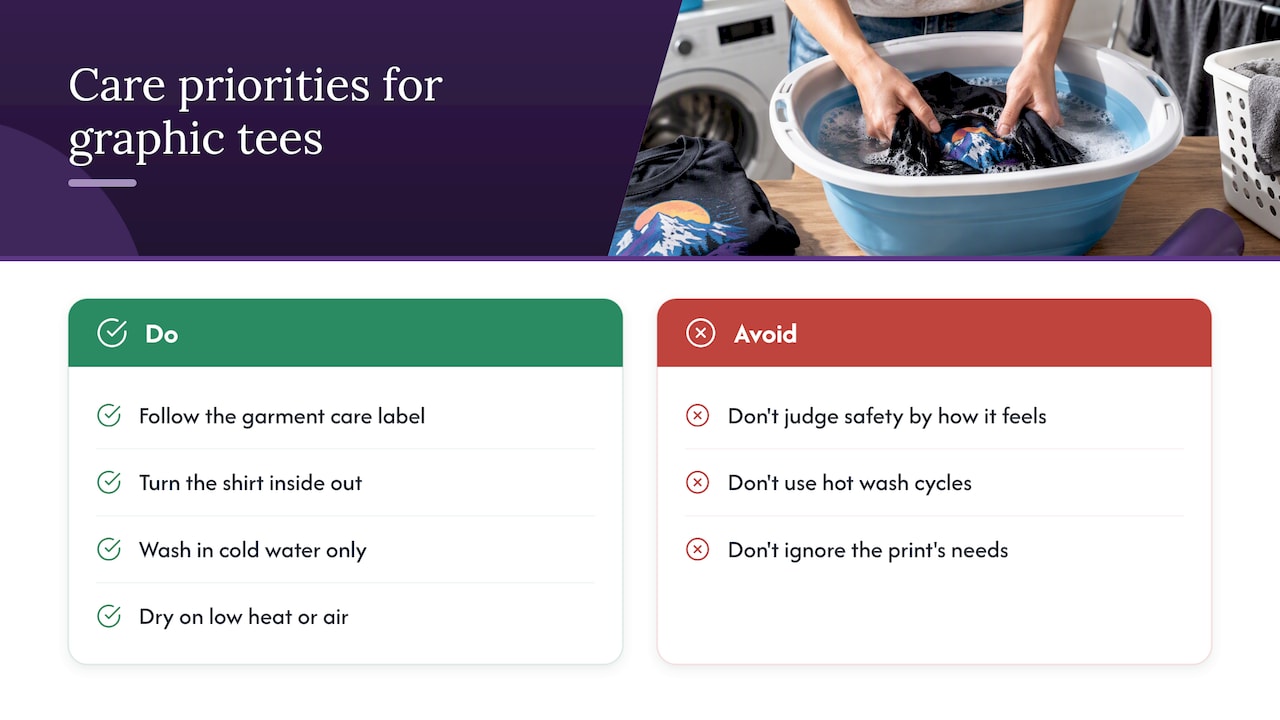
The biggest mistake we see is people judging wash safety by how the shirt feels rather than what the label says. A heavyweight tee might feel sturdy enough for a hot cycle, but the ink on it can still crack at temperatures the fabric itself handles fine.
If you take one thing from all of this, prioritize the care label over instinct. It’s printed on the shirt for a reason, and it accounts for the specific ink, fabric blend, and finish used on that exact garment, something generic advice can’t do. Everything else, the cold water, the inside-out turn, the low heat, matters, but it only works as a system when you start from what the label actually says.
— Slappersnbangers@gmail.com
How to care for Slappers N Bangers merch
We build our merch to survive a packed dance floor and the wash cycles that follow, and a little care keeps it looking right for years, not just a season.
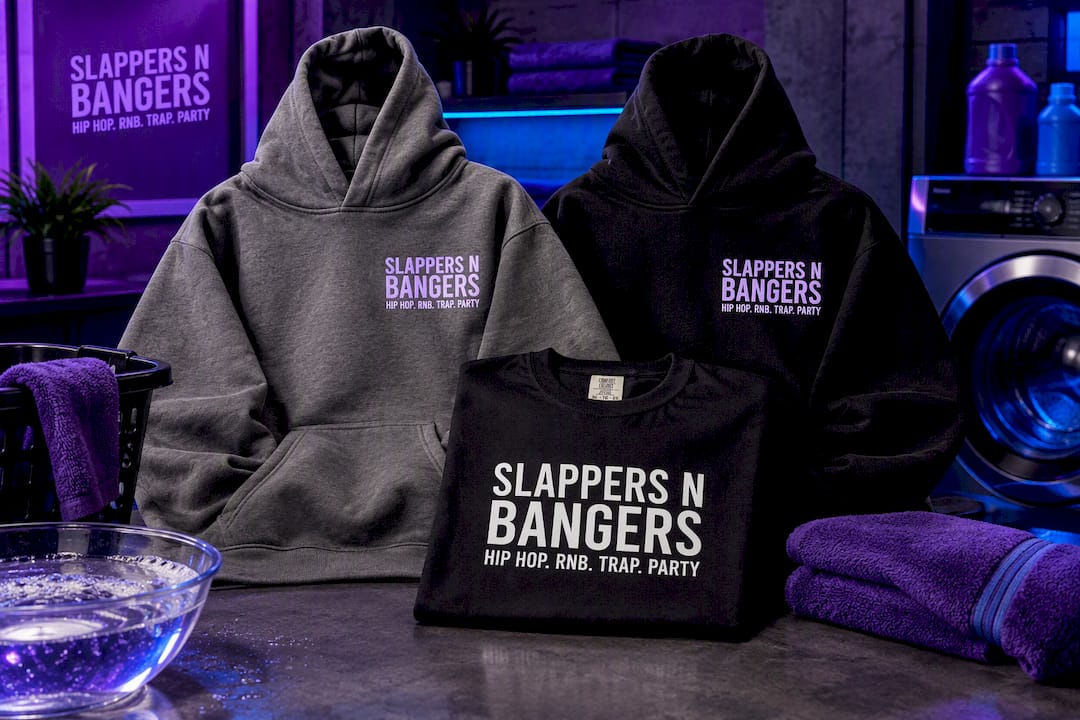
- The Slappers n’ Bangers Gray Bubble Hoodie does best turned inside out, washed cold, and dried on low or hung to air-dry.
- The Slappers n’ Bangers Black Bubble Hoodie holds its color longest with cold water and zero fabric softener.
- The SNB heavyweight t-shirt needs extra drying time given its thicker cotton, so pull it while still slightly damp and lay it flat.
Check the sewn label on whatever you grab, and when in doubt, air-dry. Browse our new and limited-edition items before the next drop sells out, and keep an eye on August SNB: 400 Degreez for what’s coming to the floor next.
FAQ
Can I wash graphic tees in the washing machine?
Yes, most graphic tees are machine safe if you turn them inside out and wash cold on a gentle or delicate cycle. Check the sewn care label first, since some fragile prints or vintage pieces specifically call for hand washing instead.
How to wash graphic tees without cracking?
Cold water, a gentle cycle, and avoiding high heat in the dryer are the main defenses against cracked prints, since heat softens and breaks down inks like plastisol. Turning the shirt inside out before washing also reduces the friction that wears ink down over repeated cycles.
Is OxiClean safe for graphic tees?
Oxygen-based, color-safe bleach products are generally gentler on colorfast fabrics than chlorine bleach, according to American Cleaning Institute guidance, but you should still check your garment’s care label and spot test first. Some prints and finishes react differently, so a small test patch protects you from surprises.
Are you supposed to wash graphic tees inside out?
Yes, turning a graphic tee inside out before washing is a widely recommended step because it reduces direct contact between the print and the drum or other clothing. That contact, repeated over many wash cycles, is one of the main causes of cracking and premature fading.
Authoritative sources for further reading
- Clothes captioning: complying with the care labeling rule | FTC
- Laundry basics | American Cleaning Institute
- How to use bleach | American Cleaning Institute
- ACI product fact sheet (HE detergent and detergent guidance)
Recommended
- Day Party Outfits: What to Wear to an Outdoor Pittsburgh Day Party in August
- Stacks at 3 Crossings: Parking, Transit and Entry Guide for 400 Degreez
- 400 Degreez: Everything to Know About Pittsburgh’s Hip Hop Day Party on August 9
- Barrel & Flow Weekend 2026: Where Pittsburgh’s Party Continues on Sunday