Trap and boom bap split on three things: tempo, drum source, and where the focus sits. Trap runs faster and leans on programmed 808s with rapid hi-hat rolls, while boom bap sits slower and swings on sampled acoustic drums that leave room for the rhymes. Most producers today borrow from both, but the DNA underneath each style is still easy to spot once you know what to listen for.
TL;DR:
- Trap operates predominantly between 130 and 170 BPM, typically felt at half-time around 65 to 88 BPM, influencing its rhythmic feel and production choices.
- Boom bap maintains a steady 85 to 95 BPM, relying on sampled jazz or soul loops and a drum sound with gritty, vintage character influenced by limited hardware capabilities.
- Trap hats feature rapid triplet rolls at high resolutions with velocity and pitch automation, while boom bap hats are swung, steady, and function more like a timing reference.
- Modern trap production emphasizes tuning 808 bass to the track key and using layered synths, whereas boom bap centers on sampled acoustic drums and a more spacious arrangement.
- Both styles blend in contemporary music, with producers combining trap’s low-end punch and high-hat speed with boom bap’s warmth and lyrical focus, creating a versatile production approach.
Table of Contents
- Trap vs Boom Bap: The Technical Breakdown
- How Producers Actually Build Each Sound
- Where Each Style Actually Comes From
- Songs and Producers Worth Studying
- When to Reach for Trap vs Boom Bap
- Small Technical Details That Separate Amateur Beats From Professional Ones
- How Song Structure Differs Between the Two Styles
- A Quick Timeline From Sampler to Software
- What Each Style Left Behind in Modern Music
- What The Crowd Tells You About Trap vs Boom Bap
- Hear Both Styles the Way They’re Meant to Be Played
- Sources
Trap vs Boom Bap: The Technical Breakdown
The fastest way to tell these two apart is by counting. Trap typically sits in the 130 to 170 BPM range, though producers usually write and feel it in half-time, closer to 65 to 88 BPM. Boom bap holds steady around 85 to 95 BPM, a pocket that has barely moved since the genre’s golden age. That tempo gap changes everything downstream, from how the hi-hats get programmed to how a rapper phrases a bar.

Drum sourcing is the second dividing line. Trap producers build kits around a tuned 808 sub, layered with crisp programmed kicks and snares, often pulled from sample packs designed specifically for that boom low end. Boom bap producers dig through vinyl for a “boom” kick and “bap” snare, then chop and loop them so the drums carry the grit of the original recording. Boom bap’s defining trait is that sampled, drum-forward texture rather than any single tempo or scale.
Hi-hats tell you almost everything in the first eight bars. Trap hats roll in fast subdivisions, sometimes triplets stacked inside triplets, creating that stuttering, almost breathless texture you hear in half the songs on any current hip hop playlist. Boom bap hats sit back, swung and steady, functioning more like a metronome with personality than a rhythmic centerpiece.
Harmony and texture diverge just as sharply:
- Trap leans on synth pads, minor key motifs, and cinematic risers that build tension before a drop.
- Boom bap leans on chopped jazz and soul loops, giving it a warmer, dustier tone that feels lived in rather than engineered.
- Trap bass is a tuned, sustained 808 note that often carries the melody itself.
- Boom bap bass usually comes from the sampled loop or a simple upright bass line sitting under the drums.
- Arrangement energy in trap builds toward hooks and ad libs; boom bap arrangement builds toward verses and wordplay.
| Element | Trap | Boom Bap |
|---|---|---|
| Tempo (BPM) | 130–170 (felt at 65–88 half-time) | 85–95 |
| Drum source | Programmed 808s, synthetic kicks/snares | Sampled acoustic kick/snare, dusty breaks |
| Hi-hats | Fast triplet rolls, 1/16 to 1/32 resolution | Steady, swung, moderate density |
| Harmony | Synth pads, minor/dark motifs | Sampled jazz/soul loops, warmer tone |
| Focus | Cadence, hooks, low end | Lyricism, wordplay, groove |
If you want a quick ear test, mute everything but the hats and the low end for the first eight bars. A rolling, stuttering hat pattern over a tuned sub almost always means trap. A steady swing over a chopped, slightly grainy loop almost always means boom bap.
How Producers Actually Build Each Sound
Boom bap production starts with the crate, not the sequencer. A producer finds a loop, usually from jazz, soul, or funk records, then chops it into workable pieces before running it through hardware or plugin emulations of samplers like the SP-1200 or MPC-60. That hardware coloration, limited sample memory, low bit depth, aggressive filtering, is what gives boom bap its gritty signature. Swing gets dialed in manually or through quantize settings around 54 to 62 percent, and acoustic drum layers get stacked under the sample to punch through mix.

Trap production starts with the 808. Producers tune the sub to match the key of the track, then run it through saturation or distortion to add harmonic weight without losing low-end clarity. Synth pads and plucky leads fill the harmonic space, often written in minor scales for that moody, half-lit feel. Hi-hats get programmed at high resolution, 1/16 or 1/32 note triplets, with velocity and pitch automated across the pattern so the rolls don’t sound mechanical.
Here’s a build order that works for either style:
- Lock the tempo and feel before touching a single drum sound.
- Build the main loop or harmonic bed, sample chop for boom bap, synth pad or melody for trap.
- Program drums around that bed, swinging them for boom bap or rolling hats for trap.
- Add bass, sampled low end for boom bap, tuned 808 for trap.
- Arrange the sections, then leave space for vocals before finalizing mix decisions.
The most common mistake in both camps is over-quantizing. Snap every hat and snare to the grid and boom bap loses its swing while trap loses its human feel. A second common error is mismatched 808 tuning against the vocal’s key, which creates a dissonant low end that most listeners feel before they consciously notice it.
Pro Tip: Automate small pitch shifts and varied velocity across your trap hi-hat pattern instead of copying one sample across the grid. It’s the single fastest way to kill that robotic, stamped-out feel amateur trap beats often have.
Where Each Style Actually Comes From
Boom bap and trap grew out of two different cities, two different decades, and two very different sets of tools.
- Boom bap took shape in New York during the late 1980s and early 1990s, the so-called golden age of hip hop, built by producers sampling from crates of jazz and soul records.
- Trap emerged out of the Southern United States, centered in Atlanta, in the early 2000s, taking its name from the “trap house,” slang for a location where drugs are sold, and drawing lyrically from that same gangsta rap lineage.
- Sampling limitations shaped boom bap’s sound as much as any artistic choice. Producers working with the SP-1200’s short sample time had to chop tight, loop efficiently, and let the hardware’s coloration do some of the aesthetic work for them.
- DAW-based production gave trap producers unlimited track counts and pitch-perfect tuning, which is exactly why the genre could afford layered 808s, synth stacks, and dense hi-hat automation that would have been impossible on 1990s samplers.
- Lyrical delivery split accordingly. Boom bap’s slower tempo left room for dense internal rhyme schemes and storytelling. Trap’s faster, more percussive backdrop rewards cadence, repetition, and hook-driven delivery over intricate wordplay.
The tools available to each generation of producers didn’t just support the sound, they defined its ceiling. A boom bap producer in 1991 couldn’t have made a trap beat even if they wanted to; the 808 programming and hi-hat density trap requires simply weren’t possible on the gear of that era.
Songs and Producers Worth Studying
If you want to train your ear, these are the reference points worth pulling up on repeat.
- DJ Premier’s work with Gang Starr (“Mass Appeal”) shows the boom bap blueprint at its cleanest: a looped jazz sample, a boom kick, a bap snare, and nothing crowding the vocal.
- Pete Rock’s production for CL Smooth (“They Reminisce Over You”) demonstrates how a warm horn loop can carry as much emotional weight as the lyrics riding on top of it.
- Wu-Tang Clan and RZA’s productions lean into grimier, lower-fidelity sampling, useful for hearing exactly how much hardware coloration shapes a beat’s texture.
- Metro Boomin’s catalog is the trap masterclass: listen for how his 808s carry melody while the hats stay busy without ever fighting the vocal.
- Southside and 808 Mafia productions show off aggressive synth stacking and cinematic builds that define the darker end of modern trap.
- Zaytoven’s work demonstrates a lighter, more melodic trap approach built around piano and organ motifs rather than pure synth weight.
- Contemporary hybrids, think producers pairing sampled soul loops with tuned 808 bass, borrow boom bap’s warmth while keeping trap’s low-end punch, proof the two styles are more like adjustable settings than opposing camps.
When to Reach for Trap vs Boom Bap
Pick your style based on what the song needs to do, not which one sounds more current.
- If the vocal cadence is rapid-fire and hook-driven, build in trap; the fast hats and tuned 808 will carry momentum the vocal alone can’t.
- If the artist is wordy and detail-oriented, boom bap’s slower pocket gives every line room to land.
- For club or festival settings, trap’s low-end impact and repetitive hooks translate better through a big sound system.
- For a cypher, album deep cut, or lyric-focused single, boom bap’s space favors the writing over the beat.
- When hybridizing, borrow selectively. Keep a boom bap sample loop but tune a subtle 808 underneath it, or slow a trap hat pattern down to swing over a sampled break.
Neither style outranks the other; they’re built for different musical jobs, and the smartest producers treat that as a toolbox, not a rulebook.
Small Technical Details That Separate Amateur Beats From Professional Ones
Boom bap grit doesn’t come from a single plugin, it comes from stacking small decisions. Resampling at a lower bit depth, shortening the loop’s decay, and running the whole thing through analog-modeled saturation gets you most of the way toward that classic texture. Keep compression light. Over-compress a boom bap loop and you flatten the exact transient punch that made the original sample worth using.
Trap hat programming rewards patience more than talent. Set your grid resolution to 1/16 or 1/32 note triplets, then manually vary velocity and pitch across the pattern rather than pasting one sample everywhere. Alternate open and closed hat samples, add subtle panning, and let a touch of reverb create depth between hits.
808 tuning matters more than most beginners realize. Match the 808’s root note to the track’s key, then sidechain it lightly against the kick so the two don’t collide in the low end. A simple starting channel template looks like this:
- Kick, tight, punchy, minimal sustain.
- Snare or clap, layered for width.
- Hi-hats, high resolution with velocity automation.
- 808 or bass sample, tuned and sidechained.
- Sample or pad, sitting slightly behind the drums in the mix.
Pro Tip: If your trap 808 sounds muddy against the vocal, it’s almost never a volume problem. Check the tuning first. A half-step mismatch between your sub and your rapper’s key causes far more low-end conflict than gain staging ever will.
How Song Structure Differs Between the Two Styles
Boom bap songs tend to follow the classic verse-chorus skeleton hip hop inherited from soul and funk records: two or three sixteen-bar verses, a shorter hook, minimal ad libs, and an arrangement that rarely strays from a single loop played straight through. The sample itself often functions as the song’s only real “hook,” repeating with minor variation while the verses do the heavy lifting.
Trap structure is built more like a pop record wearing rap clothing. Intros are shorter, hooks arrive faster, often inside the first thirty seconds, and the arrangement frequently includes a beat switch or drop that resets the energy midway through. Ad libs stack in the background throughout, functioning almost like a second rhythmic layer rather than an occasional flourish.
The verse length differs too. Boom bap verses commonly run a full sixteen bars of continuous rhyme. Trap verses often break into shorter eight-bar segments punctuated by hook repetition, matching the genre’s preference for repetition and cadence over sustained storytelling. Bridges are rare in boom bap but increasingly common in trap, especially in tracks aimed at radio or streaming playlists where a structural reset helps retention.
Neither structure is more sophisticated than the other. They’re optimized for different listening environments: boom bap for focused, attentive listening, trap for repeat plays and algorithmic discovery.
A Quick Timeline From Sampler to Software
Boom bap’s roots trace to New York’s late-1980s and early-1990s golden age, when producers armed with samplers and crates of vinyl built the genre’s drum-forward template. Through the mid and late 1990s, the style spread nationally, then quietly receded from the mainstream as Southern and West Coast sounds gained ground in the 2000s.
Trap’s rise started in Atlanta in the early 2000s, growing out of a lyrical tradition rooted in the drug trade’s language and geography. Through the late 2000s and into the 2010s, trap’s production techniques, tuned 808s, rapid hi-hats, spread far beyond its regional origin, eventually becoming a dominant mainstream sound across hip hop and pop radio alike.
Boom bap never fully disappeared. Since the mid-2010s, underground producers and collectives have deliberately revived the hardware-limited texture of the golden age, often using modern plugins built specifically to emulate that vintage grit. The two timelines now run in parallel rather than in sequence, with new tracks regularly borrowing from both eras depending on what a given song needs.
What Each Style Left Behind in Modern Music
Trap’s influence stretched well past hip hop. Its 808 programming, hi-hat patterns, and half-time feel became a standard toolkit across pop, R&B, and even segments of EDM once producers outside rap noticed how well the template translated to other genres. That crossover is a big reason trap became one of the most widely copied production styles of the 2010s.
Boom bap’s legacy runs quieter but just as deep. Its emphasis on sample-based warmth and lyrical space still shapes how a huge portion of underground and independent hip hop gets made, and its drum-forward mixing philosophy, kick and snare as the emotional anchor of a track, still informs how producers across genres approach low end.
The most interesting development is how thoroughly the two have merged. Producers now regularly build tracks with a boom bap sample loop and a trap-style tuned 808, or take trap’s hi-hat programming and slow it down over a swung sample. That blending isn’t a compromise, it’s become its own recognizable lane, and it’s a big part of why hip hop’s production palette keeps expanding rather than settling into one dominant sound.
What The Crowd Tells You About Trap vs Boom Bap
Watch a floor for one night and the difference is obvious. Boom bap sets pull heads down into the groove, people mouthing lyrics, nodding on the snare. Trap drops send the whole room up at once, phones out, energy spiking on the 808. At certain hip hop events, DJs blend both styles deliberately, using boom bap cuts to build attention and trap records to release it, because a crowd that only gets one texture all night loses steam by hour two.
— Slappersnbangers@gmail.com
Hear Both Styles the Way They’re Meant to Be Played
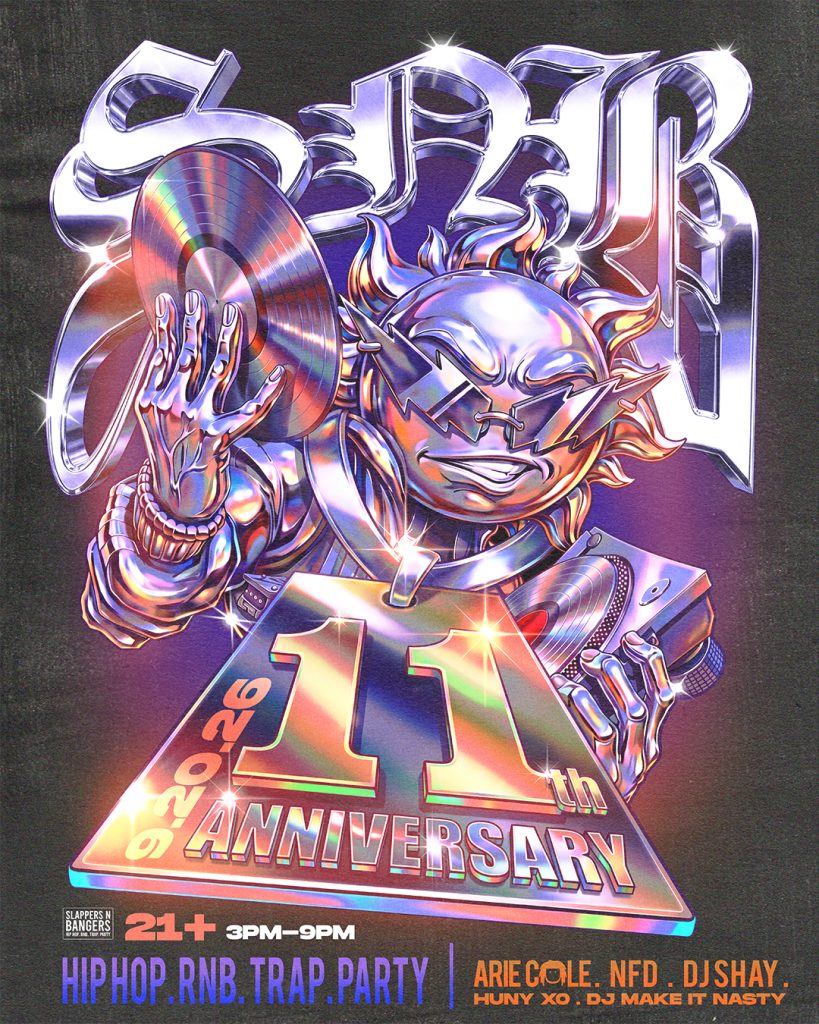
Reading about tempo charts and hi-hat resolution only gets you so far. There are DJ-driven parties that blend both styles across a single night, so attendees can experience the lyrical pocket of golden-age boom bap and the low-end rush of modern trap back to back, not as a playlist theory but as a lived set.

Expect a lineup built for momentum, branded merch available on site, and a crowd that treats hip hop and rap like the culture it is rather than background noise. Check upcoming dates and grab tickets for the next event near you, or browse the full events calendar to find a night that fits your city and your sound.
Sources
- Trap music — Britannica
- Boom bap — Wikipedia
- In Search of Boom Bap — Red Bull Music Academy Daily
- Trap music readings — LibreTexts
Recommended
- Meet the Pittsburgh DJs Behind 400 Degreez: Arie Cole, Digital Dave, DJ KK and QRX
- 400 Degreez: Everything to Know About Pittsburgh’s Hip Hop Day Party on August 9
- Hip Hop and R&B Events in Pittsburgh This Summer: Where to Find the Culture
- The Summer Event Every Philadelphia Hip Hop Fan Should Have on Their Radar