A hip hop silent disco is a dance party where the music plays through wireless headphones instead of speakers, and at least one channel is dedicated to hip hop, rap, R&B or trap. You put on the headphones, pick your channel, and the room turns into a crowd of people dancing to a soundtrack only they can hear. Take the headphones off and the room is nearly quiet.
That is the short version. Below is the longer one: what the term means, how the gear works, what makes a hip hop version different, what to expect on the night, and how it compares to a loud, packed, speaker-driven party like the ones we throw.
TL;DR
- A silent disco sends music from DJs to wireless headphones, so only the people wearing them hear it.
- Most setups run up to three channels, shown by headphone light colors, so you can switch DJs or genres whenever you want.
- Hip hop fits the format well: a dedicated channel gives you a focused set, and DJ battles turn the crowd into the scoreboard.
- Bring a plan for the basics: wear the headphones, keep volume at a safe level, return the gear, and take them off to talk.
- If you want the full-volume, bass-in-your-chest version of a hip hop night, that is what Slappers N Bangers does.
Table of Contents
- What “silent disco” actually means
- How a silent disco works, step by step
- What makes a hip hop silent disco different
- Why people love it
- What to expect when you show up
- How big can one get?
- Organizing one: the basics
- Our take on silent disco and hip hop
- When you want the full-volume version
- FAQ
- Sources
What “silent disco” actually means
The term sounds like a contradiction, so here is the plain definition. A silent disco is a collective music event in which songs are transmitted to participants through headphones rather than played out loud. That is the whole idea. Everything else, the colored lights, the channels, the DJ rivalries, is layered on top.
The name stuck even though the music is rarely disco. Plenty of silent parties are built around a single genre, and hip hop is one of the most requested. Searching “silent disco meaning” mostly turns up this same answer: a dance event with no room speakers and a headphone for every guest.
One detail people miss: anyone in the room without headphones hears almost nothing. The City of Mesquite Arts Center says headphones are required to hear the music, and people without them experience the event as silent. That is why the gear count matters so much to organizers, and why the scene looks so strange from the doorway.

How a silent disco works, step by step
The tech is simpler than it looks. According to a practical guide to the format, DJ decks or other audio sources feed separate radio transmitters, each one broadcasting its own channel. Wireless headphones pick up those signals. The wearer can switch channels, see the selected channel on a colored LED, and adjust their own volume.
In practice that means:
- The DJs play. Each DJ or audio source runs into its own transmitter.
- Each transmitter is a channel. Three is the common number.
- You choose. A switch on the headphones changes your channel at any time.
- The lights tell the story. The LED color shows which channel you are on, so DJs and other guests can see who is listening to what.
- You set your own volume. Nobody else controls how loud it is in your ears.
Rechargeable headsets are the norm now. One U.S. equipment catalog describes headphones with up to three channels, red, green and blue channel indicators, 12-hour battery life and a stated range of up to 1,500 feet. That range is a manufacturer’s claim, and real conditions such as walls and crowds will change it, but it shows the gear is built for big spaces.
Why the light colors matter
When the New York Times covered the trend, it described three DJs competing for attention through headphones glowing red, blue or green depending on the listener’s choice. You can stand on the edge of a dance floor and see which DJ is winning.
Some organizers turn that into a game. One catalog lists DJ battles as an event option in which the DJ with the most headphones tuned to their channel wins. For hip hop, where a crowd’s reaction is half the performance, that is a natural fit.
What makes a hip hop silent disco different
The format is the same whatever the genre. The feel is not.
A generic silent party often means one channel of pop, one of throwbacks and one of dance. A hip hop version usually gives you a dedicated rap channel, and the best ones split the lanes: classic boom bap on one, current rap and trap on another, R&B and club records on the third. You get to decide whether this song is a moment or a skip.
Here is what changes for hip hop crowds:
- Call and response gets strange and fun. When a hook drops on your channel, the people around you who are on the same channel scream the words. Those on another channel just watch, then switch.
- The DJ’s selection matters more. With only a hip hop channel, there is no hiding behind a genre-agnostic playlist.
- Dancers get clear sound. If you are working on a routine or a freestyle circle, you hear the track at your own level without the bass fighting a venue’s speakers.
- Late-night noise limits stop being a problem. Hip hop events in cities with strict noise ordinances can go on because there is no sound spilling outside.
The music side
The track list is the point. A good set builds from familiar anthems to deeper cuts and reads the room as it goes. If you are building your own playlist or just want a refresher on what moves a crowd, our rundown of hip hop party songs DJs rely on is a solid starting point. Producers and artists looking for fresh instrumentals to rap over can browse hip hop instrumentals and beats built for independent artists.
Why people love it
The Los Angeles Times described the appeal early: people enjoy personal control, the novelty of a crowd dancing to apparently nothing, and the chance to talk without shouting. Those three reasons still hold up.
You can actually talk
Without a room sound system, conversation is possible. The same report notes that guests can hear each other more easily when they remove or turn down their headphones. A Minnesota paper covering a 2022 event noted that individual volume control made conversation easier during the dance party. For anyone who has spent a night at a club shouting a name into someone’s ear, that is a real upgrade.
Everyone gets their own lane
The same Minnesota account says three channels let guests choose among different song lists. That is why the format works for mixed groups: people of different ages, abilities and tastes can share a floor without agreeing on a playlist. Your cousin who wants 2000s R&B and your friend who wants trap can stand next to each other.
It does something to a crowd
Researcher Joshua S. Bamford explains that silent discos put people in the same space while they dance to different music and out of time. That makes them a useful setting to study how dancing together, or not, shapes social bonding. The takeaway for partygoers: being in the room with other dancers matters, even when your soundtracks differ.
What to expect when you show up
A typical night looks like this:
- Check-in and gear. You may leave an ID or card, or simply sign for the headset, depending on the organizer. Ask before you go.
- Headphones on. Find the switch, pick a channel, set a safe volume.
- Explore. Flip between channels in the first 20 minutes. You will quickly learn which DJ matches your taste.
- Dance, talk, repeat. Pull one ear off when you want to chat.
- Return the gear. Rented equipment must come back, and organizers count heads at the door.
The Mesquite Arts Center’s attendee guidance covers the basics: control volume safely, return equipment, follow venue rules, and remove headphones when you want to talk normally. Good advice for any venue.
Practical tips
- Volume: Start low and go up. Your ears are the only ones you have.
- Footwear and clothes: You will be moving. Our guide to dance proof hip hop party outfits covers what holds up on a packed floor.
- Etiquette: Not hearing the room makes it easy to bump into people. Read our dance floor etiquette essentials and give people space.
- ID: Many 21+ events check ID at the door. See what happens if you forget ID.
How big can one get?
Bigger than you would think. Pollstar reported that one U.S. silent-events producer supplied equipment to about 160 events a year in 2014, and that one college event had 1,800 attendees wearing headsets. The trade paper’s view was that better headphone quality and range helped silent events move beyond a novelty toward a scalable live-music format.
So it is not just a small-room trick. It works at festival and campus scale, which is part of why more cities offer it.
Organizing one: the basics
If you are thinking of hosting a hip hop silent disco, start with these questions:
- How many guests? You need one headset per person.
- How many channels? One transmitter per channel, so three channels means three DJs or sources.
- What is the space? Check range, walls and venue rules.
- Who is performing? DJs are the default, but live acts can play too.
- What is your code of conduct? Not hearing the room changes how people behave. Our event code of conduct templates are free to adapt.
- How long is the night? See our notes on concert duration rules at hip hop and DJ nights.
Budget varies with guest count, channel count and whether you rent or buy gear. Get quotes from equipment providers for your exact numbers rather than relying on a general figure.
A stage for local artists
The format also helps artists. Pollstar noted that performers can play into a mixing board and broadcast to wireless headphones, including in places where full sound production is a problem. For a local rapper or live band, that opens up rooms that would never allow a loud show. If you want to back local talent in any format, read why a ticket beats a stream.
Our take on silent disco and hip hop
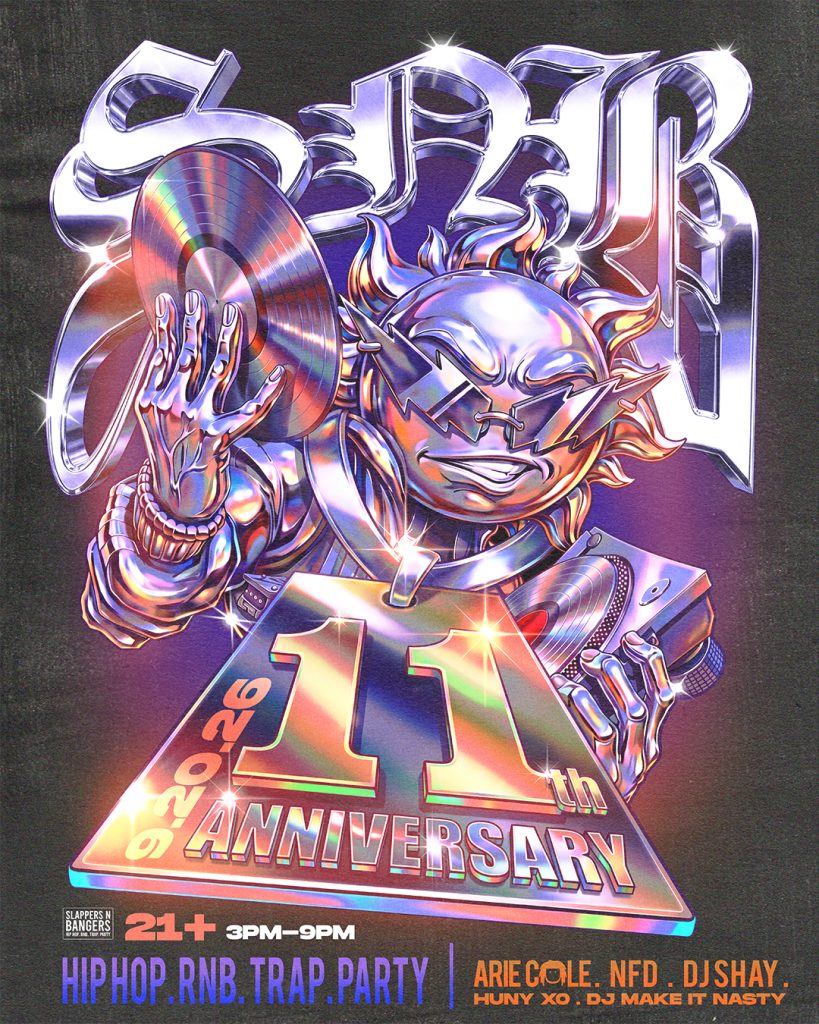
We started Slappers N Bangers in 2015 because Pittsburgh needed rooms that welcomed hip hop and rap instead of tolerating them. Everything we do is built around DJs who read the crowd and play hip hop, R&B and trap the way it was meant to be heard: loud, shared and packed.
So here is our honest view of the silent disco. It is a smart format. It gives people control, it makes conversation easy, and it opens up places a loud party cannot go. If you want to try it, go in with curiosity and pick the hip hop channel.

But the thing we care about most is the shared roar. When a hook hits and a thousand people sing it at once, out loud, that is the moment we build nights around. A silent disco gives you your own soundtrack. A big speaker-driven party gives you everyone’s. Both have a place, and they answer different moods.
If you are a first-timer, our advice is the same either way: show up early, learn the room, respect the floor and move how you want.
— Slappersnbangers@gmail.com
When you want the full-volume version
If the idea of a hip hop night with a packed floor and live DJs appeals to you, check our events page for what is coming up, including our August SNB: 400 Degreez. We also run limited-edition merch drops. Both are on the Slappers N Bangers homepage, along with the current schedule. Ticket and merch prices are listed there when published.
Prefer a local guide first? See hip hop and R&B events in Pittsburgh or the hip hop venues worth knowing in New York.
FAQ
Why is silent disco a thing?
People like the control and the novelty. Each guest picks a channel and sets their own volume, and the room stays quiet enough to talk in. It also lets organizers host dance events in places where loud sound is a problem.
How does a silent disco work?
DJs feed separate transmitters, each broadcasting a channel to wireless headphones. Guests switch channels with a button, and a colored light shows which one they chose. Each person also controls their own volume.
Can a silent disco be all hip hop?
Yes. Many organizers run a single-genre night, or give hip hop its own channel next to R&B and throwbacks. A DJ battle between channels is a popular option, with the crowd’s headphone colors deciding the winner.
Is a silent disco safe for your ears?
It can be if you keep the volume at a comfortable level. Start low, turn it up slowly and take the headphones off during breaks. If you have hearing concerns, ask an audiologist before attending any loud event.
Sources
- A practical guide to the silent disco (Taylor & Francis)
- Off The Rails | Silent Disco (Mesquite Arts Center)
- SSS Catalog, October 2025
- Silent Discos Let You Dance to Your Own Beat (The New York Times, 2015)
- Boogie Nights: ‘Silent disco’ is making itself heard (Los Angeles Times, 2011)
- Dancers get out, get moving at German Park silent disco (The Journal, 2022)
- Silent disco: why dancing in sync brings us closer together (The Conversation, 2024)
- Really Quiet Concerts (Pollstar, 2014)