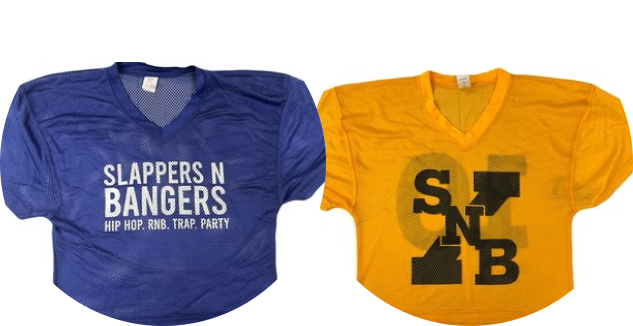
“Set times” means fixed, scheduled times that have been agreed on or assigned for something to happen. You will hear it most in meetings, exams, and concerts, where the Cambridge Dictionary and Merriam-Webster both treat “set” as meaning “fixed” or “decided in advance.” The phrase is commonly used at events like those organized by Slappers N Bangers.
TL;DR:
- “Set times” refer to multiple scheduled performance slots or fixed appointment windows for events, not just a single moment or an informal gathering.
- Overruns or delays in set times can disrupt the entire event schedule, especially at festivals, clubs, and DJ performances.
- Clarify the difference between “set time” (fixed schedule) and similar phrases like “setlist” (songs played) or “set aside” (reserved time).
- Always treat posted set times as real deadlines, arriving 20 to 30 minutes early to account for entry lines and potential delays.
- Slappers N Bangers and similar organizations publish set schedules in advance to ensure structured, organized events and to help attendees plan accordingly.
Table of Contents
- Breaking Down “Set” and “Time” as Language Pieces
- Phrases and Synonyms That Mean the Same Thing
- Sentences That Show “Set Times” in Real Life
- What “Set Times” Means at Concerts and DJ Events
- Where Learners Trip Up (And Quick Fixes)
- Why Getting This Right Matters to Us
- See Set Times in Action at an SNB Show
- Sources
- FAQ
Breaking Down “Set” and “Time” as Language Pieces
“Set” does double duty in English. As a verb, it means to arrange, fix, or decide on something. As an adjective, it describes something already fixed by appointment or agreement. Cambridge Dictionary’s entry for “set” covers both, and it lists “fix or decide on” as one of the core senses. That is exactly the meaning at work when someone says “set a time.”
“Time” behaves differently depending on what you mean by it. When you talk about the abstract concept (“time flies,” “we don’t have much time”), it stays uncountable. There is no plural. But when you mean a specific point on a clock or calendar, “time” becomes countable, and it can take an “s.” That is why “set times” (plural) works perfectly fine when you are talking about several scheduled slots, like a lineup of performers or a week of appointments.
Here is how the three related phrases split apart:
- Set a time = the action of choosing a time (“Let’s set a time for the call.”)
- A set time = one specific fixed moment (“Arrive at the set time, not before.”)
- Set times = multiple scheduled slots, often for a program or event (“Check the festival’s set times before you head out.”)
Merriam-Webster backs this up directly, listing “to fix or decide on as a time” among its definitions of “set,” alongside an adjectival sense meaning “fixed by appointment or agreement.” Once you separate the grammar this way, the phrase stops feeling slippery.
Phrases and Synonyms That Mean the Same Thing
English gives you several ways to say the same thing “set times” says, and picking the right one depends on how formal the situation is. “Scheduled,” “designated,” and “appointed” all lean formal, the kind of word you’d see on a corporate calendar invite. “Fixed” and “arranged” sit in the middle. “At a set time” itself is treated as a standalone idiom by The Free Dictionary, which defines it as a particular or assigned time and gives a useful example: someone asking whether they need to show up “at a set time or can I come whenever I want?”
A few collocations come up constantly:
- “Set a time for the meeting”
- “Arrive at the set time”
- “The set times were posted online”
- “Times are set in stone” (informal, meaning non-negotiable)
One word of caution: “set” has plenty of unrelated slang meanings (“that’s a bad set,” referring to a group of friends, or “set” as in a DJ’s music session) that have nothing to do with scheduling. Reverso’s definition of “time set” treats it strictly as a specific, scheduled time, and that is the sense you want to hold onto when reading anything about programs, events, or appointments.
Sentences That Show “Set Times” in Real Life
Seeing the phrase across different contexts is faster than memorizing a rule. Here are eight examples, each labeled so you can copy the pattern that matches your situation.
- Business: “The vendor meeting has a set time of 2:00 PM, so don’t be late.” (A fixed appointment, non-negotiable.)
- Exam: “The exam has a strict set time; you can’t start after 9:15.” (Punctuality is enforced.)
- Interview: “We’ll set a time for your second interview once the panel confirms.” (Verb form, action of scheduling.)
- Festival: “The set times for Saturday’s headliners just dropped.” (Plural, referring to performance slots.)
- Casual party: “There’s no set time, just swing by whenever.” (Informal, meaning flexible, not fixed.)
- Club: “The DJ’s set time is 11 PM to 1 AM.” (Performance window, singular slot.)
- Contrast (confusing): “I set aside time for the meeting” does NOT mean the meeting has a fixed schedule. It means you reserved time for it.
- Contrast (incorrect): “I have a set of time tomorrow” is not standard English. The correct phrasing is “I have some time set aside tomorrow.”
What “Set Times” Means at Concerts and DJ Events
In the concert and festival world, “set times” refers to something very specific: the scheduled start and end window for each performer’s slot. A DJ glossary from Vibes defines it exactly that way, distinguishing it clearly from a “setlist,” which is the list of songs a performer plays. Set times control when; setlists control what.

Slot length varies a lot depending on the type of show. A festival slot often runs 45 to 60 minutes. A club night might give a DJ a two-hour block. A headliner closing out a night could get 90 minutes or more. Position matters too: warm-up sets build the crowd, peak-time sets carry the most energy, and closer sets have to bring the night home. Running long on any of these throws off everyone scheduled after you, which is why respecting the clock is treated as a professional courtesy between DJs, promoters, and venues.
At Slappers N Bangers, we post set times ahead of every show so attendees know exactly when their favorite DJ hits the decks, and our event pages lay out arrival windows and lineup timing together.
- Arrive at least 20 to 30 minutes before your must-see set to account for entry lines
- Check the lineup page for slot order, not just names
- Treat posted set times as real deadlines, since overruns push back everyone after
Pro Tip: If a show has multiple stages, set times can overlap. Screenshot the schedule before you arrive since venue Wi-Fi is never reliable when 2,000 people are trying to check the same page.
Where Learners Trip Up (And Quick Fixes)
Three phrases trip up learners constantly, and they all sound similar but mean different things. “Set time” (fixed, scheduled) gets confused with “set aside” (to reserve or save for later). “Set times” gets confused with “setlist” (the songs, not the schedule). And “on time” gets confused with “in time.” Cambridge’s grammar notes draw the line clearly: “on time” means arriving at the exact scheduled moment, while “in time” means arriving early enough to catch something before it happens.
Quick fixes that stick:
- If you mean “reserved,” say “set aside,” never “set time.”
- If you mean “the songs,” say “setlist,” never “set times.”
- If you mean “punctual,” say “on time.” If you mean “with room to spare,” say “in time.”
Pro Tip: Try saying these two out loud: “I set aside an hour before the set times were even announced” and “We got there in time, but not exactly on time.” If both sentences make sense to you, you’ve got the distinction down.
Why Getting This Right Matters to Us
Set times aren’t a minor scheduling detail to us. They’re the backbone of how a night actually runs, from the moment doors open to the last song of the closer’s set. When we publish a lineup, attendees plan their whole evening around those windows, and performers build their sets to match the slot they’re given. Getting it wrong doesn’t just confuse a few people. It throws off an entire crowd’s night.
— Slappersnbangers@gmail.com
See Set Times in Action at an SNB Show
Reading about set times is one thing. Standing in a packed room watching a DJ nail their slot down to the minute is another. The organization runs hip hop, R&B, and trap parties with a focus on following set schedules to keep events organized. It’s the difference between a night that feels organized and one that feels chaotic.

Check the events page for published set times ahead of upcoming shows, including August SNB: 400 Degreez, so you know exactly when to show up and who’s on when. And if you’re heading to a show, grab the Draft Commemorative Tee before doors open. It’s part of the current lineup of new and limited edition items SNB is releasing this year, and it won’t be around forever.
Sources
- SET | English meaning – Cambridge Dictionary
- set – Merriam-Webster
- Set Time: DJ Term Explained | Vibes
- At a set time – Idioms by The Free Dictionary
- TIME SET – Definition & Meaning
FAQ
What Does “Set Time” Mean?
A set time is a specific, fixed moment agreed on or assigned for something, like a meeting, exam, or performance. Both Cambridge and Merriam-Webster define “set” in this sense as “fixed” or “decided in advance.”
What Does “Set” Mean in Slang?
Outside of scheduling, “set” can refer informally to a group of friends or, in music culture, to a DJ’s performance session itself. Context is everything here. “My set was fire last night” has nothing to do with a schedule.
What Is Another Word for Set Time?
Common alternatives include “scheduled time,” “designated time,” “fixed time,” and “appointed time.” “At a set time” is also its own recognized idiom meaning at a particular or assigned moment.
What Does “Set” Mean in Simple Terms?
In the scheduling sense, “set” simply means to fix, arrange, or decide on something in advance. Once a time is “set,” it’s treated as locked in rather than flexible.
How Do I Find Set Times for an SNB Event?
Slappers N Bangers posts lineup and performance windows on its events page ahead of each show. Arrival guidance and entry logistics are also detailed on individual event pages, like the 400 Degreez entry guide.