Rap subgenres are named varieties of hip-hop defined by their production sound, vocal delivery, region, and lyrical themes. This overview breaks down ten of the most-cited styles, from boom bap to drill, with their regional origins and go-to artists, drawing on catalogs like Wikipedia’s list of hip-hop genres and LANDR’s rap style breakdown. By the end, you’ll have a practical vocabulary for identifying what you’re hearing, and where it came from.
TL;DR:
- Drill is characterized by slow, sliding basslines and violent lyrical content, originating in Chicago in the early 2010s and spreading to the UK afterward.
- Trap music features rapid hi-hats, deep 808 bass, and minimal melodies, emerging from Atlanta in the late 2000s with early pioneers like T.I. and Gucci Mane.
- Boom bap relies on sample-heavy production with prominent snares, originating in New York during the mid to late 1980s, exemplified by DJ Premier and Nas.
- Regional influences shape subgenres, with East Coast favoring dense, lyrical styles, West Coast adopting G-funk sounds, and the South popularizing trap and bounce.
- Live DJ sets frequently blend multiple styles such as trap, drill, and boom bap, enabling hearing the distinctions in real-time and understanding genre overlaps.
Table of Contents
- What Counts as a Rap Subgenre?
- Ten Rap Subgenres You’ll Actually Hear
- Why Region Shaped the Sound
- How to Listen: Production Traits and Vocal Delivery Types
- How New Subgenres Actually Form
- Slappers N Bangers’ View From the Booth
- Hear These Subgenres Live
- Sources
- FAQ
What Counts as a Rap Subgenre?
Hip-hop has splintered into dozens of subgenres over five decades, and the easiest way to keep them straight is to sort them by axis rather than trying to memorize every name at once. Old-school foundations gave way to boom bap and gangsta rap, and modern rap is now dominated by trap and its many offshoots, including drill. Most subgenres get defined by some combination of the following:
- Era: old school, golden age, modern, contemporary
- Region: East Coast, West Coast, Dirty South, Chicago, UK, and beyond
- Production sound: sample-heavy, synth-driven, 808-based, lo-fi
- Vocal delivery: aggressive, melodic, rapid-fire, storytelling
- Lyrical theme: street narratives, party anthems, horror imagery, social commentary
A style like drill combines a specific region (Chicago, later London), a dark production palette, and violent, blunt lyrical content. Grime pairs a UK origin with a frantic tempo and a distinct vocal cadence. When a track confuses you, run it through these five filters instead of guessing at a label.
Ten Rap Subgenres You’ll Actually Hear
These profiles cover the styles that show up most often in genre guides and artist retrospectives, including the Recording Academy’s rundown of influential hip-hop subgenres and REVOLT’s pioneer-focused list.
- Boom bap. Built on chunky drum breaks, sampled loops, and a hard snare on the backbeat. It emerged in New York in the mid to late 1980s. Think DJ Premier’s production work and Nas’s Illmatic.
- G-funk. Slow, funk-sampled grooves with whining synth leads and laid-back delivery. It took shape in Los Angeles in the early 1990s through Dr. Dre and Snoop Dogg.
- Trap. Built on rapid hi-hats, deep 808 sub-bass, and often dark, minimal melodies. It grew out of Atlanta in the late 2000s, with T.I. and Gucci Mane among its early architects.
- Drill. Nihilistic, blunt lyrics over sparse, sliding 808 patterns. It started in Chicago in the early 2010s with Chief Keef, then split into a UK strain led by artists like Headie One.
- Cloud rap. Hazy, reverb-soaked production with a dreamy, often melancholic vocal tone. It formed online in the early 2010s, associated with Clams Casino and early Lil B.
- Horrorcore. Horror-movie imagery layered over dark, theatrical beats. It dates to the early 1990s, with the Geto Boys and later Three 6 Mafia as touchstones.
- Grime. Frenetic 140 BPM tempos, aggressive rapid delivery, and UK garage roots. It surfaced in East London in the early 2000s through Wiley and Dizzee Rascal.
- Bounce. Call-and-response chants over a repeated “Triggerman” drum sample. It’s a New Orleans staple from the late 1980s, carried by artists like Big Freedia.
- Chopped and screwed. Slowed-down tempo, pitched-down vocals, and heavy remix culture. It originated in Houston in the early 1990s through DJ Screw.
- Cloud-adjacent lo-fi and mumble styles. Slurred, melodic, often autotuned vocals over minimal, atmospheric beats, popularized through SoundCloud in the mid-2010s by artists like Lil Peep.
Why Region Shaped the Sound
Geography did as much to define rap subgenres as any drum machine did. The East Coast, West Coast, and South form the three foundational U.S. regional traditions, each with a distinct sonic fingerprint that took shape independently before cross-pollinating through mixtapes and touring.
- East Coast favored sample-based boom bap and dense, technical wordplay, rooted in New York’s early hip-hop scene.
- West Coast leaned into G-funk’s smoothed-out grooves and gangsta rap’s narrative style, centered on Los Angeles and Long Beach.
- The South produced trap, bounce, and chopped and screwed, each tied to a specific city: Atlanta, New Orleans, and Houston.
- Chicago gave the world drill, a style built on that city’s specific street realities and production choices.
- The UK adapted both grime and drill into homegrown scenes with their own slang and cadence.
- International hybrids like Latin trap and funk carioca show how streaming and touring carried these templates far beyond their home cities.
How to Listen: Production Traits and Vocal Delivery Types
Once you know what to listen for, classifying a track gets a lot faster. Production tells you the region and era: 808 sub-bass and rapid hi-hat rolls point to trap and its descendants, while chopped samples and boom-bap snares point back to the East Coast. Tempo matters too. Grime sits near 140 BPM, chopped and screwed drags a track down to a crawl, and drill often rides a slower, sliding bassline underneath fast hi-hats.
Vocal delivery is the second axis, and analysts generally sort flows into four buckets: aggressive (drill, horrorcore), melodic or autotuned (cloud rap, mumble styles), rapid-fire and technical (boom bap, some grime), and smooth or storytelling (G-funk, golden-age narrative rap).
- Ask yourself: is the bass hitting in sharp 808 hits or a rolling sample loop?
- Is the vocal delivery clipped and aggressive, or stretched and melodic?
- Does the tempo sit fast (grime), mid (trap), or dragged (chopped and screwed)?
Pro Tip: Isolate the hi-hats first. Their pattern, whether triplet rolls or straight eighth notes, narrows down the subgenre faster than almost any other single element.
How New Subgenres Actually Form
New rap subgenres rarely start as a manifesto. A producer finds a new sound first, whether that’s a sampler setting, a drum machine pattern, or a DAW plugin, and artists and platforms define the genre around it afterward. Drill is the clearest recent case: a specific Chicago production style around 2010 to 2012 turned into a Chicago sound, then a UK sound, then a global one.
Producers and production tools are central to how subgenres form. New timbres and beat-making techniques tend to arrive before anyone agrees on a genre name for them.
Sampling hardware like the SP-1200 shaped boom bap’s grit decades ago. Today, modern DAWs, streaming algorithms, SoundCloud, and TikTok do the same accelerating work, pushing a regional sound to a global audience within months instead of years.
Slappers N Bangers’ View From the Booth
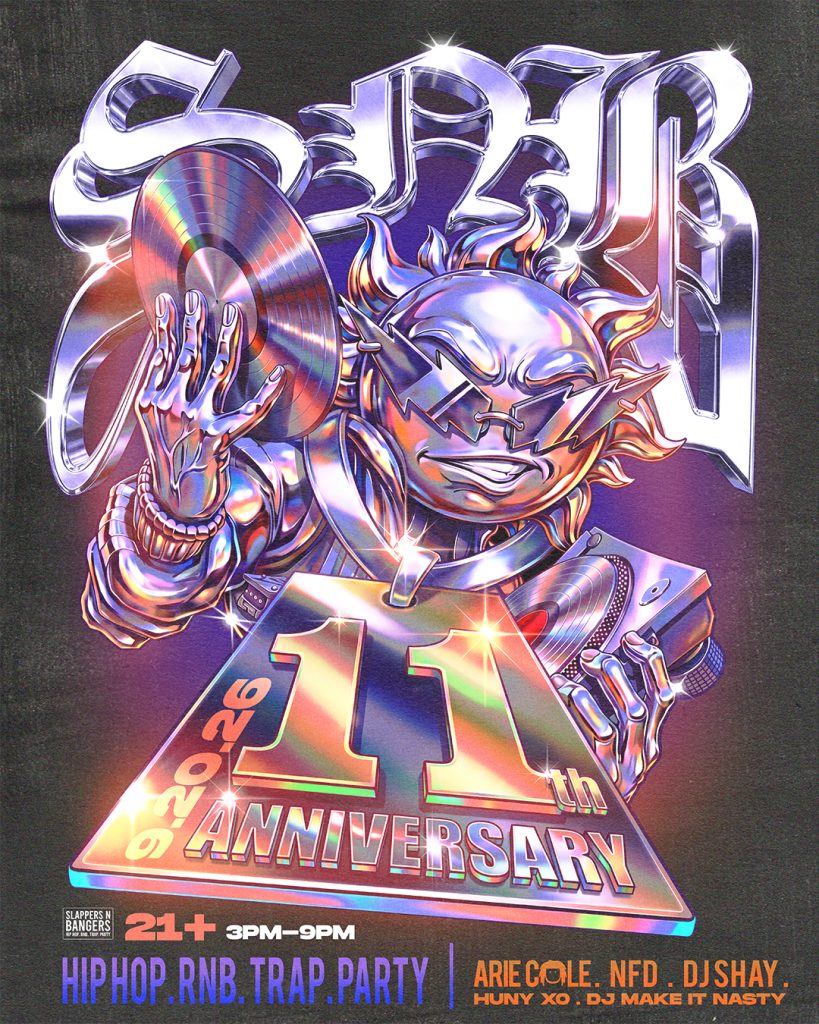
Since 2015, Slappersnbangers has built dance floors around the exact subgenre distinctions covered here, mixing boom bap breaks into a trap-heavy set, or dropping a drill record right before a G-funk cut to shift the room’s energy. Knowing these lines isn’t academic when you’re building a setlist. It determines whether a crowd stays locked in or drifts to the bar. That knowledge, built through years of curating lineups like the one behind 400 Degreez in Pittsburgh, shapes every transition in a Slappersnbangers set. Come hear how these styles actually sound stacked back to back.
— Slappersnbangers@gmail.com
Hear These Subgenres Live
Reading about the difference between trap’s 808 patterns and boom bap’s sampled snares only gets you so far. Live, DJ-curated environments exist where you can hear drill, trap, G-funk, and boom bap blended in real time by experienced DJs who have been reading crowds since 2015.

Rather than piecing together a listening education from scattered YouTube rabbit holes, you get a night where a Pittsburgh crew or a touring lineup already did that curation work for you. Events like the one detailed in this summer’s Brooklyn, Queens, and Newark hip-hop lineup stack multiple regional sounds into a single night, so you leave with a better ear than any article can give you. Check the current event calendar at Slappersnbangers and grab a ticket to the next one near you.
Sources
- Rap Styles: 22 Rap Genres That Defined the 50 Year Evolution of Rhyme
- Chicago drill goes global
- 11 Hip-Hop Subgenres To Know: From Jersey Club To G-Funk And Drill
- Top 20 rap genres that have defined hip hop | Native Instruments Blog
- List of hip-hop genres
FAQ
What Are the 7 Levels of Rappers?
There’s no single official ranking, but the phrase usually refers to an informal skill hierarchy fans use online, ranging from casual amateurs to technically elite lyricists. Definitions vary widely by source, so treat any specific numbered list as opinion rather than an industry standard.
What Rap Genre Is Eminem?
Eminem is generally classified under East Coast hip-hop and horrorcore-influenced rap, known for rapid-fire, technical delivery and dark storytelling themes. His early work with Dr. Dre also carries clear West Coast G-funk production touches.
Why Is Gen Z Obsessed With Rap?
Streaming platforms and short-form video apps like TikTok let niche subgenres such as drill and cloud rap reach global audiences almost instantly, turning regional scenes into worldwide trends within months. That speed of discovery, paired with rap’s constant stylistic reinvention, keeps the genre feeling current to younger listeners.
What Are the Different Types of Raps?
Rap styles break down by production sound, vocal delivery, region, and lyrical theme, covering categories like boom bap, trap, drill, G-funk, grime, and chopped and screwed. Each type combines a distinct regional origin with specific production and vocal traits, which this guide profiles individually above.
Where Can I Hear Multiple Rap Subgenres in One Night?
DJ-curated live events, like those run by Slappersnbangers, blend trap, drill, boom bap, and G-funk sets designed around crowd energy rather than a single genre. Check current listings for a lineup that stacks regional styles back to back.