Yes, you need a physical government-issued photo ID at most concerts, especially if you’re buying alcohol or entering an age-restricted show. General arena and theater shows without personalized tickets often skip ID checks entirely at the door. Photos of IDs on your phone almost never count, and showing up without acceptable ID typically means denied entry or a flat “no” at the bar, with zero refund.
TL;DR:
- Photographic or digital copies of IDs are almost universally rejected, so carrying a physical government-issued ID remains essential for entry and alcohol sales.
- Valid IDs accepted at most venues include state drivers licenses, passports, and military IDs; photocopies, expired IDs, and phone photos are typically refused.
- For age-restricted events, a valid ID is required for entry and for purchasing alcohol, with wristbands used after verification to streamline bar checks.
- If you lose or forget your ID, contacting the venue early may help, but most will deny entry without an acceptable primary ID, and refunds are unlikely.
- International visitors should carry their passports, as foreign IDs often face stricter scrutiny, and mobile IDs are only accepted if the venue explicitly allows and can verify them.
Table of Contents
- Acceptable and Unacceptable IDs: The Photo-ID Checklist
- Age-Restricted Events and Alcohol Wristband Policies
- If You Lose or Forget Your ID: Realistic Next Steps
- Personalized Tickets and Name-on-Ticket ID Matching
- Mobile and Digital ID Acceptance: The State of Verification Tools
- How Slappers N Bangers Runs Entry and ID Checks at Its Events
- Venue-Type Differences: Arena, Club, and Festival ID Rules
- ID Requirements for International Visitors
- Expired IDs and Grace Period Confusion
- Special Accommodations for Minors at Non-Alcohol Events
- Our Take: What the ID Rules Actually Boil Down To
- Get Your Tickets and Gear Before the Next SNB Show
- Sources
- FAQ
Acceptable and Unacceptable IDs: The Photo-ID Checklist
Here’s the part that trips people up every single weekend: not every ID that works at the airport works at a concert. Venues run their own rules, and those rules almost always come down to what the bouncer or bartender can legally rely on without putting the liquor license at risk.
What’s accepted almost everywhere:
- A valid U.S. state driver’s license or state-issued ID card
- A U.S. passport (book or card)
- A U.S. military ID
- Foreign passports for general entry, though alcohol sales get checked more strictly and some bars simply won’t serve without a domestic ID they recognize
Major event organizers spell this out in plain language. Insomniac’s general concert guidelines list driver’s licenses, passports, and military IDs as acceptable, then draw a hard line against anything that isn’t a primary, government-issued document.
What gets you turned away at the table:
- School or college IDs, even ones with a photo and birthdate
- Photocopies of any ID
- A photo of your ID stored on your phone
- Expired IDs, with rare exceptions for temporary DMV paperwork paired with a passport or another primary document, and only if the specific venue allows it
That last one surprises people every year. You’d think a license that expired two weeks ago would be fine. Some door staff will wave it through. Most won’t, because the person checking IDs isn’t paid to make judgment calls on your behalf. Insomniac’s policy page confirms photocopies and photo-of-ID formats sit on the same rejected list as expired documents, and that’s the pattern you’ll see at venue after venue.
Statistic Callout: Venues that reject phone photos aren’t being difficult for the sake of it. Reporting on a recent incident showed how physical-ID-only policies exist specifically because accepting phone photos or improvised digital formats raises real legal exposure around alcohol service.
The practical move is simple: carry the physical card, and keep a backup photo of it stored somewhere secure on your phone in case the original gets lost. That backup photo is for your own peace of mind, not for getting past the door. Treat it as a “just in case I need to file a police report” tool, not a plan B for entry.
Pro Tip: Check your license expiration date the week you buy tickets, not the day of the show. A quick DMV renewal is a lot less stressful than getting turned away with your friends already inside.
Age-Restricted Events and Alcohol Wristband Policies
There’s a difference between an event’s age policy and the ID check that happens at the bar, and mixing the two up is one of the most common reasons people get caught off guard. An 18+ show means anyone under 18 simply can’t get in, full stop. A 21+ show raises that bar to legal drinking age for entry itself. An all-ages show, on the other hand, might let a 16-year-old walk right in, but that same 16-year-old still can’t buy a drink, and the venue still checks ID at the bar regardless of what the door policy says.
OKC Zoo Amphitheater’s FAQ page makes this distinction clear: age-restricted concerts require valid government-issued photo ID for every attendee, and showing up without one can mean removal from the event, not just a denied drink order.
Here’s roughly how the wristband workflow tends to play out at a typical age-restricted or alcohol-serving show:
- You show your ticket, then your ID, at the main entry point.
- Staff verify your birthdate against the ID and, if you’re of legal drinking age, issue a wristband or hand stamp.
- That wristband becomes your fast pass at every bar inside, no repeat ID checks needed.
- Some venues apply an “appears under 40” rule, meaning staff card anyone who looks like they might be under 21, even with a wristband, if something seems off.
- Leaving the venue and trying to re-enter often means a fresh ID check, since wristbands can be swapped or lost.
The liability angle explains almost everything about why this feels so strict. Venues protect their liquor license by requiring physical or verified mobile IDs, because a bartender who serves a minor on a technicality is putting the entire venue’s ability to sell alcohol on the line. That’s also the root reason phone photos get rejected across the board: an ID that can be edited in a photo app doesn’t hold up as “reasonable reliance” under most state alcohol regulations.
Pro Tip: If you’re the designated sober friend at a 21+ show, ask for a “no alcohol” wristband color at the door. Some venues offer this so bar staff don’t waste time carding you every time you’re standing near the counter.
If You Lose or Forget Your ID: Realistic Next Steps
Losing your ID hours before a show feels like a disaster, but there’s usually a sequence of moves worth trying before you write off the night entirely.
- Call the box office or venue guest services immediately. Explain the situation and ask directly whether they offer will-call pickup, accept a secondary form of ID, or have any documented exception process.
- Check if the ticket is personalized. If it is, and the original purchaser is available, bring them along, since some venues will admit the group if the lead purchaser can verify identity for everyone on the order.
- Gather backup paperwork. A booking confirmation email, a bank statement showing the ticket charge, or documentation of an authorized transfer can sometimes support your case, though acceptance is entirely at the venue’s discretion.
- Prepare for the realistic outcome. Many venues will still deny entry or refuse alcohol service if you can’t produce acceptable primary ID, and most ticket policies do not offer a refund for this reason.
- Explore resale or transfer for a future date if the event has multiple dates or a comparable show coming up, since that’s often a better use of your time than arguing at the gate.
None of this is a guarantee. Staff working the door don’t have the authority to bend the rules on the spot in most cases, and pushing hard on that point rarely changes the outcome. The best return on your effort is almost always a phone call made hours before doors open, not a conversation happening in the parking lot at showtime.
Personalized Tickets and Name-on-Ticket ID Matching
Personalized tickets require the name on the ticket to match the ID of the person walking through the door, and that’s by design, not an accident of the ticketing system. Organizers use this model specifically to fight scalping and fraud, tying each ticket to one verified buyer rather than letting it change hands freely.
Official ticketing help pages spell out exactly how this plays out at the gate. O2’s guidance on events requiring ID explains that personalized tickets need matching photo ID to prevent resale abuse, and mismatched names put your entry at risk regardless of how legitimately you obtained the ticket.
If you bought the ticket for a friend, or you’re the friend who got the ticket, here’s how to avoid trouble:
- Check the ticketing platform for an official transfer tool before the event, since most major platforms let the original buyer formally reassign a ticket to someone else’s account.
- Use that transfer feature rather than just forwarding a screenshot, because a printed confirmation or forwarded email usually isn’t enough proof on its own.
- Contact the ticket provider directly if you’re unsure whether a transfer went through, ideally a day or two before the show rather than in line at the door.
- Bring the lead purchaser along when a transfer isn’t possible, since some venues will admit the full group if that person can verify the order.
Skipping these steps and hoping the door staff will let it slide is a real gamble. Personalized-ticket enforcement exists precisely because organizers expect people to try exactly that.
Mobile and Digital ID Acceptance: The State of Verification Tools
A picture of your license on your phone is not the same thing as a verified mobile ID, and that distinction matters more than most people realize until they’re standing at the bar getting turned down. A government-issued mobile ID runs through a verifier app or certified reader that confirms the credential against state records in real time. A photo just sits in your camera roll, with no way for staff to confirm it hasn’t been edited.
A handful of states have started building the infrastructure for real mobile ID acceptance, but adoption is still voluntary and inconsistent:
- New York’s mobile ID (MiD) can be accepted by licensees for alcohol sales or admission, but only when the venue has verifier tools that read the state’s embedded DMV credential, according to the New York State Liquor Authority’s advisory.
- West Virginia’s ABCA has issued similar guidance for private clubs, requiring specific verifier apps and explicitly warning that photos of IDs don’t satisfy the standard.
- More states are expected to roll out comparable digital-ID programs, but each one comes with its own vendor hardware and verification requirements rather than a single universal standard.
Statistic Callout: Even in states with an official mobile ID program, acceptance still depends on the individual venue owning the right verifier hardware. Without the proper equipment, a mobile ID may not be usable for entry or alcohol purchase.
The safest assumption heading into any show: pack a physical ID unless the venue’s own website explicitly names mobile ID acceptance and describes how it verifies the credential.
How Slappers N Bangers Runs Entry and ID Checks at Its Events
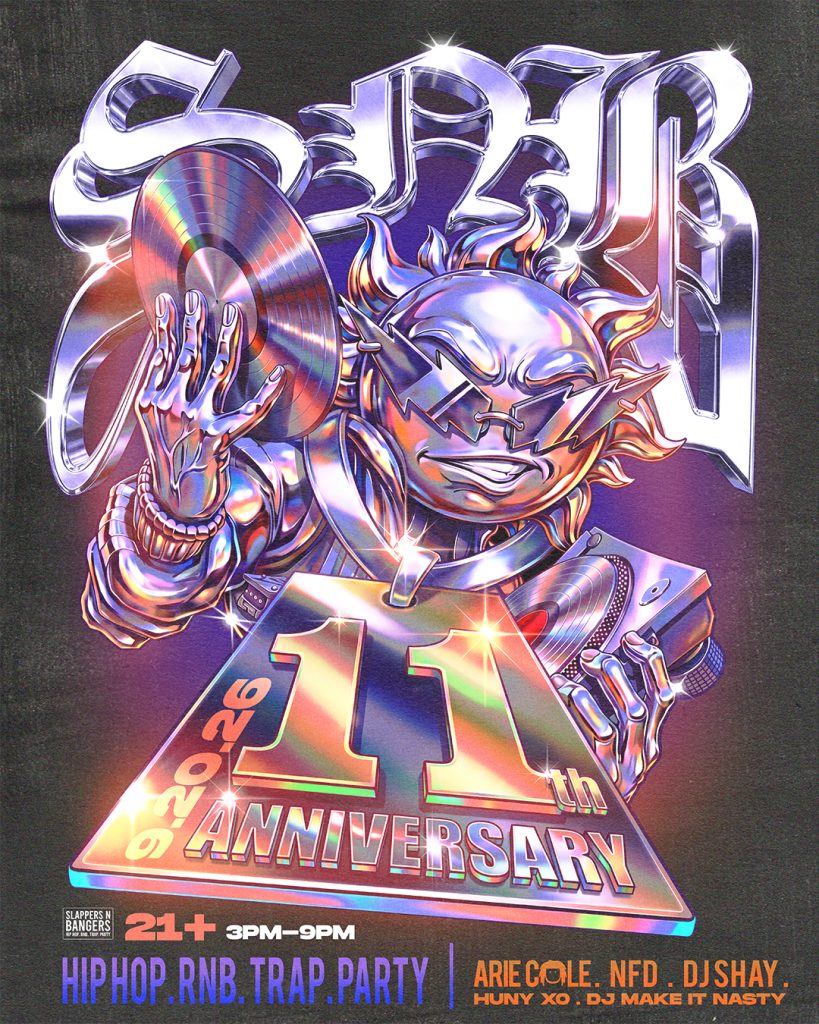
Large-scale hip hop, rap, and R&B parties have been running since 2015, and experience shows where ID friction happens. Ticket scanning generally comes first at events, followed by a photo ID check for anyone at the bar or attending an age-restricted show. Guests buying alcohol typically get a wristband, meaning one ID check clears them for the rest of the night at every bar station inside.
Advice from experience with guests moving through the door: get there early. A packed entry line moves slower when half the crowd shows up in the final fifteen minutes before doors close, and nobody wants to miss the opening set because they’re still digging through a bag for their license. Check the specific event page for your show, since venue-specific rules can shift depending on the venue hosting the party that month.
Venue-Type Differences: Arena, Club, and Festival ID Rules
The venue itself shapes how strictly ID gets checked, and knowing the pattern saves you a surprise at the door.
Arenas and theaters with general (non-personalized) tickets usually skip ID checks for entry entirely. Staff scan your ticket and let you through. The moment alcohol enters the picture, though, ID comes right back into play at every bar and concession stand inside.
Clubs and small venues run tighter door policies almost across the board. Smaller capacity means door staff have time to check every single guest, and many clubs are 18+ or 21+ by default, which makes ID checks mandatory at entry rather than just at the bar.
Festivals sit somewhere in between, with a twist: multi-day passes and cashless wristband systems often tie your ID to your wristband on day one, meaning you might only get carded once for the entire weekend. Some festivals also run age-restricted zones inside an otherwise all-ages event, with separate ID checks for those areas.
The rule of thumb holds across all three: assume you need ID until the venue tells you otherwise, and assume alcohol will require it no matter what the general entry policy says.

ID Requirements for International Visitors
A valid passport works as primary ID at the overwhelming majority of U.S. venues, and it’s often the simplest option for visitors who don’t have a domestic driver’s license. Some venues also accept foreign national ID cards for general entry, but alcohol purchases tend to get scrutinized harder, and staff unfamiliar with foreign ID formats sometimes default to a hard “no” rather than risk a compliance mistake.
Consular identification cards occupy a gray area. A handful of venues accept them for age verification, but plenty don’t, since staff have no consistent way to confirm authenticity against a document they rarely see. If you’re traveling for a show and your passport isn’t your everyday carry item, bring it anyway. It’s the one document that consistently works across state lines and venue types, and it sidesteps the “is this a real ID” hesitation that consular cards or unfamiliar foreign licenses sometimes trigger at a busy bar.
International visitors attending age-restricted shows should also expect zero flexibility on the entry-age policy itself. An 18+ or 21+ cutoff applies regardless of home-country drinking age norms, and venue staff aren’t authorized to make exceptions based on where you’re visiting from.
Expired IDs and Grace Period Confusion
An expired license is one of the most common reasons people get stopped at the door, and the confusion usually comes from state-level grace periods that have nothing to do with venue policy. Some states legally allow driving on a recently expired license for a set window. That grace period covers driving privileges, not identity verification at a concert or bar.
Most venues treat an expired ID exactly like an invalid one, full stop, with a narrow exception: some will accept a temporary DMV renewal document when it’s paired with a valid passport or another primary form of ID, but that combination only works where the specific venue’s policy explicitly allows it. Insomniac’s guidelines list expired IDs among the commonly rejected forms, right alongside photocopies and phone photos.
The safest habit is checking your ID’s expiration date the same week you buy tickets, not the week of the show. A DMV renewal appointment booked with a month of lead time is a far better use of your time than negotiating with a bouncer who has no authority to make an exception.
Special Accommodations for Minors at Non-Alcohol Events
All-ages shows exist precisely so younger fans aren’t shut out of live music entirely, and most venues handle minors at these events with a light touch on ID, at least for entry itself. A 16-year-old attending an all-ages concert typically doesn’t need ID to get through the door, though many venues still ask for some proof of age if the show sits close to an age cutoff, like a 15-and-under discount or a parental consent requirement for anyone under a certain age.
Alcohol remains the one line that never bends. Even at a fully all-ages event, a minor standing at the bar gets carded and refused exactly the same way they would at a 21+ show. Some venues also require a parent or guardian to accompany minors under a specific age, especially for late-evening events, and that policy usually shows up in the fine print of the ticket listing rather than at the door, so it’s worth a quick read before you buy.
Our Take: What the ID Rules Actually Boil Down To
The conventional advice on this topic treats ID checks like a formality. It isn’t. The real driver behind nearly every rule in this article is liquor liability, not door-staff pickiness, and once you see it that way, the inconsistencies stop feeling random.
Most people overprepare for the wrong scenario. They worry about forgetting their ID entirely, when the more common failure is bringing an ID that’s technically expired, photocopied, or stored only as a phone photo. Fix that one habit, check your license before you leave home, and you eliminate the majority of door problems before they start.
What we’d prioritize first: treat the bar line differently than the entry line. Entry policy varies by venue and event type, but alcohol verification is the one constant that never loosens, regardless of how casual the show feels. Plan around that, and the rest of the ID puzzle mostly takes care of itself.
— Slappersnbangers@gmail.com
Get Your Tickets and Gear Before the Next SNB Show
This organizer offers an alternative to guessing your way through a music calendar full of one-off promoters. Since 2015, hip hop, rap, and R&B scenes have been supported by DJs who read a crowd instead of just running a playlist, aiming for a packed dance floor and a night built around the culture.

Check the events page for upcoming shows like August SNB: 400 Degreez, where you’ll find venue-specific entry and ID details before you head out the door. While you’re there, grab the Draft Commemorative Tee from our current lineup of new and limited-edition merch, whether you’re picking it up online ahead of the show or at the merch table once you’re inside. Visit Slappersnbangers to see the full event calendar and lock in your ticket for the next one.
Sources
- OKC Zoo Amphitheater – FAQs
- Bowery Presents incident and venue physical-ID policies (Boston Globe)
- Insomniac – General concert guidelines
- NYS Liquor Authority advisory on the use of New York State Mobile ID
- West Virginia ABCA – Private club mobile ID advisory
FAQ
Do They Check ID at Concerts?
It depends on the venue and event type. General arena or theater shows with non-personalized tickets often skip ID checks at entry, but nearly every venue checks ID at the bar and at age-restricted shows, per OKC Zoo Amphitheater’s FAQ.
Can I Be 16 and Go to a Concert Alone?
Yes, at most all-ages shows a 16-year-old can attend without an adult, unless the venue lists a specific age or guardian requirement on the ticket page. Alcohol purchase still requires valid ID and legal drinking age regardless of the event’s general admission policy.
Can a 17-Year-Old Get Into a Concert?
Anyone under 18 can get into all-ages or 18±and-under shows, but they’re barred from 18+ or 21+ events entirely. Checking the venue’s posted age policy before buying a ticket avoids a wasted trip to the door.
Do 21+ Concerts Check ID?
Yes, 21+ concerts check ID for every attendee at entry, not just at the bar, since the age restriction applies to the entire event. Acceptable ID typically means a driver’s license, passport, or military ID, and photos of IDs are rejected almost everywhere, per Insomniac’s concert guidelines.
What Happens if I Forget My ID at a Concert?
You risk denied entry or refused alcohol service, and most venues won’t issue a refund for that reason. Calling the box office ahead of time to ask about will-call or secondary verification options is worth trying before you head to the venue.