Start with your groove, an 8-count, and three small moves, and you can dance to most hip hop tracks within weeks. Skip the flashy combos you see online and focus on feeling the beat in your knees and chest before you worry about footwork. Practice in short sessions, stay upright rather than jumping into floor moves, and let musicality do the heavy lifting.
TL;DR:
- Developing a relaxed bounce and mastering basic groove are essential and can be built through short, consistent practice sessions focusing on weight transfer and musicality.
- Mastering fundamental moves like the two-step and grapevine at 70-80% tempo allows for natural control and can be extended to full speed with added arm variations over a few weeks.
- Starting with upright social dancing styles and focusing on groove, isolations, and listening to the layered rhythm of hip hop music proves more effective than learning many moves quickly.
- Practicing in a social, DJ-led party environment provides real-time feedback on groove and helps integrate moves into authentic dance situations more effectively than studio classes.
- Clothing should be loose and stretchy, with flat-soled sneakers for good grip, and hair should be tied back to avoid distraction during practice.
Table of Contents
- What Hip Hop Dance Basics Actually Require: Groove, Counts, and Focus
- Six Starter Moves for Hip Hop Party Dancing
- A 5-Minute Practice Routine You Can Do at Home Today
- Warming Up Right: How to Avoid Injury While You Learn
- Breaking, Popping, and Party Dancing: Sorting Out the Styles
- Slappers N Bangers: Where Beginners Practice Hip Hop Socially
- What to Wear When You’re Learning Hip Hop Moves
- Why Musicality Beats Move Count for Every Beginner
- Try Your New Moves on a Real Dance Floor
- Sources
- FAQ
What Hip Hop Dance Basics Actually Require: Groove, Counts, and Focus
Before you learn a single step, you need to hear the music the way a dancer hears it. That’s the real starting point, and it’s where most beginners skip ahead too fast.
Hip hop tracks are built in layers, and each layer gives your body something different to respond to. The kick drum and snare set the pulse, the bass gives you something to sink your weight into, and the hi-hat adds texture on top. According to Berklee College of Music’s breakdown of hip-hop production, that layered structure and rhythmic density are what define the genre’s sound. Dancers use an 8-count (counting “1, 2, 3, 4, 5, 6, 7, 8” over a musical phrase) as a map for where movements land. Once you can count along and point out the kick versus the snare, you’ve got the single most useful skill in hip hop groove basics.
Groove itself comes from a soft knee bend and a steady bounce, not a stiff bob. Stand with your feet shoulder-width apart, bend your knees slightly, and let your weight drop and rise on the beat like you’re gently pressing into the floor. That small motion is the base layer under almost every move you’ll learn.
Exercises to build a relaxed bounce:
- Bounce in place for one minute to a slow beat (around 80 to 90 beats per minute), keeping your shoulders loose.
- Shift your weight side to side on counts 1 and 5 without lifting your feet off the floor.
- Add a slight head nod on the snare hits to connect your upper body to the rhythm.
Isolations come next. An isolation means moving one body part while the rest stays still, and it’s what makes hip hop look sharp instead of loose. Practice chest pops by pushing your chest forward and back without moving your hips. Try shoulder isolations by rolling one shoulder up and back while the other stays fixed. Hip isolations work well standing still and shifting your hips in a small square pattern. Head isolations, a slow tilt or slide side to side, finish the set.
Performance basics tie it all together. Committing to a move with confident focus and a relaxed face reads better than perfect technique performed nervously. Look up, not at your feet, and let your expression match the music’s energy.
Pro Tip: Practice isolations in front of a mirror with the music muted first. You’ll notice extra tension in your shoulders or face that you’d never catch with sound on.
Six Starter Moves for Hip Hop Party Dancing
These six moves cover most of what you’ll see on a dance floor at any hip hop party, and each one builds directly on the groove and counts from the last section.
1. Basic Bounce
Stand with knees soft, feet hip-width apart, and bounce gently on every beat. Keep your arms relaxed at your sides or add a light pump. Use a slow count (1 through 8, repeating) until the bounce feels automatic. The common mistake here is bouncing from the waist instead of the knees, which looks jerky instead of grounded. Drill it for one full song before moving on.
2. Two-Step
Step your right foot to the side on count 1, bring your left foot to meet it on count 2, then step left on count 3 and bring your right foot in on count 4. Add a shoulder shrug or arm swing on each step for style. Most beginners rush the weight transfer, landing flat instead of rolling through the foot. Slow the tempo down and exaggerate the weight shift until it feels natural.
3. Step-Touch
This is the two-step’s simpler cousin. Step out to the side with one foot, touch the other foot next to it without putting weight on it, then reverse. Keep your knees bent and let your hips sway slightly with each touch. The main error is standing too upright, which kills the groove. Bend more than feels natural at first.
4. Shoulder Bounce
With your basic bounce going, add a forward and back roll of your shoulders on alternating beats. Right shoulder forward on count 1, left shoulder forward on count 2, and so on. Keep your chest loose. Beginners often tense their neck while doing this. Drop your shoulders and shake them out between reps to stay loose.
5. Body Roll
Starting from your chest, push forward, then let the wave travel down through your ribs, hips, and knees in one continuous motion, like a wave rolling through your body. It helps to practice each section separately first (chest, then ribs, then hips) before linking them. The most common mistake is rolling too fast, which turns it into a jerky wiggle instead of a smooth wave. Slow it down to half tempo until the motion feels connected.
6. Grapevine
Step your right foot to the side, cross your left foot behind it, step right again, then bring your left foot to meet it. This is a four-count move that travels across the floor. Keep your upper body facing forward while your feet cross behind. The typical mistake is crossing the foot in front instead of behind, which throws off the rhythm and the look. Practice slowly against a wall until the foot pattern is automatic.

For tempo, start every move at 70 to 80 percent speed on a track you know well. Once the counts feel automatic, bump the speed up to match a full-tempo song. Scaling difficulty is simple: add an arm variation, combine two moves back to back, or try the same move facing a different direction. You don’t need new moves to get harder. You need more control over the ones you already have.
Common threads across all six moves:
- Every move gets easier when you slow the music down first.
- Weight transfer (not footwork speed) is what separates a beginner move from a confident one.
- Arms and shoulders should follow the beat, not fight it.
A 5-Minute Practice Routine You Can Do at Home Today
Building hip hop dance steps into muscle memory takes repetition, and repetition needs structure. Here’s a session format that works whether you have a studio mirror or just floor space in your living room.
Start every session with a short warm-up. Roll your ankles, bend and straighten your knees a few times, circle your hips, and shrug your shoulders forward and back. Ninety seconds is enough to loosen the joints you’ll use most.
Four drills to run through, in order:
- 8-count isolation loop. Pick one isolation (shoulders work well) and hit it on every count of an 8-count, repeating for two full minutes.
- Accent practice. Play a track and try to hit a bounce or shoulder pop exactly on the snare hit, ignoring the kick and bass for now.
- Groove loop with arms. Add a simple arm swing to your basic bounce and hold it for a full minute without stopping.
- Mirror or record check. Film 30 seconds of yourself doing the two-step and watch it back. You’ll spot tension or rushed weight shifts you can’t feel in the moment.
The SF Conservatory of Dance’s guide for beginners makes a point worth repeating: staying grounded and finding the beat matter more early on than learning new moves. Short, consistent sessions beat long, occasional ones for building this kind of muscle memory.
Here’s a 5-minute routine that strings three moves together. Play any mid-tempo hip hop track (around 90 to 100 BPM works well for beginners):
- Minute 1: Basic bounce, focusing purely on the knee bend and weight shift.
- Minutes 2 to 3: Two-step, adding the shoulder shrug once the footwork feels steady.
- Minutes 4 to 5: Grapevine, traveling across your available floor space and back.
Pro Tip: Loop the same 30-second section of a song five times in a row instead of playing the whole track. Repetition on one phrase locks in timing faster than dancing through a full song once.
For a weekly schedule, three 20-minute sessions or five 10-minute sessions both work, and the shorter, more frequent option often fits better into a busy week. Progress by adding one new move every week rather than trying to learn everything at once. By week three, most beginners can chain two moves together without stopping to think about the counts.
Warming Up Right: How to Avoid Injury While You Learn
A proper warm-up takes three minutes and prevents most of the strains beginners run into. Skipping it to save time almost always costs more time later in recovery.
A simple pre-practice warm-up:
- Ankle circles, ten each direction, to prepare for quick weight shifts.
- Knee bends (ten slow squats) to warm up the muscles that absorb your bounce.
- Hip circles, ten each direction, loosening the joint you’ll isolate constantly.
- Shoulder rolls, ten forward and ten back, since isolations put repetitive strain here.
Floorwork (drops, spins, anything involving your hands or back on the ground) should wait until your core strength and general mobility catch up with your enthusiasm. There’s no set timeline. It depends on how your body responds to the upright moves above. If a body roll or a deep bounce already causes strain, floorwork will strain you more.
Watch for sharp pain (different from normal muscle fatigue) and swelling that doesn’t go down within a day. Both are signs to rest, not push through. A dull ache after a new drill is common. A sharp pain during a specific motion is not, and it’s worth seeing a physical therapist or sports medicine professional if it persists past a few days of rest.
Breaking, Popping, and Party Dancing: Sorting Out the Styles
Hip hop dance covers more ground than most beginners realize, and knowing the difference saves you from signing up for the wrong class.

Breaking is the athletic, floor-based style most people picture when they hear “hip hop dance.” It includes toprock (standing footwork), footwork on the ground, freezes, and power moves like spins. According to DanceUS’s breakdown of hip-hop dance styles, breaking demands strength and conditioning that most beginners haven’t built yet.
Party and social dances (the two-step, body roll, grapevine, and similar moves covered above) stay upright and social. These are what you’ll actually use at a party, a wedding, or a club, and they’re the right entry point for nearly everyone starting out.
Funk styles like popping and locking use sharp muscle contractions and hits rather than the flowing bounce of party dancing. They’re technical in a different way and worth exploring once your isolations are solid.
House dance brings in fast footwork tied closely to house music’s tempo, a different rhythmic world from most hip hop tracks.
The practical takeaway: start with upright social moves, and only add breaking or power moves once your core strength and floor comfort catch up. When you’re reading class descriptions, look for language about musicality, groove, and social/party styles if you want what this guide covers. Descriptions heavy on “power moves” or “tricks” signal a breaking-focused class, which is a great goal but a different starting point.
Slappers N Bangers: Where Beginners Practice Hip Hop Socially
Learning moves in your living room only gets you so far. At some point, you need a room full of people moving to the same track to see how it actually works.
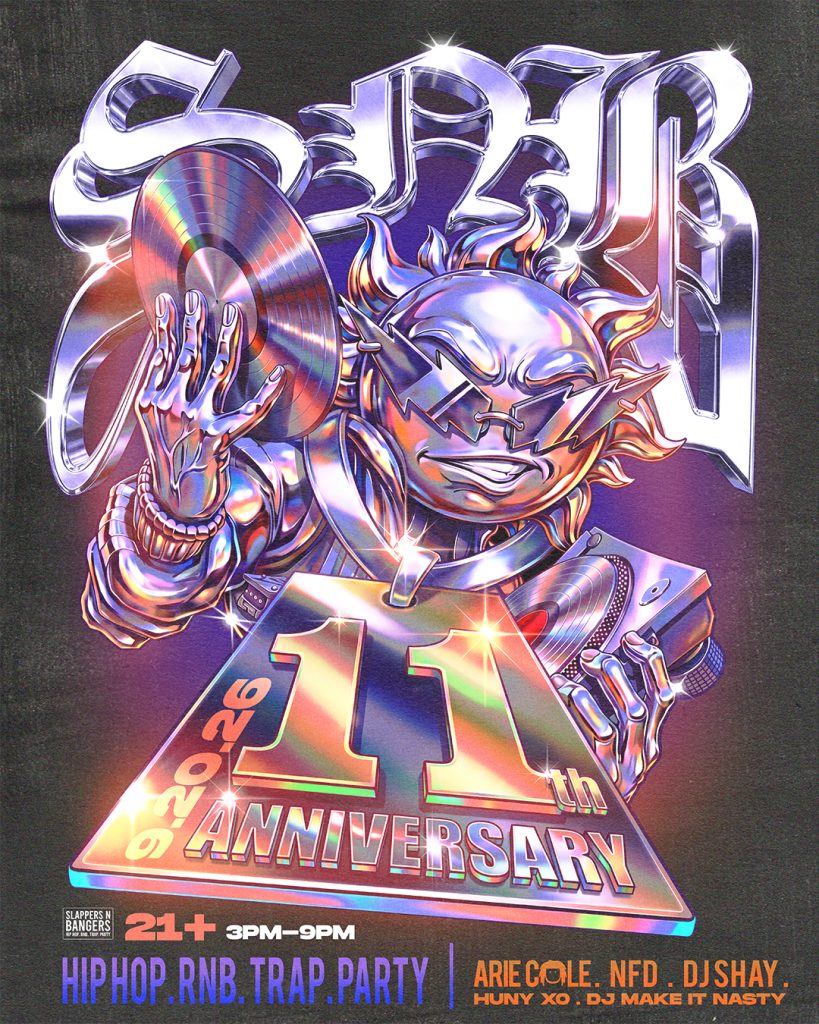
A party organization has built exactly that kind of room since 2015, when founders started throwing hip hop and rap parties in Pittsburgh to fill a gap local venues weren’t covering. The flagship event, 400 Degreez, draws a crowd built around DJ-led energy and an expressive, community-focused dance floor.
Why a party setting helps beginners specifically:
- Nobody’s watching you closely; everyone’s focused on their own groove.
- DJs read the crowd and build tempo gradually, giving you time to warm into the music.
- You’ll see two-steps, body rolls, and shoulder bounces done a hundred different ways by a hundred different people, which teaches you more about style than any single tutorial.
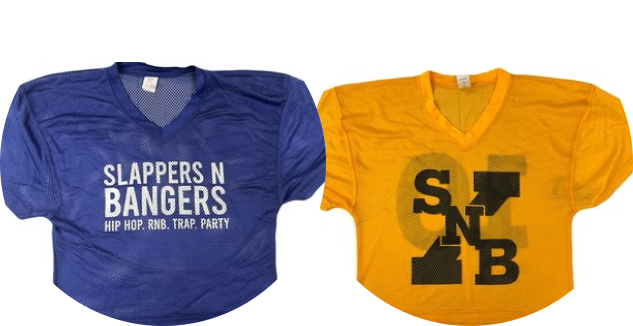
For readers who want a keepsake from the experience, the Draft Commemorative Tee and the Slappers n’ Bangers 10th Anniversary Jersey (Limited Run) both mark the milestone in a way a photo alone doesn’t.
What to Wear When You’re Learning Hip Hop Moves
Your clothing choices matter more than most beginner guides admit, mostly because the wrong outfit fights your movement instead of supporting it.
Loose, stretchy clothing wins every time. Joggers, athletic shorts, or a t-shirt that doesn’t restrict your shoulders let you isolate and bounce without fabric bunching or pulling. Skip anything with a tight waistband if you’re working on body rolls. It’s the first thing that’ll bother you three minutes in.
Footwear depends on the surface you’re practicing on. Flat-soled sneakers with a bit of grip work best for most beginners. Look for a sole that lets your foot pivot without catching, since two-steps and grapevines both involve small rotations. Avoid running shoes with heavily cushioned, curved soles. They’re built for forward motion, not lateral steps, and they’ll make your weight shifts feel unstable.
If you’re practicing at home on carpet, socks or bare feet sometimes work better than shoes since carpet already limits your pivot. On hardwood or a studio floor, sneakers give you more control. Skip anything with a slick leather sole unless you’re intentionally working on slides, since they offer none of the grip your basic bounce needs to feel grounded.
One more practical note: pull long hair back before you start. Head isolations and body rolls both put hair in motion, and it becomes a distraction fast if it’s in your face during a drill.
Why Musicality Beats Move Count for Every Beginner
Most beginner advice treats hip hop dance like a vocabulary list: learn move one, then move two, then move three, and eventually you’ll “know how to dance.” That’s backward. The research on beginner-focused teaching consistently points the same direction: musicality, groove, and grounded weight shifts come first, and move count is almost irrelevant.
The overrated piece of conventional wisdom is the tutorial that promises ten moves in ten minutes. You’ll finish that video able to mimic ten shapes and unable to dance to a single new song, because nobody taught you to hear the beat those shapes were built on. A dancer who knows three moves and can hear the snare will look more confident on a floor than someone who knows fifteen moves and can’t find the downbeat.
What should you prioritize first? Groove and counting, full stop. Everything else, including the six starter moves in this guide, is just vocabulary layered on top of a skill you can build in a week of short daily sessions. Freestyle practice matters here too. The moment you stop following a tutorial and just move to a song you like, badly at first, is the moment you start actually dancing instead of performing steps.
— Slappersnbangers@gmail.com
Try Your New Moves on a Real Dance Floor
Slappers N Bangers gives beginners a lower-pressure way to test everything covered here: a DJ-led party where the crowd is focused on the music, not on judging your two-step. Unlike a studio class where you’re learning choreography from a mirror, an event puts you in a room where groove and musicality actually get used in real time, next to hundreds of other people doing the same thing.

Formats vary from indoor club nights to outdoor day parties like 400 Degreez, where DJs build the tempo throughout the day rather than dropping you into peak energy cold. Expect a lively floor, hip hop and R&B played authentically, and a crowd that’s there for the culture as much as the music. Browse current event dates and merch to find one near you, grab a ticket, and treat it as a practice session with better speakers than you have at home.
Sources
These sources back the specific claims made throughout this guide, and each is worth a read if you want to go deeper on any single topic.
- Essential features of hip-hop production: tempo, instrumentation, rhythmic feel, and sonic density — Berklee College of Music
- Hip-hop dance styles explained: Breaking, popping, krumping and more — DanceUS
- The creation and application of a fundamental hip-hop curriculum — University of Northern Colorado thesis
- How to hip hop dance for beginners: step-by-step basics, moves, and practice tips — SF Conservatory of Dance
FAQ
What are the basic hip hop dance steps for beginners?
The core starter moves are the basic bounce, two-step, step-touch, shoulder bounce, body roll, and grapevine. Each builds on the same groove and 8-count foundation, so mastering one makes the next easier to pick up.
What are the elements of hip hop dance?
Definitions vary slightly, but most frameworks point to groove, isolations, musicality, freestyle or improvisation, and knowledge of the culture’s history and vocabulary. The University of Northern Colorado’s curriculum research ties these elements to genuine hip hop instruction rather than generic dance fitness classes.
What are the different styles within hip hop dance?
The major categories are breaking (athletic, floor-based, includes power moves), party and social dances (upright moves like the two-step and grapevine), funk styles like popping and locking, and house dance. DanceUS recommends beginners start with upright social styles before moving into breaking’s floorwork.
How do I know if a class is teaching real hip hop dance basics?
Look for descriptions mentioning musicality, groove, isolations, or history and vocabulary rather than just “cardio” or “hip hop fitness.” A class that references cyphers, freestyle, or foundational moves is more likely rooted in the culture than one built purely around choreography routines.
How long does it take to learn hip hop dance basics?
Most beginners can comfortably combine two or three starter moves within two to three weeks of short, consistent practice sessions. Attending a live event, like Slappers N Bangers’ 400 Degreez, accelerates that timeline by putting your new moves in front of real music and a real crowd.