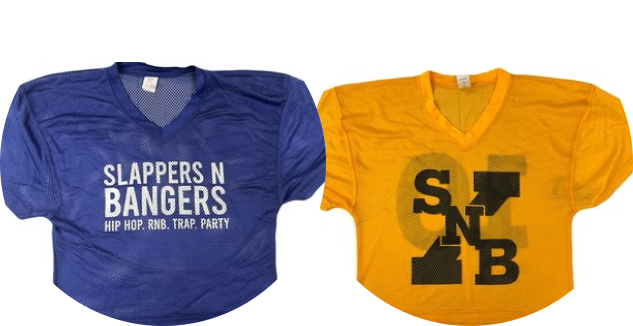
A heavyweight cotton tee is a T-shirt cut from thicker, denser jersey than the thin tees you grab in a three-pack. Most start around 6 ounces per square yard and run up to about 9, which works out to roughly 200 to 290 GSM. The result is a shirt that hangs straight, holds its shape and survives a lot of wash cycles, which is exactly what you want from a tee you wear to shows and then keep for years.
This guide explains the numbers, how a heavy tee feels and fits, when it is the wrong shirt for the weather, and what to check besides weight before you buy.
TL;DR
- “Heavyweight” has no official cutoff. Most tees sold under that label start near 6 oz/yd² and go to about 9 oz/yd², or roughly 200 to 290 GSM.
- Heavy jersey is stiffer and more structured, hides what is underneath better and keeps its shape, but it runs warmer in humid heat.
- Weight is only one part of quality. Check the collar, the seams, the cut and the sizing chart too.
- Wash graphic tees inside out and cool, and size up or down by checking measurements, not the letter on the tag.
- Our own SNB heavyweight t-shirt is built for the dance floor crowd that wears merch long after the night is over.
Table of Contents
- What is a heavyweight cotton tee?
- How fabric weight is measured
- How a heavyweight tee feels and fits
- Warmth, breathability and the weather
- What to check besides weight
- Is heavier always better?
- Styling a heavyweight graphic tee
- Caring for a heavyweight tee so it lasts
- Our perspective
- Get the tee from the night
- FAQ
- Sources
What is a heavyweight cotton tee?
It is a T-shirt where the fabric itself is heavier than standard. The shirt is made from thicker yarn, a denser knit, or both, so a square of fabric weighs more than the same square from a basic tee.
That is the whole definition, and it is looser than most shoppers expect. There is no universal cutoff. One brand’s heavyweight is another brand’s midweight. A reasonable rule of thumb, backed by a GQ guide to heavyweight tees, is that heavyweight tees start at about 6 oz/yd² and go up to about 9 oz/yd², or around 200 to 290 GSM.
So when a product page says “heavyweight,” look for the number behind the word. If there is no number, you are trusting a marketing term.
How fabric weight is measured
Fabric weight is a density measurement, not the weight of the finished shirt. Two units show up in listings:
- Ounces per square yard (oz/yd²). The common unit on American blank and merch listings.
- Grams per square meter (GSM). The metric version, common on international and fashion listings.
The two describe the same thing, so you can convert. One oz/yd² is about 33.9 GSM, which means a 6 oz tee is around 203 GSM and a 9 oz tee is around 305 GSM by straight math. Brands round and measure a little differently, which is why published ranges like 200 to 290 GSM can differ slightly from your calculator.
A quick reference:
| Label | Typical range (oz/yd²) | Roughly in GSM | What it tends to feel like |
|---|---|---|---|
| Lightweight | Under about 5 | Under about 170 | Thin, drapey, can show what is underneath |
| Midweight | About 5 to 6 | About 170 to 200 | Everyday tee, soft, moderate structure |
| Heavyweight | About 6 to 9 | About 200 to 290 | Thick, structured, holds its shape |
The heavyweight row follows the range in the GQ guide above. The other rows are our shorthand for how to shop, not an industry standard, so treat them as a guide.
How a heavyweight tee feels and fits
Put a heavy tee next to a light one and the difference shows up in three places.
Structure. Good Housekeeping’s testing notes that lighter, drapier tees tend to be thinner and sheerer, while heavyweight tees are stiffer and more structured and do a better job concealing undergarments. In practice that means a heavy tee stands away from your body a little instead of clinging.
Shape retention. Thick jersey resists stretching out at the neck and hem, so a good one still looks sharp after dozens of wears. That matters for graphic tees, because the print sits on a flat, stable surface and does not warp as the shirt ages.
Break-in. A new heavy tee can feel a bit stiff. It softens with washing and wear. That stiffness is part of the appeal for many people, like a good pair of raw denim.
Fit is the other half. Heavy fabric tends to look boxier, so many heavyweight tees are cut with a wider body and a slightly shorter length on purpose. If you want a closer fit, you are choosing by measurements, not by the size letter alone. Our merch sizing guide walks through how to pick your size before you buy, and our breakdown of unisex T-shirt sizing shows how two sample sizes help you nail the fit.

Warmth, breathability and the weather
This is where heavy cotton needs honest advice, because it is the part that decides whether you love the shirt on a given night.
Cotton on its own is breathable and soft, but it absorbs moisture and dries slowly. A university extension study guide on textiles notes that wet cotton holds moisture next to the body, which matters for active wear and humid conditions. Add thicker fabric and you have more cotton to hold that moisture.
Gear Patrol’s review of heavy tees makes the practical point: they can be warmer in fall and winter, while in hot, humid summer weather they can be hard to wear without sweating.
Here is how we would put that to use:
- Cooler nights, indoor shows, fall and spring: heavyweight is the sweet spot. It layers well under a jacket and holds up in a packed room.
- Hot outdoor day parties: pick the lighter end of the heavyweight range, wear it loose, and plan for sweat. Our day party outfit guide for Pittsburgh in August covers what works when the sun is out and the crowd is thick.
- Dancing for hours: remember that cotton stays damp. Bring a spare tee for the ride home, especially if you are riding in air conditioning.
Water-repellent finishes exist for cotton, such as the STORM COTTON finish described by Cotton Works, which is designed to add water repellency without giving up breathability. They are a finish applied to fabric, though, not something every heavyweight tee has, so check the product description if it matters to you.
What to check besides weight
GSM gets the attention, but two tees with the same number can be very different shirts. Before you buy, look at these:
- Fiber. The best-known heavyweight tees are 100% cotton, but some blend in other fibers. Blends can change the feel and how the shirt handles moisture, so read the label line, not just the headline.
- Collar. A thick, ribbed collar that lies flat is a sign of a well-made tee. A thin, wavy one is where cheaper shirts give out first.
- Stitching. Look for clean, even seams at the shoulders, sleeves and hem. Double stitching at the hem and sleeves is a good sign.
- Cut and length. Boxy, cropped, standard, oversized: the same fabric can wear completely differently. Look at the size chart measurements for chest width and length.
- Shrinkage. Cotton can shrink the first time through heat. Read the care tag, and wash cool.
- Print quality. For graphic tees, a heavy fabric gives the ink a stable surface. Check photos of the print up close, and look for cracking or fading in reviews.
- Return policy. If you are unsure about size, check how exchanges work before you order.
If you are a bigger-bodied concert-goer, the cut matters even more than the weight. Our plus size concert outfit ideas are built around pieces that stay comfortable through a six-hour night.
Is heavier always better?
No, and the useful version of the answer is about what you are doing in the shirt. A heavyweight tee in the 6 oz neighborhood is usually the comfortable everyday choice. Heavier shirts toward 9 oz are better for cool weather, layering and a bold, boxy look. Going heavier past what the climate and the activity can handle just makes you hot.
The thing that sets a heavyweight apart is how it ages. A thick tee that holds its shape and handles repeat washing earns its place in the rotation, while a thin tee gets retired when the neck stretches out. If you are buying merch from a night you want to remember, that longevity is the point.

Styling a heavyweight graphic tee
Heavy fabric has a built-in advantage for graphic tees: it hangs cleanly, so the print reads clearly and the shirt looks intentional rather than rumpled. A few ways to wear one:
- Straight up with relaxed jeans or cargos for a show or a day party.
- Under an open overshirt or bomber when the evening cools off. The structure keeps the tee from bunching under the layer.
- Tucked loosely or half-tucked with a belt, if you want to dress it up a notch.
- Oversized over fitted bottoms for a balanced silhouette.
For more ideas on pairing graphic tees with different outfits and occasions, this piece on how to style graphic tees is worth a look, especially for concerts, casual outfits and cooler-weather layering.
Caring for a heavyweight tee so it lasts
Thick cotton is tough, but a printed one still needs a little care. The short version: turn it inside out, wash cool, skip harsh detergents and avoid high heat in the dryer, since heat is what shrinks cotton and cracks prints. Hang dry when you can.
We wrote a full walkthrough, a six-step hand wash to protect graphic tees, for the ones you really care about, like limited event pieces.
Our perspective
We started Slappers N Bangers in Pittsburgh in 2015 to give hip hop, rap and R&B a room where the music is played the way it is meant to be played. Merch came from the same idea: if a night means something to a crowd, people want something real to carry out of it.
That is why we care about the tee itself. A shirt from a party should survive being worn, washed and worn again. A heavyweight cotton tee does that better than a flimsy giveaway shirt, because the thick fabric holds its shape and gives a graphic a solid canvas.
Our approach to events is the same as our approach to merch: build it for the community that shows up. We would rather you own one tee that earns a spot in your rotation than a drawer of shirts you never wear. Heavyweight is a good fit for that, and the SNB heavyweight tee is our answer to it.
Slappersnbangers@gmail.com
Get the tee from the night
If you want a heavyweight tee with real event roots, start with the SNB heavyweight t-shirt in our shop. Check the product page for the current sizes, colors and pricing.

We also release new and limited edition items around our events, including the 11th Anniversary run. You can see what is live on our home page and find upcoming parties, like August SNB: 400 Degreez, on our events page. Our Draft Commemorative Tee is another piece to look at while you are there.
FAQ
What is a heavyweight tee?
It is a T-shirt made from thicker, denser cotton jersey than a standard tee. Most heavyweight tees start around 6 oz/yd² and go up to about 9 oz/yd², or roughly 200 to 290 GSM. The label has no official definition, so check the number on the listing.
How many GSM is a heavyweight cotton tee?
Generally about 200 GSM and up, with many heavyweight tees landing between 200 and 290 GSM. You can convert from ounces by multiplying oz/yd² by about 33.9. Different brands measure and round differently, so treat the range as a guide.
Are heavyweight tees too hot for summer?
They can be. Reviewers note that thick tees are warmer in fall and winter, and can be hard to wear without sweating in hot, humid weather. For summer, go to the lighter end of the heavyweight range, choose a looser cut and bring a dry shirt for after.
Do heavyweight tees fit differently?
Often, yes. Thicker fabric is stiffer and more structured, so it stands off the body, and many heavy tees are cut boxier. Compare the chest and length measurements on the size chart to a shirt you already like, rather than relying on the size letter.
Will a heavyweight tee last longer?
Thick jersey tends to hold its shape better than thin jersey, which is a big part of why people buy it. How long any tee lasts still depends on construction and care, so wash it cool, inside out, and skip high heat.
Sources
- The Best Heavyweight T-Shirts, GQ
- Best white T-shirts, Good Housekeeping
- Textiles study guide, Utah State University Extension
- The Best Heavyweight T-Shirts, Gear Patrol
- Four finishes that expand cotton’s potential, Cotton Works