A DJ set is a curated performance of pre-recorded tracks, mixed and transitioned in real time. A live set means the sound itself is being produced or reworked on the spot, whether that’s a synth line, a drum machine, or a full band. Plenty of shows blur the two, running a DJ rig alongside live vocals or hardware, so the line isn’t always as clean as the labels suggest.
TL;DR:
- Live sets involve real-time sound creation or manipulation, such as triggering stems or working with hardware synths, making them riskier but more improvisational.
- DJ sets focus on seamless track selection, blending, and timing, with shorter, high-energy performances suited for clubs and controlled with various gear like turntables, controllers, or laptops.
- Technical setup complexity and soundcheck time heavily influence whether a promoter schedules a DJ or live performance, with live acts requiring more space, time, and backup planning.
- Tempo patterns distinguish live from DJ sets, with live performances often featuring more tempo variation and spontaneous crowd interactions that academic research can identify.
- Choosing the right format depends on logistics, event type, and artist intent, not a hierarchy, and honest setup assessment and redundancy are essential for success.
Table of Contents
- DJ Set vs Live Performance: What a DJ Set Actually Means
- What Counts as a Live Set in Electronic Music
- Gear, Setup Time, and What Can Go Wrong
- Tempo Patterns and Crowd Interaction, According to the Research
- Club, Festival, or Tour: Where Each Format Actually Shows Up
- How Slappers N Bangers Books DJs and Live Acts
- Common Problems Behind the Booth and On the Stage
- From Turntables to Modular Rigs: A Short History of the Divide
- The Skills Each Format Actually Demands
- Our Take: Booking the Right Format Matters More Than the Debate
- Sources
DJ Set vs Live Performance: What a DJ Set Actually Means
A DJ set is the art of curating and blending recorded tracks so a room never stops moving. The DJ reads the crowd, layers songs, rides the EQ, drops effects, and times transitions so one track melts into the next. Nobody’s writing new music up there. The skill is in sequencing, and a great DJ can turn three decent songs into one unforgettable ten minutes.
Not every DJ set looks the same, and the format usually depends on where it’s happening:
- Nightclub sets run shorter and hit harder, built for continuous dance-floor energy in a tight window.
- Festival sets stretch longer and often need to work for a broader, less genre-loyal crowd.
- Pre-mixed or podcast sets are studio-produced, polished in advance, and released for streaming rather than played live.
- Hybrid DJ rigs bring in controllers, sample pads, or live vocal drops layered over the mix.
The toolkit varies by generation and budget: turntables and CDJs, DJ controllers, laptops running Rekordbox, Serato, or Traktor, effects units, loaded USB drives, and a basic monitor setup so the DJ can hear over the crowd. What matters more than the gear is the read: watching feet, watching hands, deciding whether the floor needs a tempo bump or a breather.
What Counts as a Live Set in Electronic Music
A live set means the sound is being built or reshaped in the moment rather than played back from a finished recording. That can look like a producer triggering stems and manipulating effects on controllers, an artist working entirely from hardware synths and drum machines, or a full band layering vocals and instruments over an electronic backbone. The common thread is real-time creation. Nothing is locked in advance, and small decisions on stage change what the audience hears.

This format leans harder into improvisation. A DJ builds a night from other people’s finished songs; a live performer is composing, or at least recomposing, as the set unfolds. That freedom comes with a tradeoff: less reliance on a pre-sequenced playlist, but a real risk if a transition or a patch change doesn’t land.
Live setups tend to fall into a few recognizable shapes:
- Laptop-plus-controller acts performing individual stems and loops rather than a finished mix.
- Hardware-only performers working exclusively with synthesizers, drum machines, and samplers, no laptop in sight.
- Bands or vocalists layering live instrumentation and singing over electronic production.
Pro Tip: If a lineup calls something a “live set,” don’t assume real-time production. Some artists use the tag loosely to mean they’re playing original music rather than a DJ mix of other people’s tracks, so check the actual setup before you build expectations.
Practitioner commentary on the club and festival circuit backs this up: live electronic performance carries more on-stage risk than DJing, because mistakes have to be solved in the moment instead of mixed around.
Gear, Setup Time, and What Can Go Wrong
The two formats diverge hardest once you look at logistics. A DJ booth needs a controller, monitors, and maybe an hour, which is why many DJs turn to DJ equipment hire in Coventry for fast, reliable setups. A live rig can mean racks of synths, multiple DI boxes, extra power drops, and a front-of-house engineer who actually has time to learn the set before doors open.
- Stage footprint. DJ booths are compact and standardized; live rigs often need dedicated table space, extra outlets, and more time for the crew to route everything correctly.
- Soundcheck. DJs usually need a quick line check. Live acts, especially with vocals or instruments, need a full soundcheck with time to dial in monitor mixes.
- Redundancy. A DJ who loses a track can grab another from the library instantly. A live performer without backup stems or a prepared fallback part has far less to fall back on if something breaks mid-song.
- Promoter cost. More gear and longer load-in times mean higher production costs and tighter stage scheduling, which is exactly why many venues default to DJ formats when the budget or the timeline is thin.
None of this makes live performance the “harder” or “better” option. It just means the promoter’s risk tolerance and schedule often decide the format before the artist does.
Tempo Patterns and Crowd Interaction, According to the Research
Tempo isn’t just a technical detail. It’s one of the clearest ways researchers have measured what separates a DJ set from a live performance. A tempo-variation study of DJ mixes identifies three distinct patterns: static sets that hold a steady BPM for dance-floor stability, dynamic sets that shift tempo deliberately for build and release, and erratic sets where tempo swings without a clear plan.
The tempo tell: the same research found live sets and pre-recorded mixes often differ in how much tempo actually varies across a performance, meaning tempo contour alone can sometimes hint at whether a set was played live or assembled in advance.
Academic analysis of DJ performance also pushes back on the idea that DJing is passive playback. Studying genre-specific practice, researchers documented emergent, dialogue-like interactions between DJ and crowd, including rewinds and rapid track swaps that function as real-time creative choices, not scripted moments.
For performers, the takeaway is practical:
- Practice reading tempo shifts in real time rather than locking a set list rigidly.
- Treat crowd response, not just the clock, as a cue for when to change energy.
- Expect listeners to notice erratic pacing even when they can’t name what felt off.
Club, Festival, or Tour: Where Each Format Actually Shows Up
Venue and context predict format more reliably than genre does. Clubs lean toward DJ sets because smaller stages and shorter turnaround windows favor a setup that’s fast to load in and easy to control from a single booth.
Festivals mix both. Headliners sometimes bring full live rigs because the stage has room and the time slot allows for it, while most of the lineup runs DJ formats simply because that’s what fits the schedule. Genre matters here too. Genre-specific programming decisions documented in academic analysis of club and festival sets show that grime, dubstep, and techno crowds carry different pacing expectations even within the same event.
Touring artists make the call based on logistics, not preference alone. A tight rider on a multi-city run often pushes toward a DJ set simply because it travels lighter; a headline date with a real budget might justify hauling out the live rig.
Typical run times follow a predictable pattern:
- Club sets: roughly 1 to 3 hours.
- Festival slots: usually 30 to 90 minutes.
- Live headline sets: often longer, with built-in room for improvisation.
How Slappers N Bangers Books DJs and Live Acts
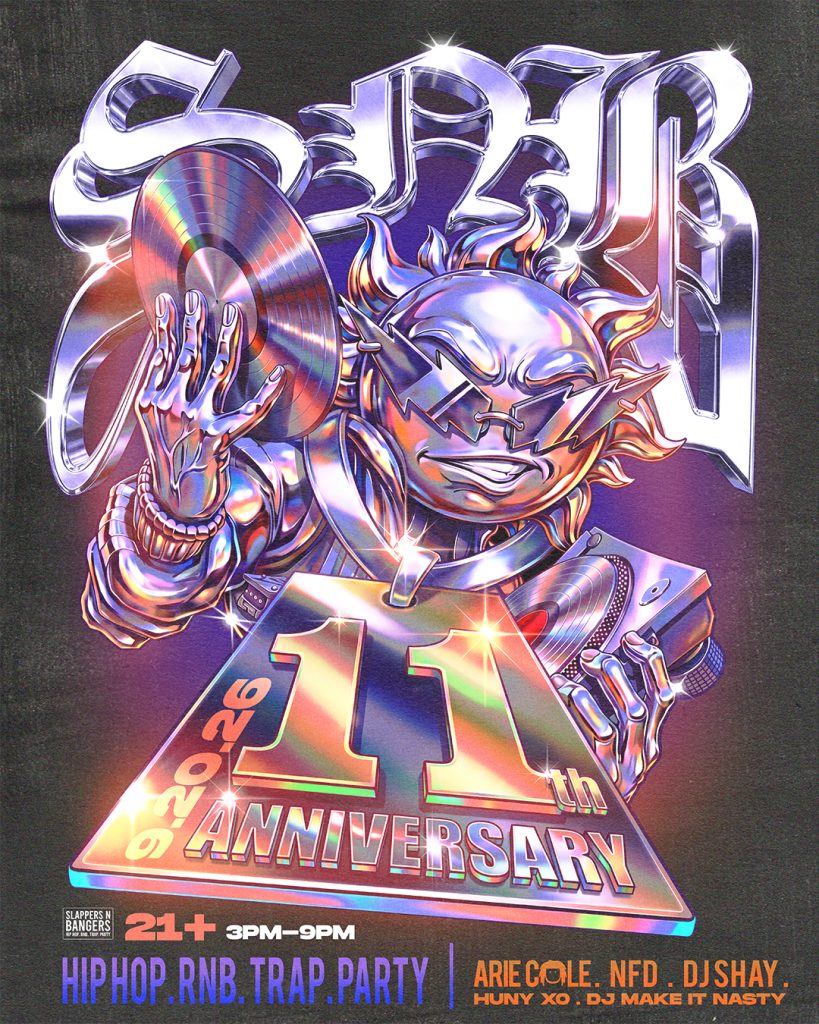
Since 2015, parties have often been built around DJ-driven programming for practical reasons. DJ sets travel light, load in fast, and keep the dance floor moving without the extra stage time a full band or hardware rig demands. Festival and club programming decisions usually come down to exactly that tradeoff: stage space and set length versus reliability.
Live elements do show up at select block parties and headline shows when the format calls for it. Lineups like 400 Degreez show how SNB has paired DJ-led continuity with moments built for a bigger stage.
Artists working toward a booking should be ready to answer a few questions upfront:
- What’s your full setup, down to power and table space?
- What’s on your rider, and what’s genuinely non-negotiable?
- Do you have a backup plan if a piece of gear fails mid-set?
Common Problems Behind the Booth and On the Stage
DJs and live performers run into different failure points, and knowing which ones apply to your format saves a lot of panic mid-show. For DJs, the recurring headaches are technical: a corrupted USB drive, a laptop that won’t sync with CDJs, a controller that loses connection right as the floor peaks. The fix is almost always redundancy. Carry a backup drive, know the venue’s house gear before you arrive, and never build a set around one piece of hardware working perfectly.
Live performers face a rougher set of risks because so much happens in real time. A synth patch that behaved fine in rehearsal can glitch under different power conditions. A vocalist can lose a monitor mix mid-song with no way to fix it quietly. Because mistakes have to be solved live rather than mixed around, the standard fix is preparation: rehearsed fallback parts, prepared stems as a safety net, and a stage plan detailed enough that the sound engineer isn’t guessing.
Both formats share one universal trap: assuming the venue’s gear matches what was promised. A DJ shows up expecting CDJs and finds only a basic mixer. A live act expects a full monitor rig and gets two wedges split three ways. The troubleshooting habit that actually works for either format is the same, confirm the technical specs directly with the promoter days before the show, not the morning of.
From Turntables to Modular Rigs: A Short History of the Divide
DJ culture and live electronic performance grew up on parallel but different tracks. DJing emerged from disco and hip hop’s block-party era, built around turntables, breakbeats, and a DJ’s ability to keep a crowd dancing using other people’s records. The skill was curation and manipulation, not composition, and that distinction stuck for decades.
Live electronic performance has a separate lineage, rooted in synthesizer-driven acts and early techno artists who built entire performances from hardware, treating the stage as a place to compose in real time rather than replay finished work. As gear got smaller and cheaper, laptop performers and controllerists blurred that line further, letting DJs incorporate live elements and letting live artists lean on sequenced backbones.
The cultural weight attached to each format has shifted too. For a long time, “live” carried more prestige, treated as more authentic than “just pressing play.” That framing has softened as academic work reframes DJing itself as an active, performative practice with real creative decision-making, not passive playback. Today, both formats carry legitimate respect, and the choice between them is more about logistics and intent than hierarchy.
The Skills Each Format Actually Demands
DJ mixing techniques and live performance skills overlap less than people assume. A DJ’s core skill set centers on track selection, beatmatching, EQ control, and reading a room fast enough to adjust before energy drops. Training usually happens through hours of practice mixing at home, building a library, and learning software like Rekordbox or Serato inside and out. The learning curve rewards repetition and pattern recognition over formal music theory.

Live performance demands a different foundation. Someone building a hardware-based live set needs to understand synthesis, sequencing, and often basic music theory to construct workable arrangements in real time. Bands adding electronic elements need the coordination skills of ensemble playing on top of whatever gear they’re running. The training path leans more toward music production courses, instrument practice, or hands-on hardware experimentation, and rehearsal time matters more here than for most DJ sets because there’s less room to recover from a wrong move once you’re on stage.
Neither skill set is objectively harder to learn, but they reward different kinds of practice. A DJ improves mostly through reps in front of live crowds. A live performer improves mostly through structured rehearsal before ever facing an audience.
Our Take: Booking the Right Format Matters More Than the Debate
The DJ set versus live debate gets treated like a status argument, live is “realer,” DJing is “easier.” That framing misses the actual decision promoters and artists face, which is about fit, not hierarchy. A packed club with a two-hour turnaround has no business booking a full modular rig, and a festival headline slot with room to breathe is wasted on a safe, static DJ set that never takes a risk.
Where conventional advice falls short is treating these as interchangeable formats with the same rider and the same soundcheck needs. They aren’t. The tempo research backs that up: live and recorded performance genuinely behave differently, and that difference should shape how artists prepare, not just how they market themselves.
If you’re an aspiring performer, prioritize honesty about your format before you chase a booking. Know what your setup actually requires, build real redundancy, and stop assuming “live” sounds more impressive than a DJ set that’s tight, well-read, and built for the room. Slappers N Bangers has spent a decade proving that a well-run DJ night can carry a crowd just as hard as any live rig, and upcoming events are a good place to see that in action.
— Slappersnbangers@gmail.com
Sources
- Analyzing DJ Performance in the Dub Diaspora | Journal of Popular Music Studies
- Expressivity in DJ performance (project)
- Live Techno vs DJ Sets: What’s actually different? (practitioner interview/essay)